Introduction | West Side Neighbors | Dr. Juliet Saltman | National Neighbors | Conclusion
West Side Neighbors
In July 1967, the Akron Beacon Journal published an article about racial integration in Akron, Ohio. Ward Three Councilman Ed Davis had said to his colleagues a week earlier that the area between Delia Avenue, Hawkins Avenue, Rhodes Avenue, and the West Expressway was “growing into the ‘biggest slum Akron ever had…I don’t say it is a slum now, but we’re building it – building it with tax dollars we’re using to buy property in Opportunity Park.’”1
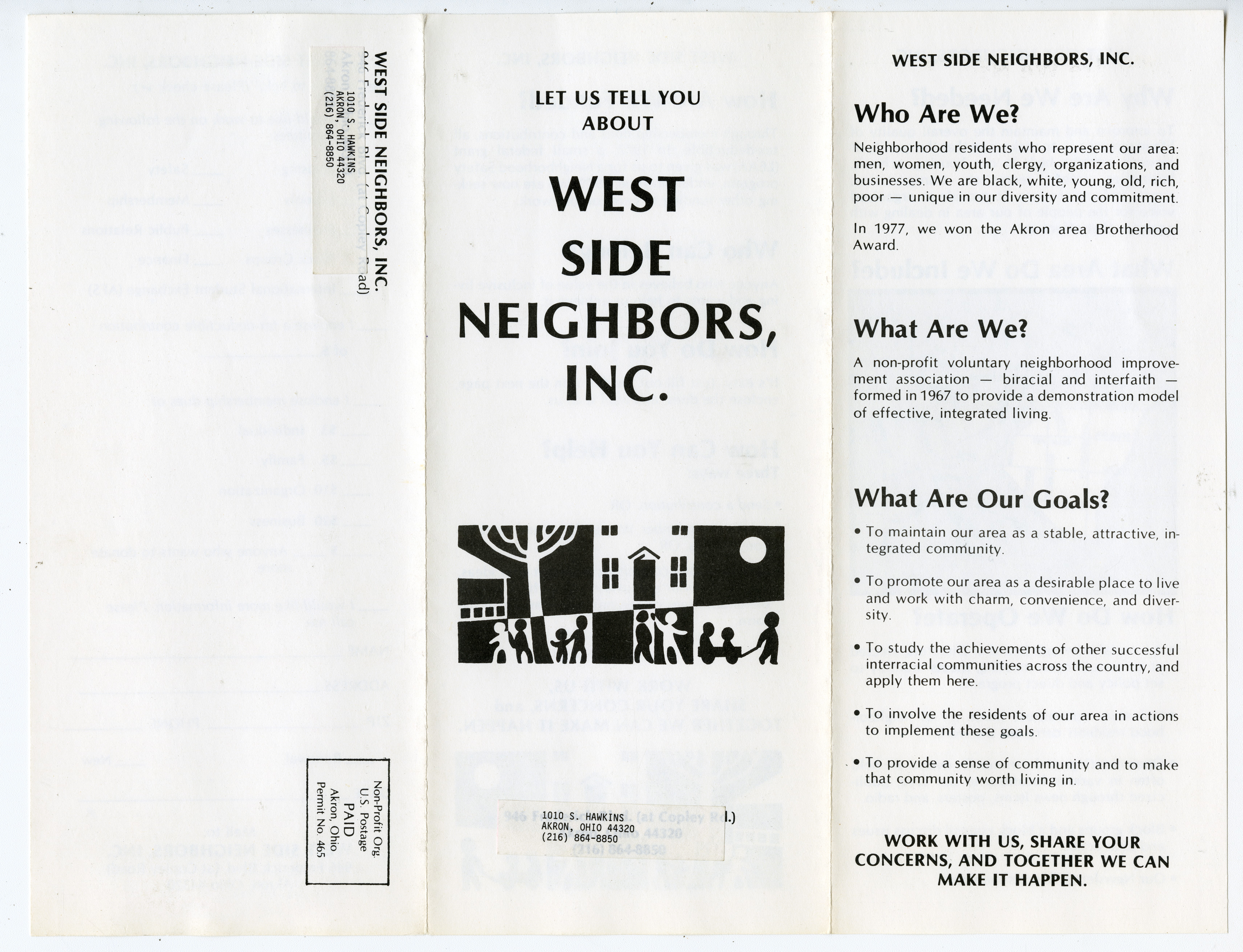
In response to Davis’ comment, a group of West Akron residents and faith leaders joined together a few months later to form West Side Neighbors, Inc. Approximately 150 people attended the meeting and they elected a 21-member steering committee and adopted bylaws. West Akron residents could become dues-paying members for one dollar a year.2
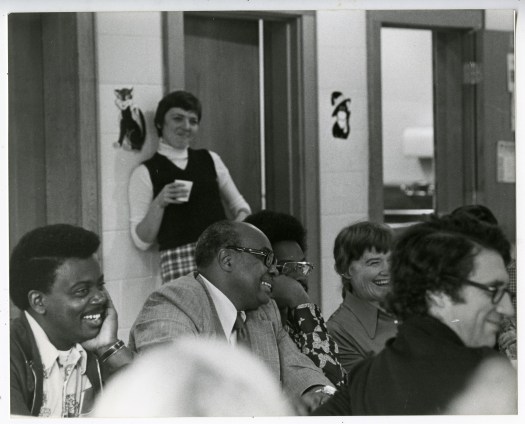
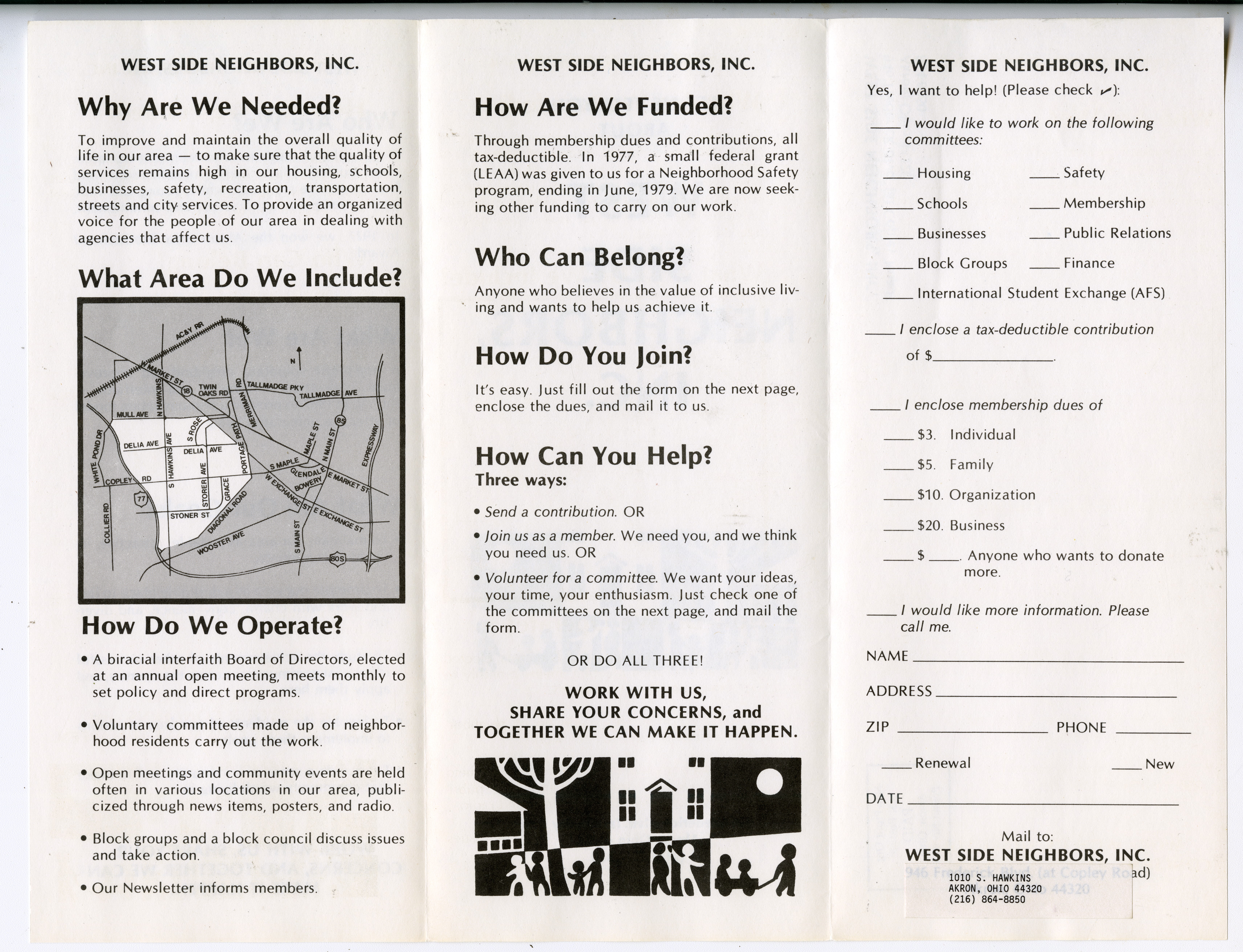
The approximate boundaries of WSN’s service area was the West Expressway (I-76/77) to the west, Mull Avenue to the north, West Exchange Street and Portage Path to the east, and Diagonal Road to the south. At the time of WSN’s founding, their service area included approximately 10,000 homes and 30,000 people.
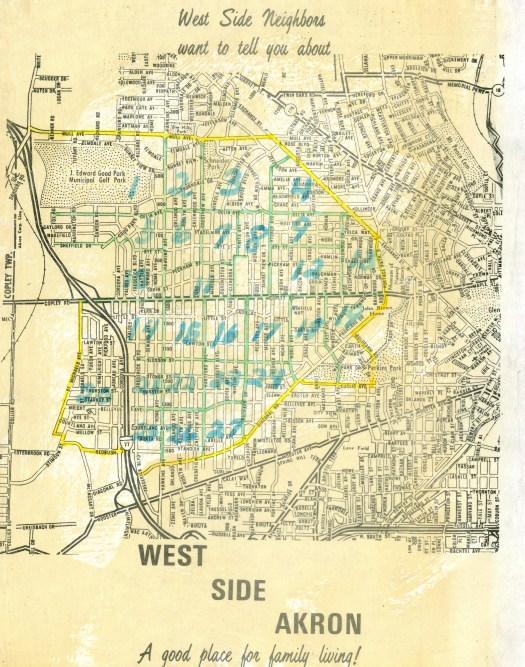
West Side Neighbors, Inc. was a biracial and interfaith group. The organization’s goal was to demonstrate an effective integrated community, “to show that blacks and whites could live, work and play together amicably” in a well-maintained neighborhood with access to adequate services, businesses, schools, and recreation.3 The hope was that an active neighborhood organization such as WSN could prevent the resegregation of West Akron, which often occurred in other neighborhoods across the U.S. after they had become integrated.
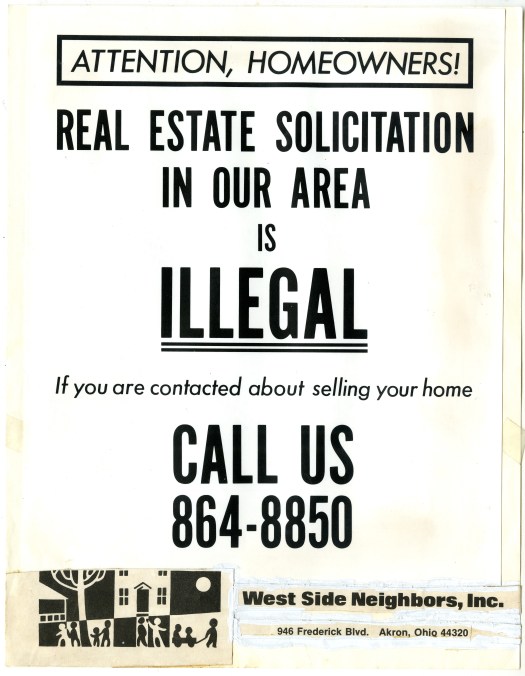
WSN identified several actions that led to resegregation of neighborhoods:
- Site selection policies by public housing authorities
- Urban renewal relocation programs
- Redlining and disinvestment by lending institutions
- Racially isolated schools
- Tactics used by real estate agents such as racial steering
- Low-quality city services
WSN held monthly board meetings and had several working committees, including block organization, schools, housing, business and industry, public relations, and finance and membership. The organization primarily operated on a volunteer basis and was a nonprofit funded by membership dues and contributions. WSN occasionally received grant funding from the federal government, the city of Akron, and private foundations for specific projects. One example of this was the Neighborhood Safety program funded by a Law Enforcement Assistance Administration (LEAA) federal grant in the late 1970s. Funding from this grant allowed for the organization of block watches in WSN’s service area.4
The dissolution of West Side Neighbors is unclear. Materials in the West Side Neighbors, Inc. Records end in the early 1990s, and coverage of WSN in the Akron Beacon Journal and Akron Reporter also ceased around the same time. However, two other related West Akron organizations, West Akron Neighborhood Development (WAND) and Westside Neighborhood Development Corporation (WENDCO) continued to be active through the 1990s. In 1989, WSN and WAND helped establish WENDCO. WENDCO is still an active organization today and offers programs for homebuyers and homeowners to support neighborhood stabilization.5
This exhibition was created in Fall 2024 by Melanie Mohler as part of her capstone project for the MA in the Applied History and Public Humanities program at The University of Akron.
If you would like to consult the West Side Neighbors, Inc. Records for research and study, please schedule an appointment to visit The University of Akron Archives and Special Collections.
Do you have information you can share about the West Side Neighbors, or any of the other people or organizations represented in this digital exhibition? If so, please contact The University of Akron Archives and Special Collections at 330-972-7670 or archives@uakron.edu.
- The West Expressway is I-76/77. Opportunity Park refers to the Opportunity Park Urban Renewal Project, which was first introduced in 1964 and encompassed the area between the West Expressway, Rhodes Avenue, Wooster Avenue (now known as Vernon Odom Boulevard), Bowery Street, Cedar Street, and Washington Street. Robert Kotzbauer, “Citywide Integration Vital,” Akron Beacon Journal, July 10, 1967. ↩︎
- “Copley-Delia Group Elects Committee,” Akron Beacon Journal, October 18, 1867. ↩︎
- “West Side Neighbors: A Brief History.” West Side Neighbors Collection, box 35, folder 3, University of Akron Archives and Special Collections, 1. ↩︎
- “West Side Neighbors: A Brief History.” West Side Neighbors Collection, box 35, folder 3, University of Akron Archives and Special Collections, 1. ↩︎
- “West Side Neighbors Housing Committee Meeting Minutes, August 1, 1989.” West Side Neighbors Collection, box 35, folder 4, University of Akron Archives and Special Collections; “About Us,” Westside Neighborhood Development Corporation, accessed December 11, 2024, https://wendco.org/aboutus.html ↩︎