Description
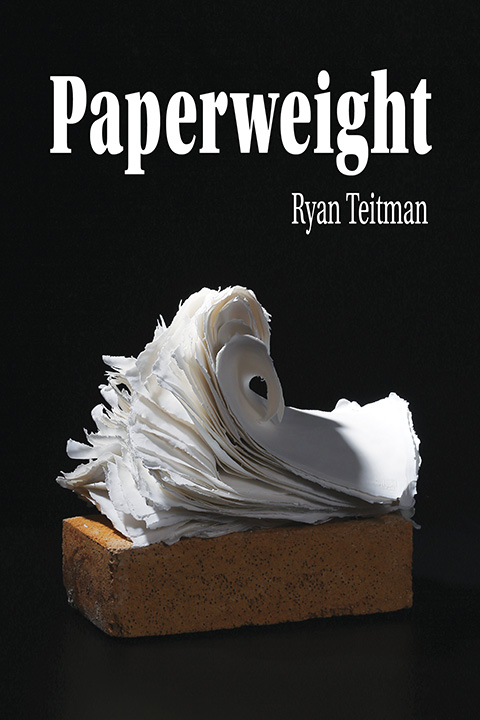
Ryan Teitman’s second book uses myths and meditations to create gemlike, multifaceted poems. Filled with doubles and dreams, Paperweight dives into how humans harness their ability to create—whether to make works of art or to simply find hope in the depths of grief. By exploring the boundaries of the prose poem, Teitman finds unexpected lenses through which to view the beauty of the natural world, the breadth of contemporary culture, and the narratives of everyday life.
About the author
Ryan Teitman is the author of the poetry collection Litany for the City (BOA Editions, 2012). His poems have appeared in Gulf Coast, Poetry, The Southern Review, The Threepenny Review, and The Yale Review, and his awards include a Wallace Stegner Fellowship, a MacDowell Fellowship, and a National Endowment for the Arts Fellowship. He lives in Glenside, Pennsylvania, with his wife and daughter.
Praise for Paperweight
A cloud and a ghost enter a bar. A girl walks across an ocean. One poem has a speaker who used to be a dog; in another, he turns into a rock. Ryan Teitman is an expert at taking an unlikely premise, then building and inhabiting a little world around it. These poems often reminded me of improvisational theater in the best way: how they embrace their impossible materials, and escalate with wit and humor, often in the service of some greater mystery. But what I admired most about this book is how it evolves over time: at the beginning, I was drawn to the imaginative force of the poems. By the end, I was moved by their vulnerability and tender grace. Paperweight is a collection that will linger with me for years to come.
—Matthew Olzmann
Ryan Teitman creates a wildly weird and simultaneously familiar world with luminous, existential poems that plumb everything from nature to late-stage capitalism, religion to caregiving, masculinity to the act of writing itself. Reminiscent of June Jordan’s famous line, “We are the ones we have been waiting for,” Paperweight waits endlessly for a train with a father on it who never arrives, until the speaker steps in to become a father himself. Balancing cynicism and magic in equal parts, Teitman’s visionary poems remind us to tend to each other in these uncertain times.
—Erika Meitner
In these weird, sometimes comic, often fabulist, and quietly devastating poems: a bone goes missing from a foot; a baby gets lambasted for sleeping away earning potential; a girl walks across the sea; a man turns into a rock his wife uses for a paperweight. To start with. But the magic of these poems, and I suspect why I find myself re-reading them, is that despite how strange the world Teitman conjures, or notices, I feel un-estranged from it. It feels familiar to me. This is a consoling and gathering strangeness, which I do not quite understand, but I kind of love.
—Ross Gay