Although I was sad to leave Elephant’s World, I knew that we still had two thirds of our trip to go. Our amazing adventures had really just begun. Arriving back in Bangkok and spending more time there revealed the diversity of the city, from abandoned buildings and trash, to pristine gardens and gorgeous skyscrapers. We had some extra time to explore two huge malls in Bangkok. The second mall had an outdoor food market where Ryan and I picked up some tasty local Thai food. It was kind of strange going straight from our rural living at Elephant’s World to a commercial mall in a massive city, but it was fun to see a new side of Thai life. For instance, once we finished our meals, Ryan and I looked around for a trash can. There was not one in sight. So we just held on to our trash and kept walking, hoping to come across one. Finally a man who looked like a janitor came up to us and asked if we were finished. I guess most people just leave their trash somewhere and wait for the clean up crew to find it. This was a major difference I noticed because at home people look down on littering. Walking around the mall we also noticed a lot of differences in food. Dairy Queen offered Green Tea flavored cones, McDonald’s advertised sweet corn as a topping on sundaes, and a grocery we wandered into was stocked with leechi juice.
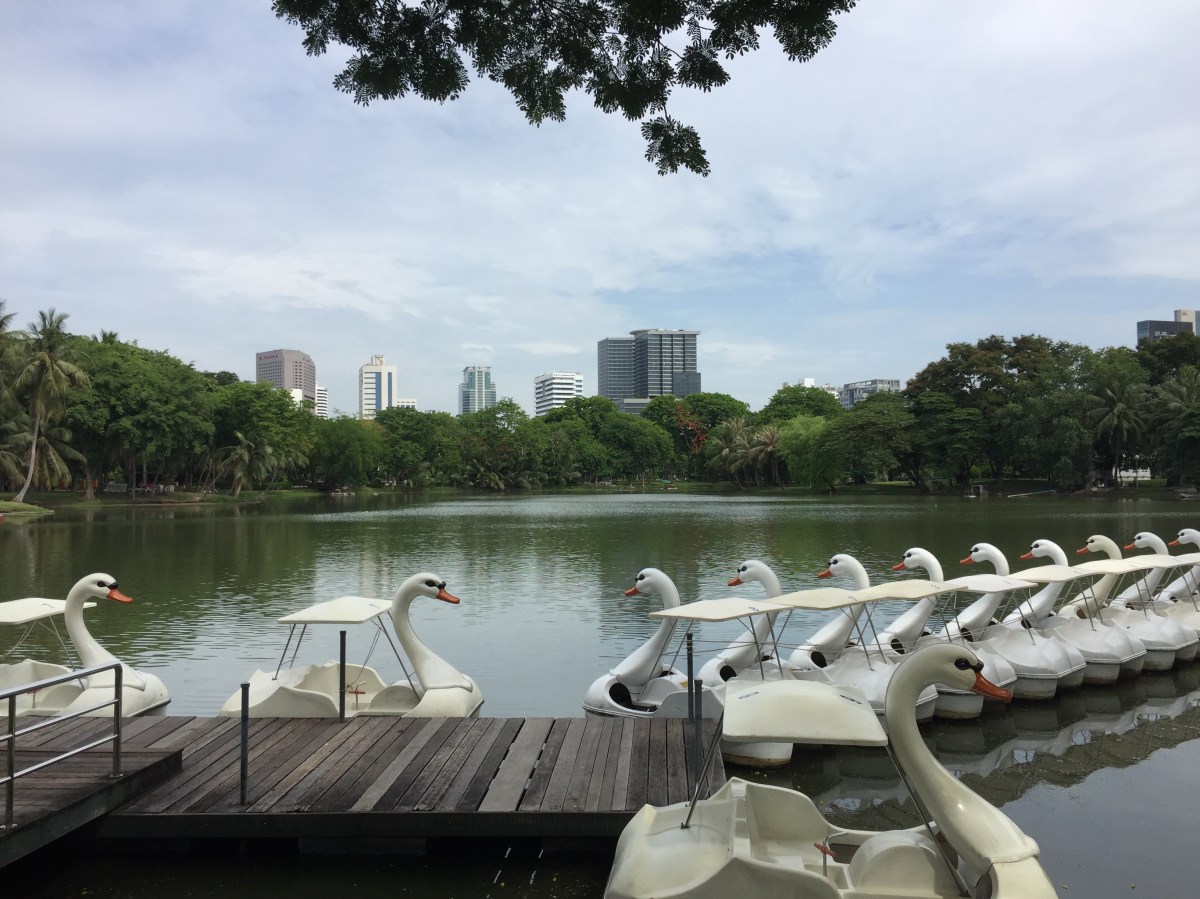
The next day was filled with activities, but we started off the day with a trip to Lumpini park. This park was beautiful, and very well maintained. I imagine it is somewhat similar to Central park because of the skyscraper building s that surrounded it. Throughout the park there was exercise equipment like a normal gym would have except it was made out of the same material as outdoor playgrounds. I tried all the machines because it was fun, but I was also confused because previously I had thought that most foreign cultures don’t put as much emphasis on exercise, they just live healthier lifestyles. All throughout the park there were beautiful shelters styled to reflect asian culture. We even found a field with bushes that were trimmed to look like elephants. Our next stop was JJ’s Market which is a gigantic outdoor ma
 rketplace. We had to use the buddy system because all of the shops formed a labyrinth that was virtually impossible to navigate if you got distracted by something that caught your eye. The most shocking difference we noticed here were the prices. Everything was extremely cheap. I picked up two t-shirts that were only two dollars a piece. Thailand cuisine is known world wide, so being able to take a cooking class was really great. We learned how to make traditional pad thai, prawn soup, fresh spring rolls, green curry chicken, and mango sticky rice. Maybe now I can spruce up my regular meals I make at home with recipes from the cookbook we received.
 mbered when I fed her a watermelon. Spending so much time with the elephants and working to gather food for them we learned how smart and gentle the elephants can be. It amazed me how trusting they can be even with their abusive pasts at trekking camps before coming to the sanctuary. Throughout the week we also bathed the elephants in the River Kwai with brooms and plastic pans/buckets. Whatever language barrier or disconnect stood between our group and the mahouts di
 sappeared in the river. Everyone was fair game when it came to splashing and getting sprayed by elephants. Our guide at Elephant’s World, Chokdee, came to be a very close friend to our group. His troubled past as a refugee didn’t stop him from smiling and playing tricks on us while he showed us his favorite activities in Kanchanaburi. Dee, as we would call him, showed us just how nice and generous the people of Thailand can be. Going to these countries and actually getting to know individuals and families helps you to understand and enjoy their culture and lifestyle. So naturally when our week long stay was finished, they threw us a party. The mahouts and Dee grilled us some really tasty kabobs and encouraged all of us to celebrate our hard work and sing karaoke with them.



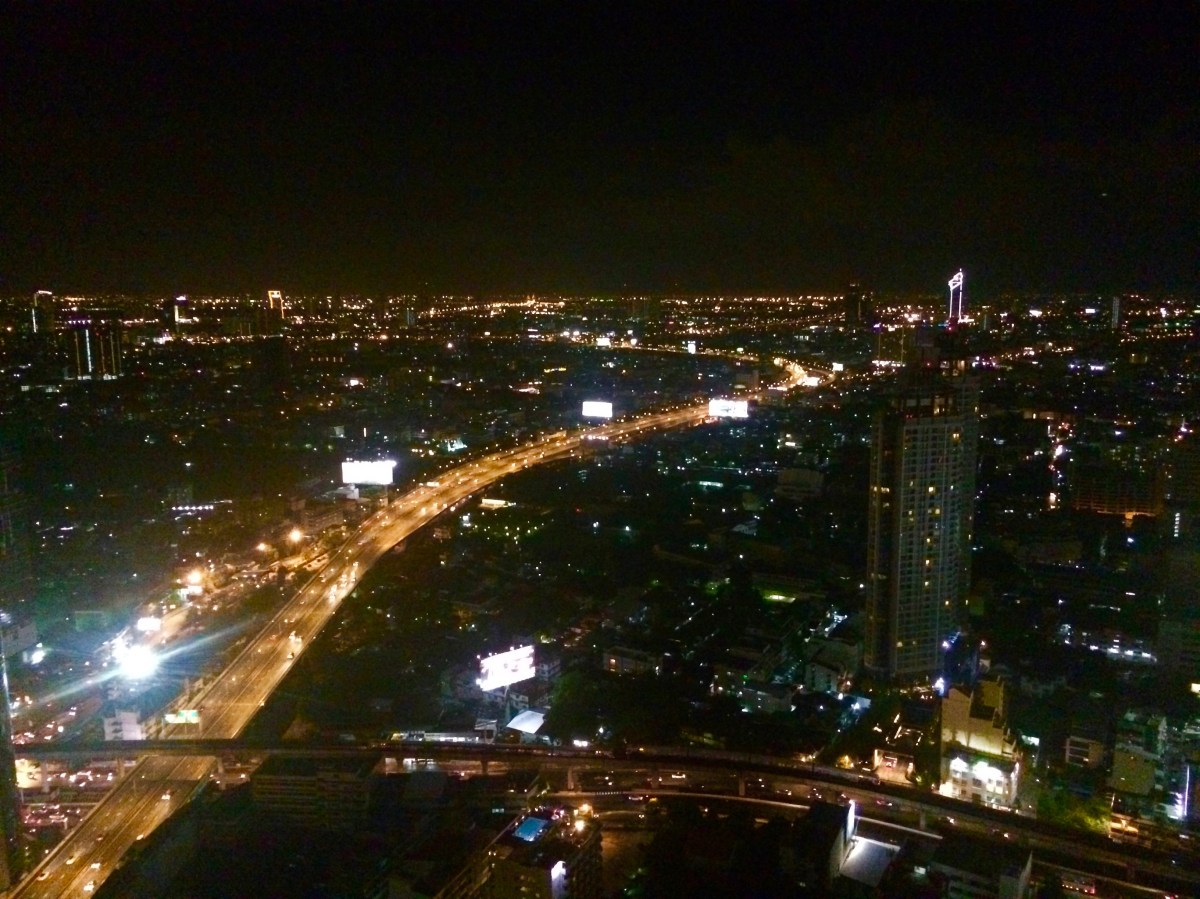
 it’s been difficult. It’s not easy to return to your normal routine after almost a month of exploring and learning and moving! I keep myself busy, but few experiences are new. This is partially a complaint, but mostly, I’m grateful that this trip sparked such a craving for new experiences. I used to hide behind the safety of the known, but now I feel brave and capable enough to let myself live.
 Traveling, especially somewhere so far and different from home, means pushing boundaries and trying new things. I’ve done so many strange and wonderful things that I couldn’t—and wouldn’t—have done in the US, and with relative success. As a result, my self-efficacy skyrocketed, which greatly impacts my life at home. I now understand that I can handle most tasks and situations—and more importantly, if I do make a mistake, it probably won’t end my reputation, career, or life. I feel pretty confident that if I want to do something, I can do it. It’s the stuff of motivational kid’s shows, but it took a pretty big adventure for the idea to resonate with me.
 I find myself saying ‘yes’ to more things, approaching i
 ntimidating situations with a sunny outlook, and making fewer to-do lists with time restrictions. These are all gifts from a culture across the world, and I am so grateful.

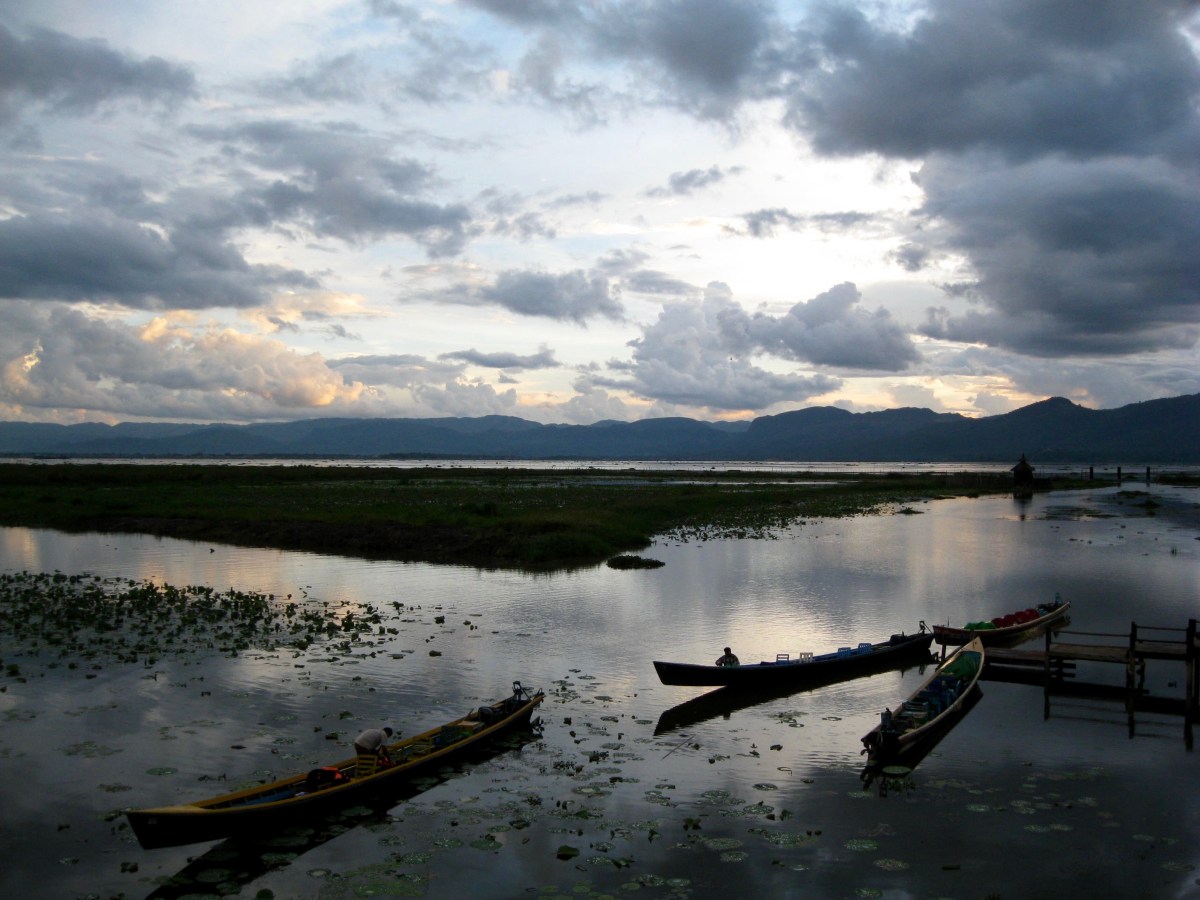

 Where the river was narrow, the water was brown and murky. Shops and homes lined the riverbank, and people bathed, collected fishnets, and played in the water. As the river widened into a lake, the water became blue and reflective, spotted with waterlilies and floating birds. Longboat fishermen delicately balanced on the tips of their boats, working calmly.
 We saw a silk-weaving shop, where they showed us each step of the process and told us how certain designs, textures and shapes are created. Lotus silk is the most valuable fabric, because it is made from the strands inside the stem of a lotus flower. The strands are rolled into a thread, which is then dyed and woven. One scarf takes over 1,200 flowers to create. This form of weaving is unique to Inle Lake, and I was honored to be able to watch the process.
  We also got to see the creation of handmade, pure silver jewelry. They showed us how the metal is melted down, then rolled into logs which are shaved down to wire strands. A man was working meticulously on a silver chain. He hand linked and soldered each tiny link together. I was incredibly impressed, and actually ended up buying some earrings from the store—they’re my favorite purchase from Southeast Asia. The woman who sold them to me was so caring and maternal—she helped me put the earrings on and everything—which gives them even more value.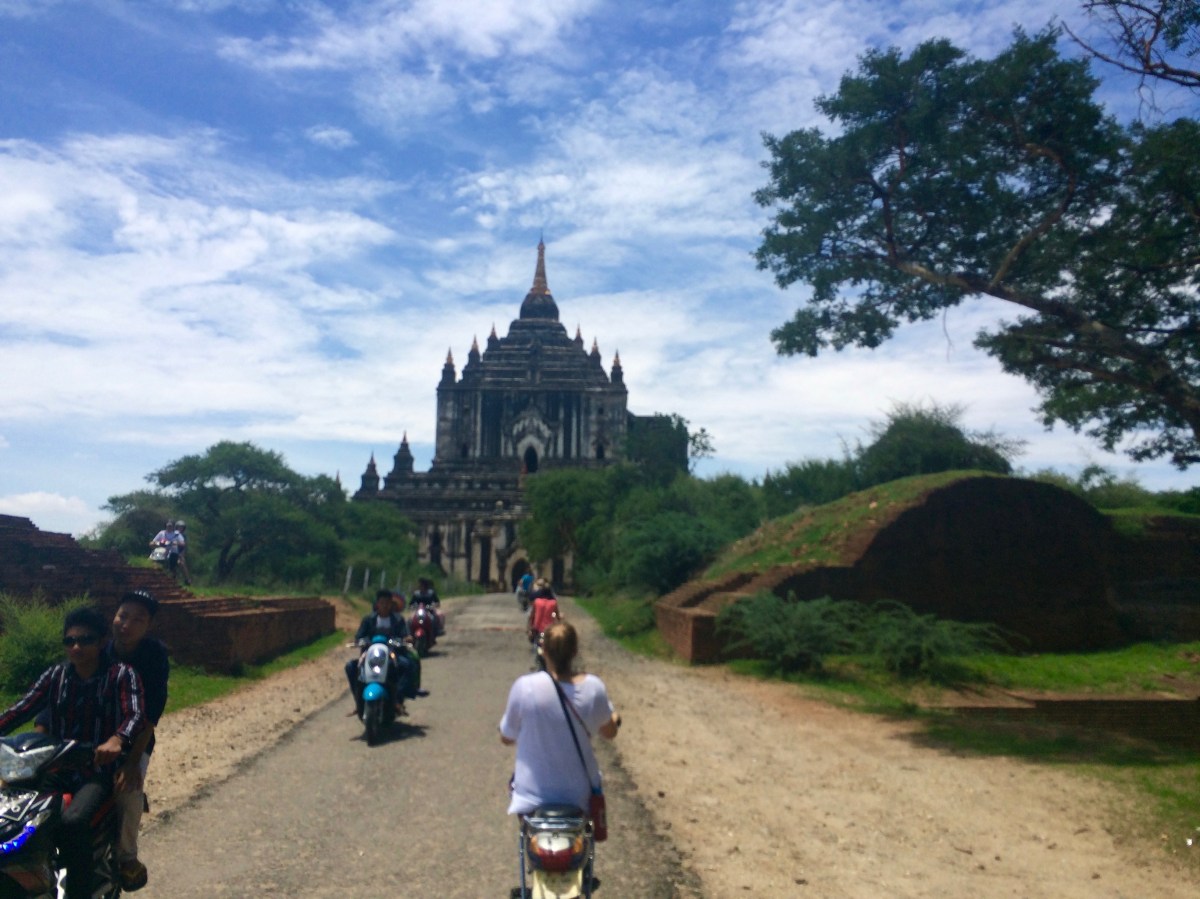
 This is a more traditional mode of transportation, although motorbikes are becoming rapidly more popular. We visited quite a few pagodas and temples, but the most memorable one was probably the first. We climbed, bent over, up a tiny staircase to the top level of the pagoda. The view was so breathtaking, we sat silently in reverie for what felt like an hour. There were stupas dotting the earth all the way out to the horizon, and surely beyond. Photos couldn’t quite capture the sight, but I did try. I wanted to remember the view, and the feeling it gave me.
 We also stopped in to a lovely family-owned lacquer shop, ‘The Golden Cuckoo’, where the owner took us through each step in the process of making a lacquer product. It is an extremely detailed, lengthy process. First, bamboo strips are coiled or woven into the desired shape. Then, layers of lacquer are applied and then sanded. The men in the shop then design the patterns, and the women fill in the more intricate details. Colors are carved and applied one at a time until the piece is finished. Each step takes about 2 weeks to dry completely, which means that some pieces can take eight months, or more! The result is an extremely durable, lightweight work of art.
 Our second day in Bagan was much less structured and guided, because we rented e-bikes for the day. This way, we could freely explore the city and stop whenever we saw something interesting—which was quite often. I happen to have a strong aversion to two-wheeled vehicles of any kind, so I compromised with myself by hopping onto the back of a friend’s bike. It was exhilarating to face my fear, and doing so meant I got to see a whole lot more of Old Bagan than I would have on foot. In fact, it ended up being one of my favorite days on the trip! We got to fully surrender to the laid back, unplanned lifestyle of Southeast Asia, and it meant we got to ‘discover’ each temple and stupa with a fresh mind.
 It was a good thing the beginning of our day got us adjusted to that laid back attitude, because the second half of the day was full of bike breakdowns as we each ran out of battery on separate occasions. Serendipitously, each breakdown left us in a spot so beautiful, we didn’t mind waiting for the bike owners to come rescue us. It added even more sights to our long list for the day, but not a single item on the list felt like an obligation. Everything fell into place and each moment was blissful. It’s pretty special when a bike breakdown (or five) feels peaceful.

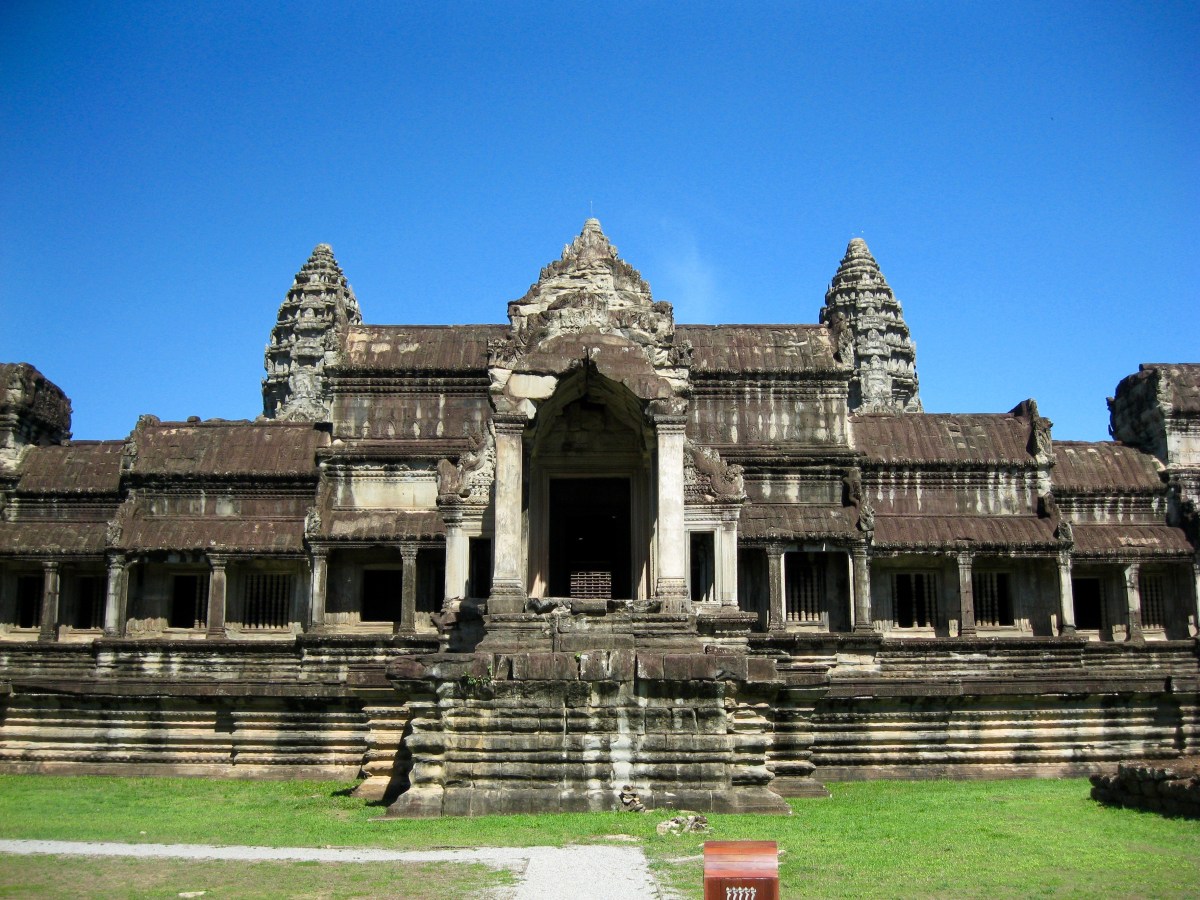
 Wow! Visiting the Temples of Angkor was like standing in a movie, or going back in time. Our first stop of the day was the iconic Angkor Wat, of course. I was surprised to see that the temple looked just as grand as it did in photos I had seen—in fact, it looked far more impressive in real life. Angkor Wat was less ruinous and crumbly than the temples we saw later in the day, which made it difficult to grasp the ancientness of the structure. It’s hard to imagine people building such a humongous, intricate place, stone by stone.
 Steep stairways made for a dizzying climb to the upper levels of the temple. We had to climb using our hands and feet as if it were a ladder, not a staircase. The steepness of the stairs represents the pathway to heaven and enlightenment—an architectural reminder that getting there is difficult, and must be earned. There were offerings of flowers and incense
  scattered throughout the temple to honor and thank the Buddha. Many people stopped to pray on colorful mats in front of the larger Buddha statues. I received a red bracelet from a monk in the temple, who tied it in multiple knots while chanting a blessing of good luck.
 ame person. Some believe the faces portray King Jayavarman VII, while others think they are images of the bodhisattva of compassion, Avalokitesvara or Lokesyara.
 Since the decline of Angkor, nature has slowly reclaimed its dominance, weaving giant trees in and out of the man-made structures. This temple had a more guided, linear progression than the Wat or the Bayon.