Categories
Japan

experiential learning

IMG_1112What is experiential learning?

I thought this question several times and reached to the conclusions through my experience of study abroad in Japan.

The definition of experiential learning is, according to University of Colorado Denver:

“Experiential learning is a process through which students develop knowledge, skills, and values from direct experiences outside a traditional academic setting. Experiential learning encompasses a variety of activities including internships, service learning, undergraduate research, study abroad, and other creative and professional work experiences. Well-planned, supervised and assessed experiential learning programs can stimulate academic inquiry by promoting interdisciplinary learning, civic engagement, career development, cultural awareness, leadership, and other professional and intellectual skills.”

IMG_1106

What is the goal of study abroad program?

IMG_1105The main purpose of study abroad is cultural awareness through visiting many interesting places in the different countries. I think that it is very easy to lose the goal because seeing the various places is memorable, but not directly related to cultural awareness without reflective inquiry. Keeping journals is one way, but without reflective inquiry or reflective questions, students feel as thought they are JUST visiting Japanese famous places.

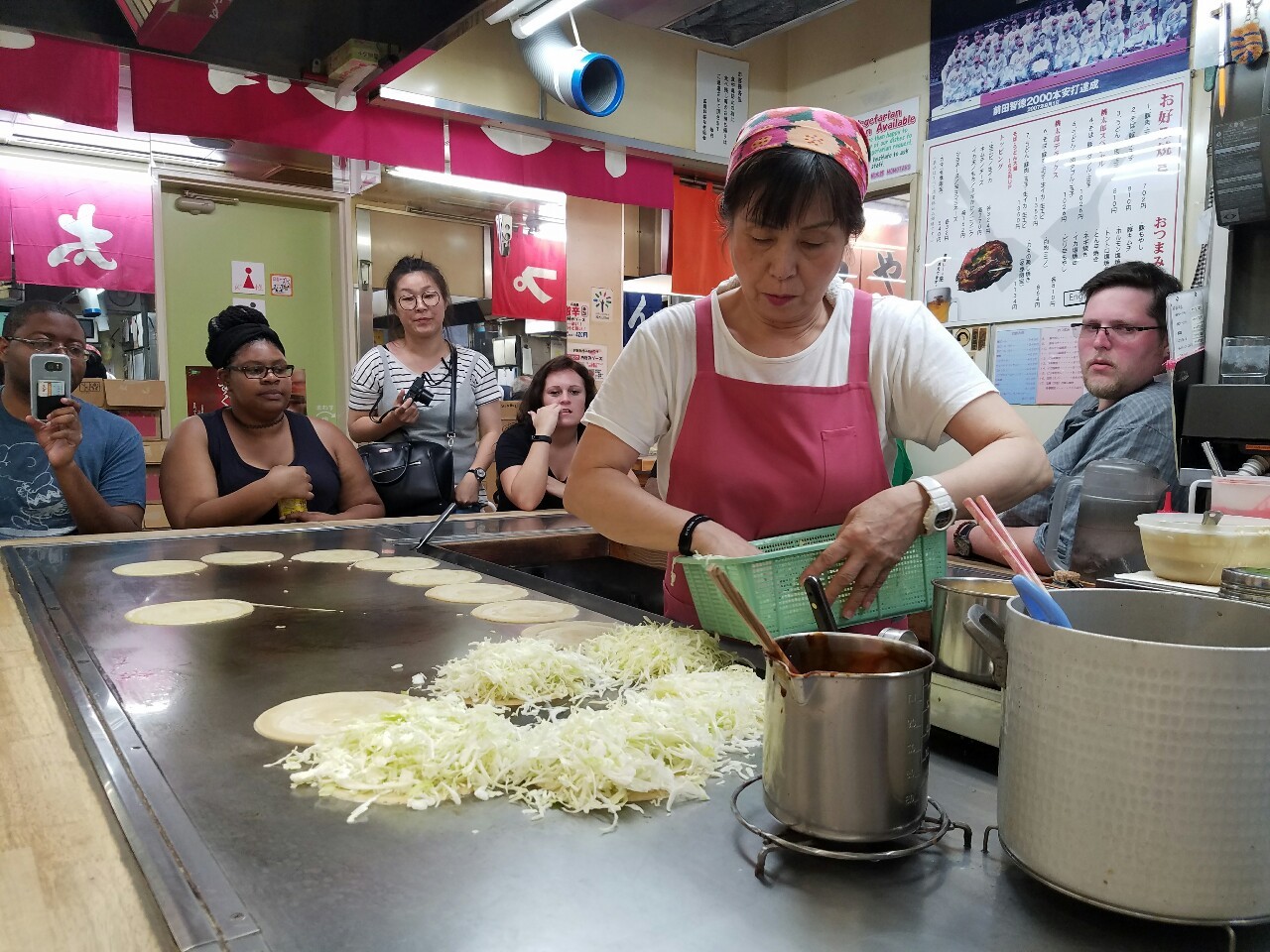
I focused on “EXPERIENCE” on experiential learning in my program, meaning that we learn Japanese culture through experiencing. For example, in my program, making plastic food samples, taking sushi lessons, making cup noodles, and staying in temple (Sukubo), etc., are invaluable in learning about the culture.

IMG_1109IMG_1103IMG_1091IMG_1090


Categories
Spain

Home life in Valladolid, Spain

View from planeMy name is Sierra Young and I am one of the 14 students studying abroad with The University of Akron this summer in Valladolid, Spain!

It has been a crazy last couple weeks here in Spain.

Student-Group-SpainWe left Akron May 24 and our plane arrived in Madrid, Spain, on May 25. After a tiring overnight flight, three different airplanes, some sketchy airport food and a two-hour bus ride from the airport, we have officially begun our five-week study abroad trip to Valladolid, Spain, and we couldn’t be more excited.

Life here is substantially different than life in the states. For example, the foods we eat, the times we eat and the way we spend our time. After about two weeks here, I would like to think I’m nearly adjusted, but this probably isn’t 100% true…yet.

We first arrived at the station where we would meet our host families the evening of May 25. Everyone was eagerly waiting to meet their new family that they would have for the next 5 weeks. Some with kids, some retired and some single. There isn’t just one kind of family/person that enjoys having abroad students living in their home for an extended period of time.

Breakfast before class.

After talking with some of my new friends, I have heard many of stories about their home experiences. A couple of girls live with single sisters around the age of 60, while others live with a young married couple with 2 kids under the age of 4. For me and my roommate, we get the opportunity to live with a caring, hard working, energetic retired woman, who loves her family so dearly.

Home-Away-From-HomeFrom what I have seen, the people here really treasure time with their families. The majority of them take an hour out of the middle of their work day to go home, spend time with their families at lunch and rest. This is a custom that isn’t typical in the U.S., but is a huge difference about Spain. Many of the businesses on the street are closed for this afternoon hour, as well as on Sundays, to spend time with family and rest. This makes for an adjustment, because in the states, we are used to being productive on Sundays, getting our shopping done and running errands that we didn’t have time for during the week.

Another aspect of home life in Spain is our meals. Our loving host mom constantly cooks for us, providing delicious food to give us energy for our crazy busy, 12 miles walking per day, mentally draining days. She never accepts help and spends hours cooking Spanish food for us. She’s very good at listening to us when we don’t particularly enjoy the food she has made us, too…at least I think. She hasn’t made us the fried eggs again. Hopefully it stays that way. 😉

Rooftop-viewAdditionally, the schedules of Spaniards is quite different. We have our breakfast around 8, in order to leave home by 8:30 for class. Lunch is typically around 3 p.m., which is the meal they call ¨la comida,¨ meaning ¨the food.¨ This meal is the biggest meal of the day. There are typically 3-4 different courses during this meal. The first few days were difficult for me because I’m not used to waiting 7 hours between breakfast and lunch. But trust me, with the amount of delicious food you eat at lunch, it’s worth the wait! (Also, snacks from the delicious cafeterías are suggested. They call these ¨tapas.¨ 🙂 )

Dinner is also quite different than in the States. We eat ¨la cena¨ around 10 p.m., right before bed time and right when the sun goes down. This meal is substantially smaller than la comida; typically it is one course. This seems crazy to Americans, because this is nearly what us college students would refer to as a ¨midnight snack while studying.¨ Haha. But it´s not too crazy to me now, because around 10 p.m. is when you begin to get hungry from the big meal we eat in the middle of the day.Street-view

On another topic, now that you’re all hungry, is the way the city is designed. This place is so historical and beautiful, I can’t even begin capture it with pictures. The city basically revolves around historical sites, cathedrals and plazas. When we first arrived, I panicked, thinking that I would never be able to figure out my way around the city. After a couple of weeks, lots of teamwork with friends and our handy map, we have yet to get too lost. Since none of the streets are parallel, they all begin to look the same.

The first floor of nearly every building is a store of some sort. There are many restaurants, cafes, fruit stores, bread shops, furniture stores, wedding dress shops, bars, pharmacies, etc. The additional 4-10 floors of the buildings are what we would call apartments. Here, since everyone lives in an apartment, they call these their homes. You won’t find a single family house like in the United States until you’re a couple miles outside the city, in the countryside.

Cathedral3My home is located on the south side of the city, about a 70-minute walk from the University. It is very common to use the bus here, as it is the main mode of transportation in the city. It’s inexpensive to use, always has room for more people to join and is a great way to see more of the city without getting terrible blisters.

Cathedral(2)My experiences here have already taught me so much about the culture, the people and the city. You can sit in a classroom for 16 weeks every semester, cramming knowledge into your head, but the only way to actually understand the culture and the language is to go there. You need to live it, speak with natives, see with your eyes the way the city comes alive at night, experience the beauty of this historical location and approach every new situation with an eager mind to learn.

CathedralIt’s only been two weeks and I have already become worlds more comfortable with speaking Spanish, learned so much about Spanish grammar and culture in my classes, and made so many new friends that are going through this exact same experience with me.

If you get the chance to study abroad, do it. You will see the most beautiful castles, cathedrals, buildings, historical sites and architecture. Trust me, you won’t regret it.

Categories
El Salvador

Dra. Mendez y Pacientes de Hospital San Rafael

Continuing our trip, we were welcomed to Hospital San Rafael by Dra. Zulma Mendez and her staff at Hospital San Rafael to talk to patients and assist in  information collection.

On Monday, we were welcomed to Hospital San Rafael and La Clinica de Atencion Integral (in English, comprehensive care clinic). Mendez specializes in the support and treatment of HIV patients, many of which come from all over El Salvador to seek treatment. Surprisingly enough, we were allowed to sit in on and participate in real appointments. (Of course, not something you’d ever see in the U.S.) Dra. Mendez assessed the lifestyle and use of medication of each patient, all of whom were polite.

(Pictured: With financial help, our first patient will be getting a septic system installed soon!)

After that, we hopped in a 15-person-van and drove to the homes of various patients, some more than 25 minutes away from the hospital, in different cities in La Libertad, and in rural and urban locations.

The experience was, at the very least, humbling. We went out to the houses of different female HIV patients, many of whom were from unfortunate socioeconomic circumstances and lacked much-needed support from their families in their diagnosis. They lived with multiple people to the bed, latrines and sometimes no electricity, because their illness and the extreme financial extortion imposed by gangs left them with almost nothing to live off of. Through these visits, we conducted interviews with the patients, in which we found out about their family circumstances, the amenities of their homes and their treatment plans. Often times, the children/siblings of the patient must aid them with receiving and taking their medicine.

I was taken aback by how kind and welcoming the patients were, letting us sit in their home and play with their kids with no prior knowledge of our arrival. All of these women were strong and persistent in their own way, and I felt privileged having been able to hear their stories firsthand.

We will continue these visits throughout the week, until our departure!

More to come!


Categories
El Salvador

Iglesias, Puerta del Diablo, y Presentaciones de la Salud

Needless to say we have accomplished our fair share of exploring the last couple days!

Friday consisted of us getting more acquainted with the city of San Salvador and the surrounding city of Santa Tecla where we are staying.

First thing, we visited Catedral Metropolitana De San Salvador, the biggest cathedral in San Salvador and resting place of Óscar Arnulfo Romero y Galdámez, archbishop killed during the Salvadoran Civil War in 1980.

The cathedral was previously burned in the fifties but was reconstructed with lots of beautiful stained glass and mosaic works.

Next we visited Iglesia el Rosario, a more modern church finished in 1971. From the outside it looks ver grey and nondescript but inside are interesting and beautiful metalwork and stained glass features which make it, personally, probably the most interesting church ive ever been to.

Metalwork sculptures were features that told the story of the crucifixion and resurrection of Christ.

Next on Friday, we did some exploring outside the city by going to Puerta del Diablo, an amazing geographical feature.

It took a lot of climbing up jagged steps but the view was well worth it!

Here’s the whole group!

We then practiced our presentations for the comunidad and went out to dinner for pupusas- iconic Salvadoran food (basically a thick tortilla pancake filled with cheese, garlic, beans, herbs, etc.)

Saturday was presentation day. The comunidad that we visited was a narrow path surrounded by houses which led to the community center where we presented to about 60 people. There we gave presentations on the importance of hand washing, dental hygiene, and stress management. Coupled with crafts, a soccer game,  and goody bags full of toiletries to practice what was taught, it was a morning very well spent.

Here are some photos taken while walking through.

Finally, we spent the remainder of the day playing with the kids back at Love and Hope, and shopping at the local mall. More fun and group pictures to come as we work in hospitals all next week!


Categories
El Salvador

First time in El Salvador

My name is Sara, one of 5 UA students participating in a 9 day service trip to El Salvador. As of about 12:30 p.m. yesterday (2:30 p.m. Ohio time), we have been exploring what it feels like to be a Salvadoran.

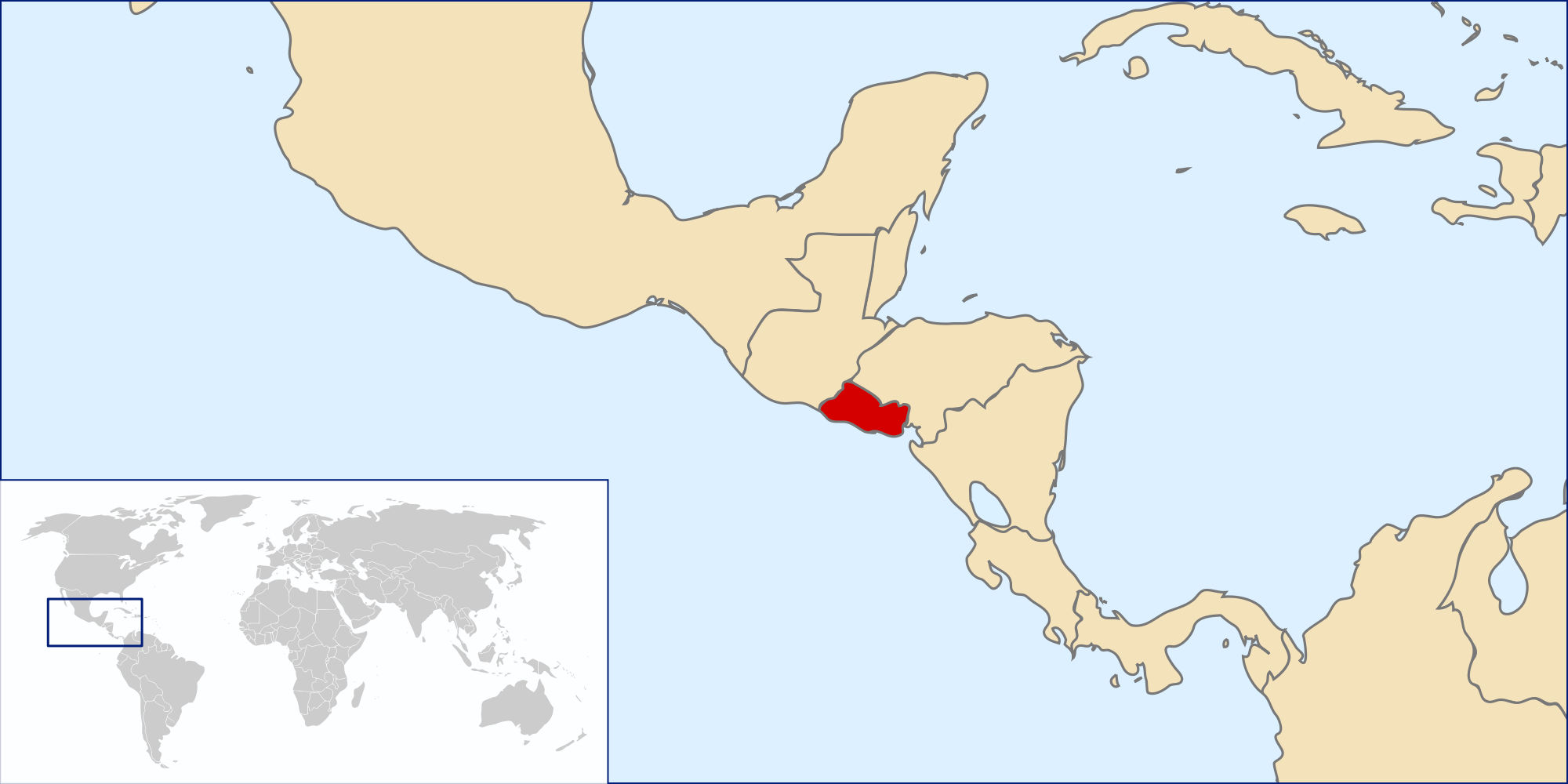
(Here’s where that is for those who were unsure)


Although it’s not notoriously the world’s safest place to be, it has many features and cultures that have already made it wonderful to visit. Upon arrival, we traveled from San Salvador to La Libertad, where the children’s home we will be working with the duration of the trip is located, in addition to the hospitals where we will be volunteering.

The “Mama” and founder of the home, Rachel Sanson, was kind enough to pick us up from the airport personally and tour us around our guest house where we will be living for all 9 days.


 (Here are a few quick photos of the guest house and our pet conejito, Sami- I will be sure to have more photos of us actually doing, first day was more of a travel day.)
After touring our space, we were able to meet the kids we’ll be working with at Love and Hope Children’s Home. The kids are full of energy to say the least, but they were more welcoming than anything- they would have played hopskotch and tag with us all night if we stayed that long!

Feel free to check out their website: http://www.loveandhopechildrenshome.com/

More interesting things to come!

Categories
Japan

Japan thoughts – Hiroshima


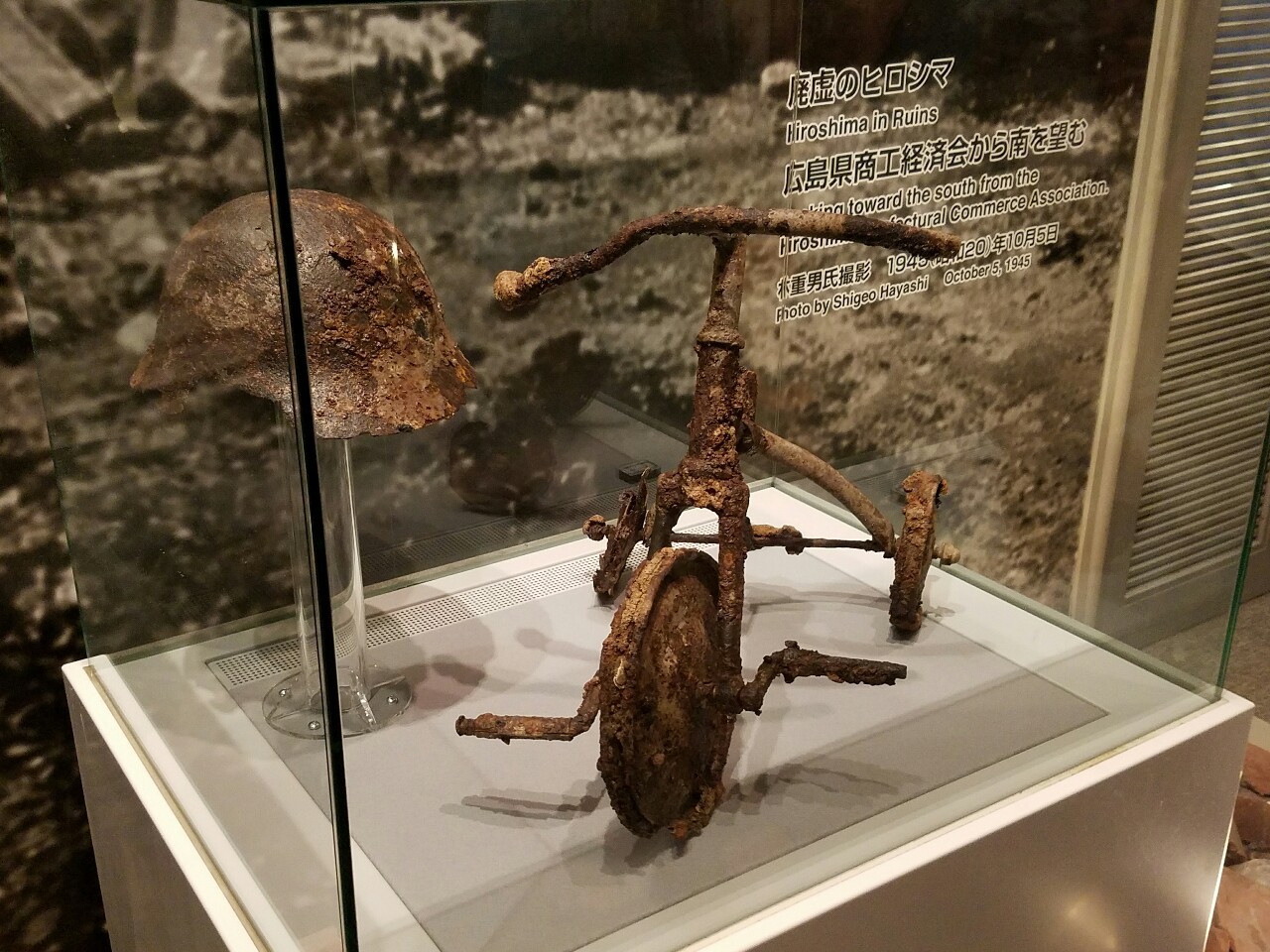
The most moving thing at the Hiroshima Peace Park was the museum where the objects recovered from the families of the victims who died from the atomic bomb blast or later from complications were housed on display. Especially though, the belongings of the children. Many of the artifacts in the museum belonged to children, like wallets, school uniforms, and lunch boxes. The most moving for me, however, was the metal bike and helmet belonging to a little boy. It said the boy loved his bike tremendously and would ride it all the time. He was a very happy child. Unfortunately, he died during the blast and the family couldn’t handle burying their son in a graveyard so they buried him in the family backyard with his precious bike. It was donated to the museum by his father in later years, but remained buried with the boy for a number of years. War is horrible for everyone and it’s horrible that people had to endure these tragedies, but it’s very fortunate that there are these belongings in the museum so people may remember their lives and who they were.

I think President Obama visiting is very good for the country. However, the ideas he speaks of are very unrealistic in my opinion. I don’t think any country that has atomic bombs will ever get rid of that kind of power. They don’t want anyone ahead of them and they like being on top. I think that countries believe that getting rid of that power will make them weaker in a world view and put them at a risk, although having bombs in the first place is a risk.

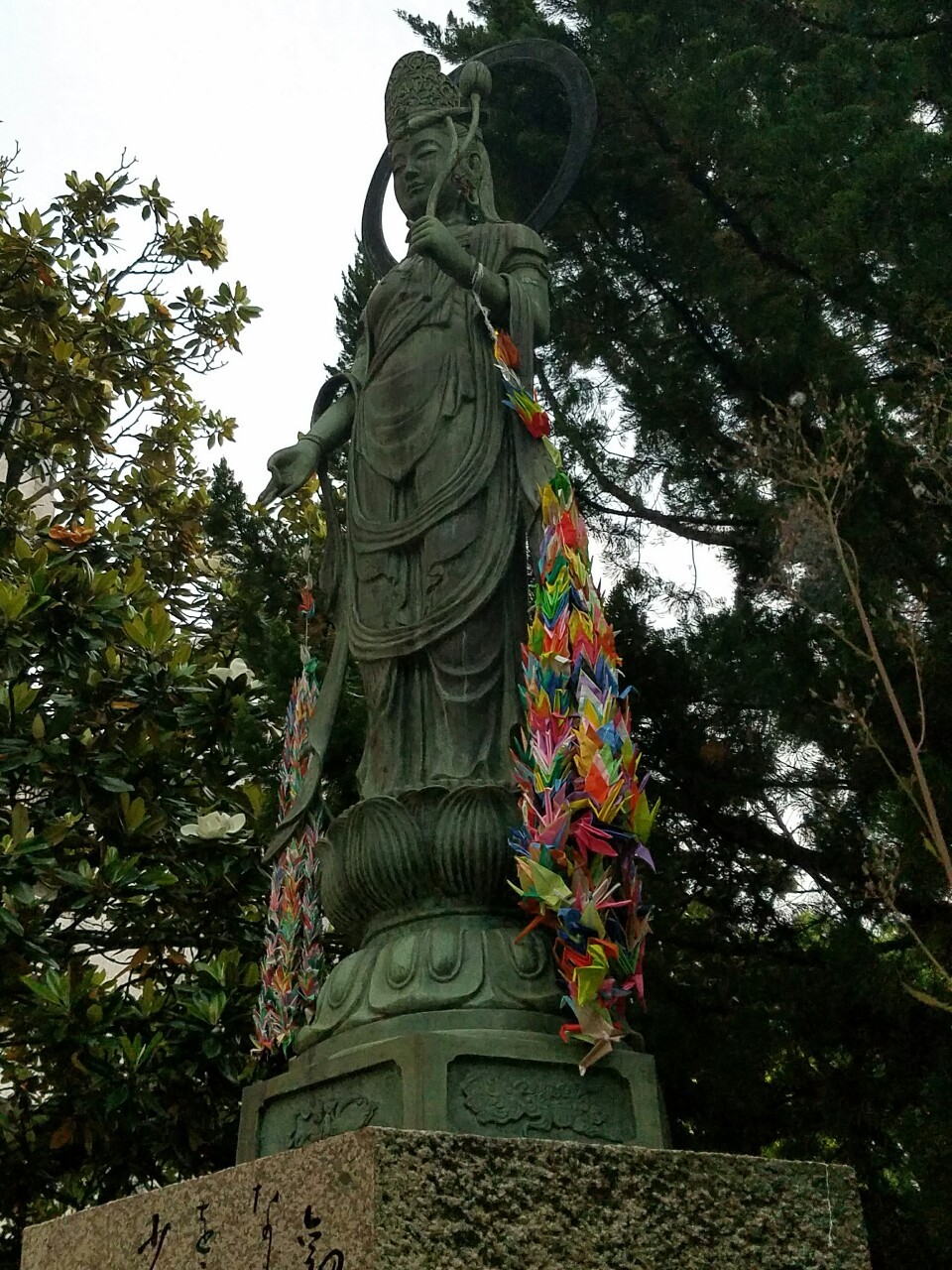
Religion is in every aspect of their daily lives, so it is no wonder it would be included in such a memorable place as Hiroshima. The Do Spirit of Japan is relevant in Hiroshima. There are so many religious monuments, whether Shinto or Buddhist in the area, commemorating the victims of the atomic blast. It is a reminder to people to keep their spirit alive through something as important as religion.

Categories
Spain

Spain – Salamanca trip!

¡Hola! My name is Chloe and I am currently studying at the University of Valladolid in Spain! I’m living with a host family and a lovely roommate named Amanda, and I spend 5 hours each weekday in class. I’m speaking Spanish all day every day, and learning about the culture of Spain through complete immersion. Every so often, we’ve been going on trips to different cities in Spain. I’m here to tell you about our recent trip to Salamanca!

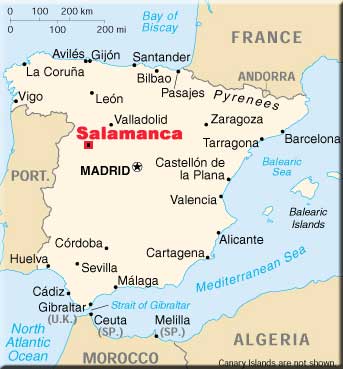
Salamanca is a beautiful city, located southwest of Valladolid, where I am staying.

map_salamanca

Here’s a photo in case you’re not a huge fan of geography.

While this trip was super interesting and very fun, I have to point out that it rained pretty much the whole time (7 hours) that we were there. I had an umbrella and boots, and somehow I still ended up with a soaking wet backpack and sad, damp socks. This put a bit of a damper (DAMPer, haha) on the excursion. Regardless, it was still a really cool trip. We rode a bus the whole way there, for an hour and a half. It was a pretty nice bus and the route was probably very scenic, but I slept almost the entire way. Right when we got there, we were given 25 minutes for the ill-prepared students to buy umbrellas and ponchos. The rest of us got to explore the shops a bit. I got gifts for my little sister and my high school Spanish teacher, which was a fun experience. In one of the shops, I helped translate a conversation between the shopkeeper and some tourists. It almost made me feel like a bilingual grown up or something.

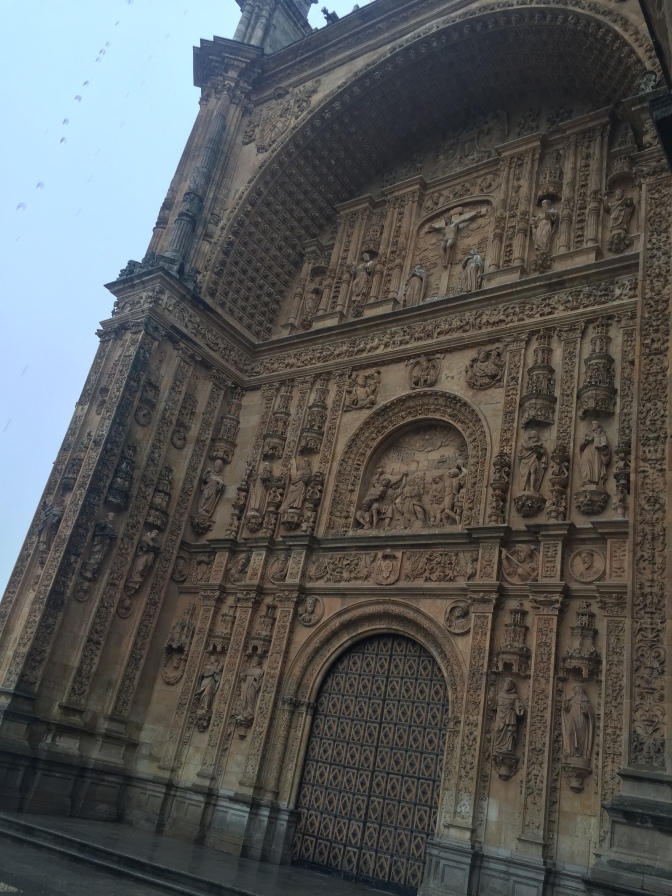
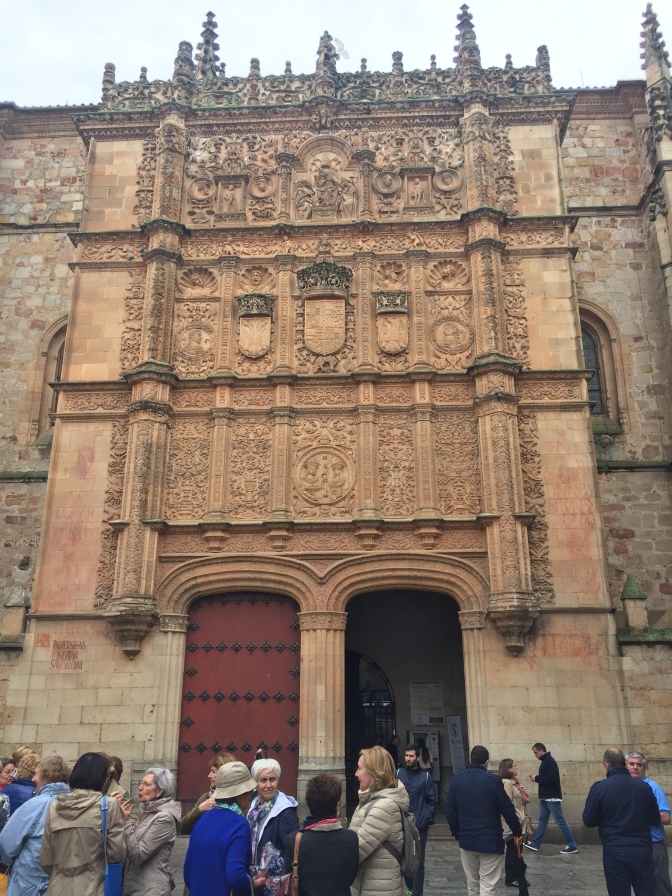
Anyway, after the super short shopping trip, were began our tour of the city. First, we saw the Convento de San Esteban.

IMG_5897

We had two great tour guides while we explored the city, but between the pouring rain and the chitchat of the students from the other university (in English… *eye roll*) I didn’t manage to hear much. I did hear that while the nuns and monks lived in separate buildings (monks lived in this one, nuns were in a building close by), there are underground tunnels that connect them!

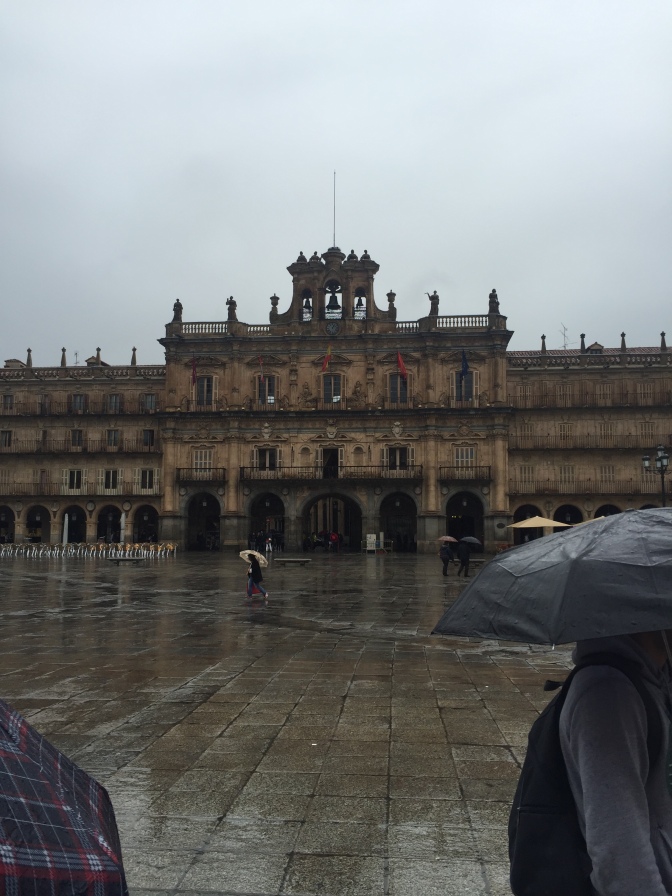
IMG_5904

Next we walked over to the Plaza Mayor. I learned that in Spanish cities, the Plaza Mayor unifies three ideas (bear with me, since I heard all this in Spanish!): the city’s government, its economy, and its culture/history. You can see the city hall in my picture, which is the government part. The shops around the perimeter of the plaza are the economy part. Although I didn’t get a picture, there are images of famous Spaniards on the three other walls of the plaza to represent the culture part. One side is conquistadores, one side is writers/philosophers, and the last side is important political figures. Apparently, when the mayor of the city dies, his body is carried around the plaza three times. I think I like this Plaza Mayor better than the one in Valladolid, because in my opinion it is much more beautiful – and honestly, it seems to have better places to eat!

IMG_5909

Our next stop was actually the Casa de Conchas, but I honestly couldn’t hear anything and didn’t manage to get a picture, so here is a photo from the following destination, la Plaza de la Universidad. On this building, there is a rana (frog) that is hidden among the decoration, and it is said that if a student finds the frog, they will pass all of their classes. You can’t see the frog in this picture, but it’s on the right. I actually couldn’t find it by myself since I left my glasses in the USA, so I’m probably going to fail everything but it’s fine.

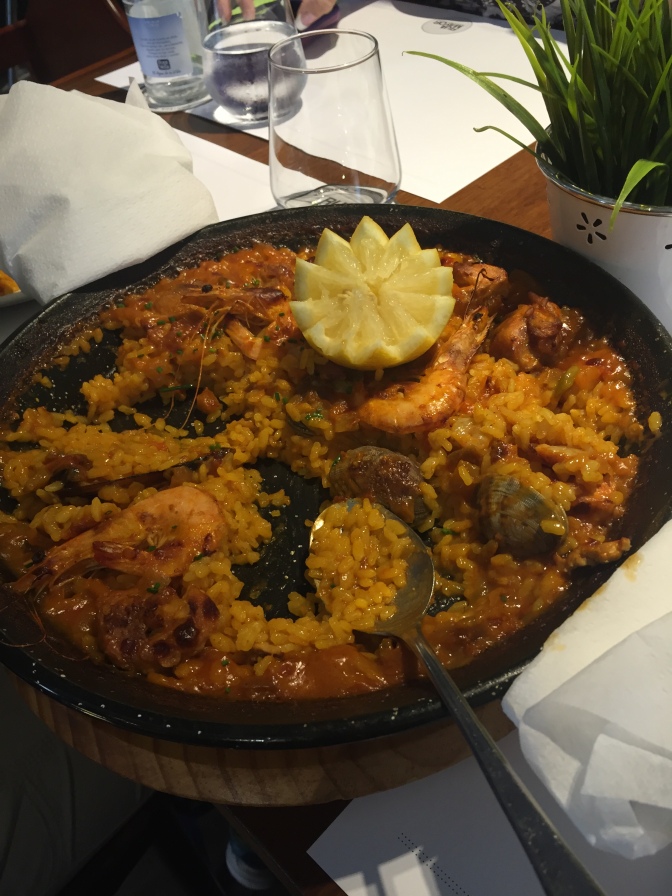
After, we were allowed an hour and a half of free time to get comida (lunch). A group of my friends and I went to a very nice restaurant (Amanda and I haven’t been able to remember it’s name). I ate, for the very first time… traditional Spanish paella!

IMG_5914

I really enjoyed the paella, though some of the seafood wasn’t my favorite. I didn’t really like eating the shrimp, because they had eyes and faces and legs, and I felt like they were very cute and friendly. They tasted really good though so I guess it’s okay.

Anyway, afterwards we went to… drumroll… LA CATEDRAL!

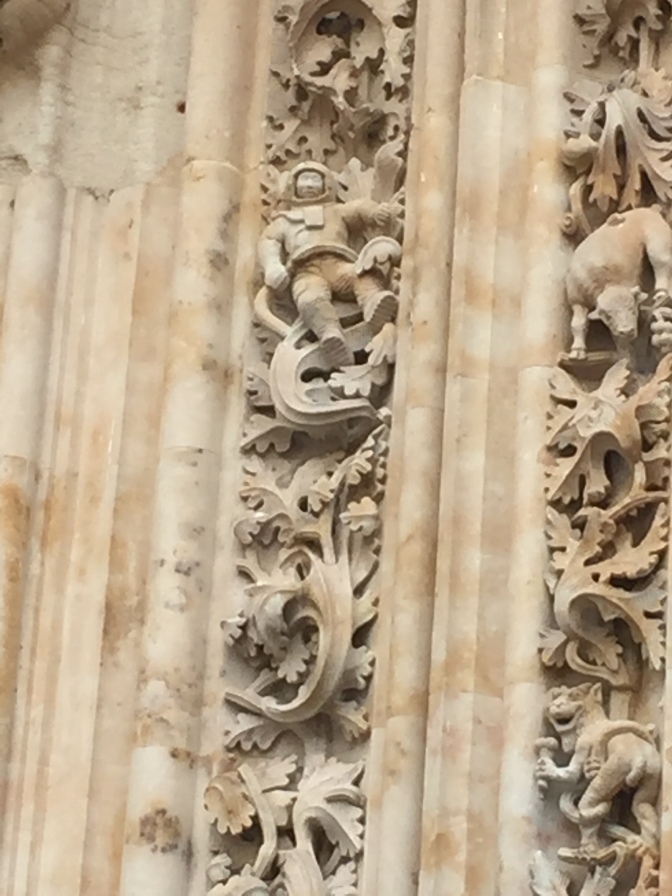
IMG_5918

Somehow, this is the only picture I ended up taking of the outside of the cathedral, and it’s a picture of an astronaut. Our two tour guides had conflicting perspectives on this new addition to the cathedral. One said that it was a great way to keep recording world history, and that someday in a few hundred years students would look at it and think it was an amazing piece of history. Our other guide, on the other hand, hated the astronaut. He said its ruining the building and that the artist just wanted to be famous. I have to agree, it looks a bit strange and I don’t think it makes much sense to include it.

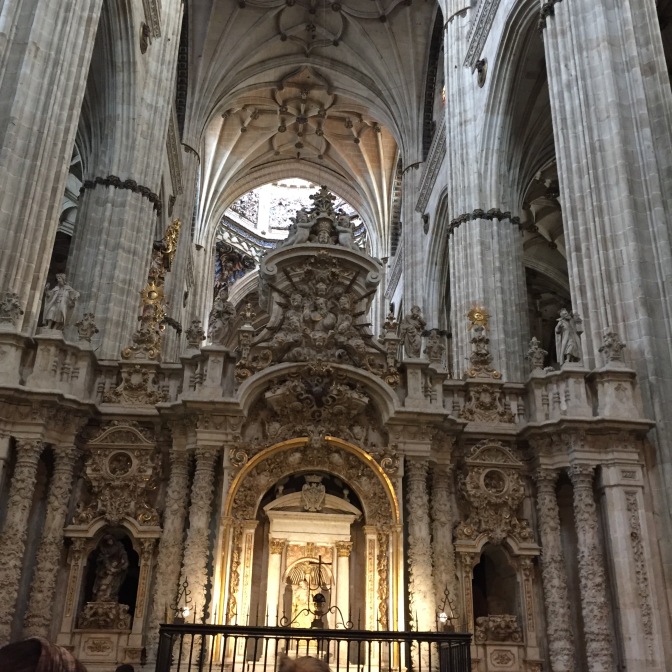
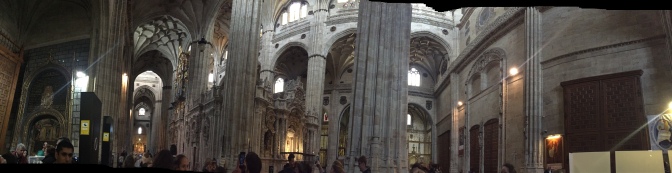
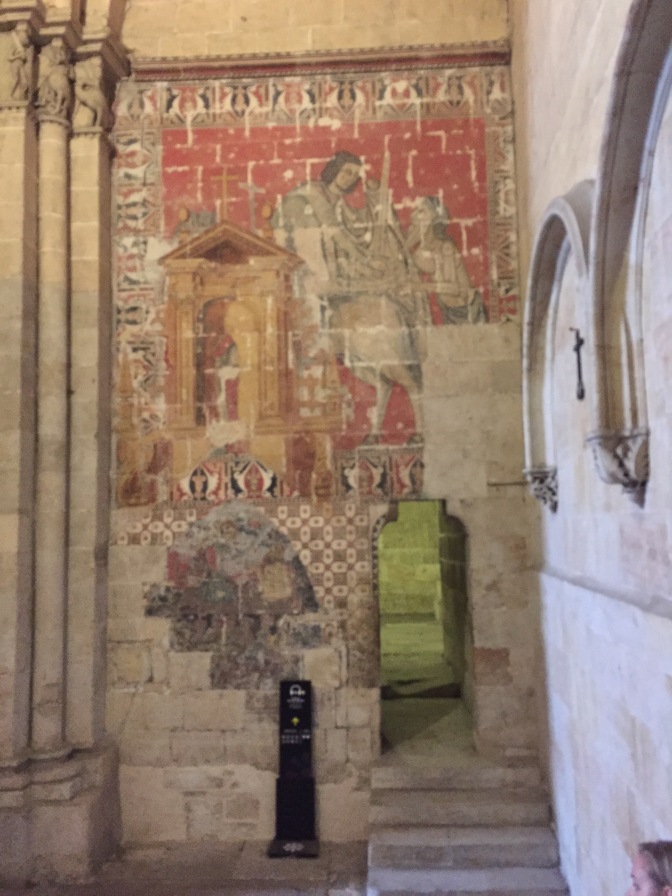
Each major Spanish city has its own cathedral, but Salamanca is special because it has two! The second church was built right next the first, instead of on top of it. Here’s some pictures that I took inside the cathedral:

IMG_5924

IMG_5921

IMG_5928

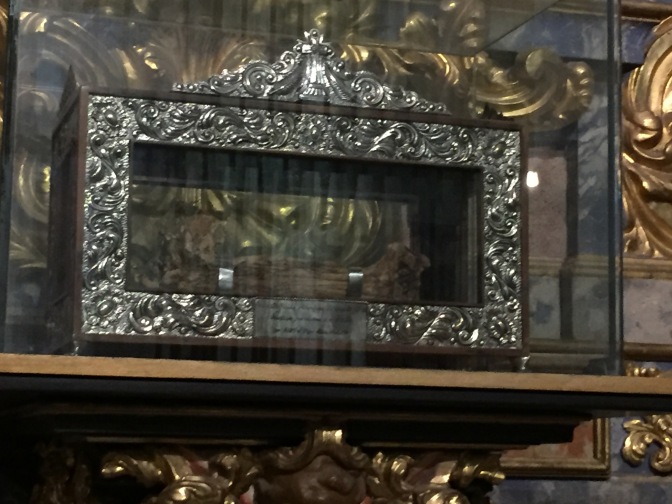
Plus there was a severed arm, which is always cool:

IMG_5927

I really liked Salamanca, because it is a city so full of history. Every place we went, we got to learn something that would be interesting to all audiences. Everyone I talked to was very nice and helpful. Before going on the trip, I read a bit about it on the Internet, and I think it exceeded my expectations. I especially enjoyed seeing the Plaza Mayor and eating the paella. I felt a little strange in the cathedral, because everyone else seemed to be Catholic and knew what was going on, but I was a bit lost at times. Compared to Valladold, Salamanca seems a lot bigger! I haven’t been inside the cathedral in Valladolid, but I have seen it from the outside. While it’s beautiful, it doesn’t hold a candle to Salamanca’s cathedral(s) (in my opinion). My Spanish abuela told me that Salamanca was much prettier than Valladolid, but I thought they were pretty even! Salamanca also seemed to have less open space than Valladolid. Additionally, there was a little train/tour bus that almost ran me over several times in Salamanca… they don’t have that in Valladolid, so that’s a plus:)

All in all, Salamanca was a great experience. I can’t wait until next week, when we head to Segovia. Hasta luego!

IMG_5929

Categories
Japan Uncategorized

Study aboard to japan

0527161116a0527161019a

Categories
Japan

Nara and Kyoto and their differences

20160527_103119

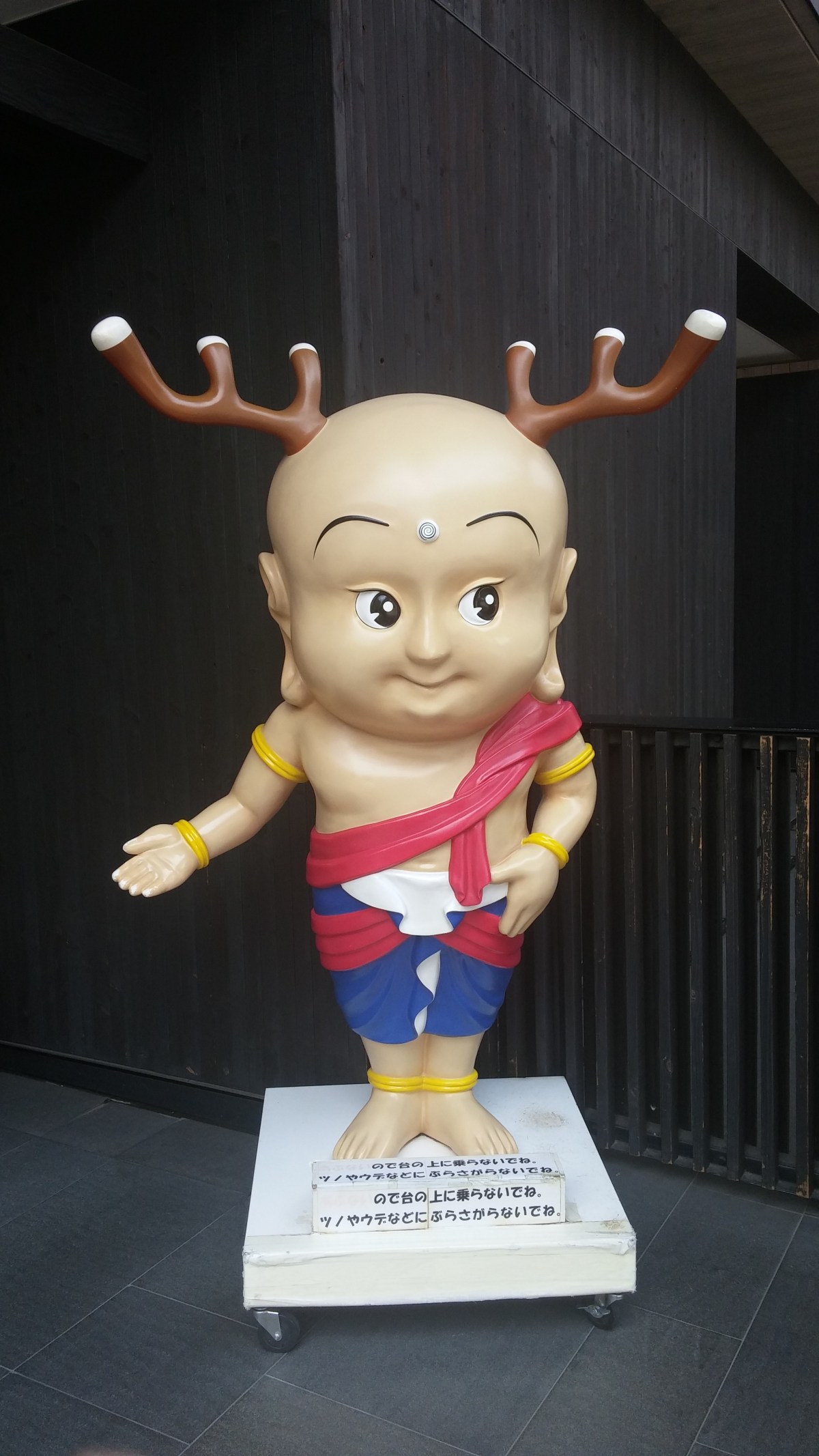
To me the big difference between Nara and Kyoto was that Nara was more of what I expected it to be. And I thought that Nara was this small little town that is only known for its deer. But I was wrong, Nara is actually a pretty nice size, maybe like Akron. It’s a very touristy city too, everywhere you go you can see deer merchandise, signs, or cartoons. With Kyoto, I thought that it was going to be a really old city where the buildings aren’t really that modern. But Kyoto is a busy bustling city. And they are very modern, with so many shops.

20160527_130021

One thing that I found interesting was, of course, the deer. It was so odd to see the deer just roaming around, being very friendly and calm with people. It was like a fairy tale to me. What I can tell so far is that Japanese culture is very in tune to nature, so I was thinking maybe that’s a reason why they let the deer roam around. I just wonder, how did this all start? It must have took awhile for the deer to get used to people. And do deer have any cultural significance?

20160527_160133

A key concept that I found interesting in Japan is that the Japanese take bits of different cultures or ideologies and then make them their own.
For example, in Kyoto there was a Buddhist shrine within a Shinto shrine/temple. This really proves the point that many Japanese don’t follow just one religion. Which makes sense — both reglions have greatly influnced Japanese culture — it would be hard to just choose one. And I think that this helps people have more of an open mind when it comes to learning about different ideas.

Categories
Spain

Why Spain?

The DISSTA: Study Abroad in Spain program is geared for students who are studying Spanish already. While abroad, they take culture, grammar and conversation classes at the Universidad de Valladolid in the target language. In only one month they earn 6 credits in the language! This puts them half way towards their minor and gives them an insight into the language and culture that is incomparable. While studying at Valladolid, students live with a host family and experience first-hand Spanish food and culture. UA offers weekly evening trips to cities in Castilla-Leon and day trips on the weekend to discover more of Spain. The trip ends with 3 days in the capital, Madrid. A month goes by fast so stay tuned to our flurry of activities!
IMG_20160525_173212593_HDR
We finally arrived!