Categories
Copyright

Senate IP Subcommittee Hearing on DMCA Exposes Notice-and-Takedown Problems for Artists and Authors

The following post comes from Yumi Oda, an LLM Candidate at Scalia Law and a Research Assistant at CPIP.
U.S. Capitol buildingBy Yumi Oda

On June 2, the Senate Subcommittee on Intellectual Property held a virtual online hearing entitled Is the DMCA’s Notice-and-Takedown System Working in the 21st Century? The hearing focused on the effectiveness of the Section 512 notice-and-takedown system under the Digital Millennium Copyright Act (DMCA). In what he described as “the longest opening statement” he had ever made, Chairman Thom Tillis (R-NC) first acknowledged the pressing issues of police brutality against African American communities and the COVID-19 crisis. He also emphasized the urgency of the hearing’s agenda considering creators’ ever-increasing dependency on the internet ecosystem during the pandemic. Notably, the deep sorrow over racial injustice and pledge of solidarity was shared among and acknowledged by each panelist throughout the hearing.

The panelists included: Don Henley, Musician and Songwriter; Jonathan Berroya, Interim President and CEO of Internet Association; Douglas Preston, President of The Authors Guild; David Hansen, Associate University Librarian and Lead Copyright & Information Policy Officer of Duke University; Abigail Rives, IP Counsel of Engine; Kerry Muzzey, Independent Classical & Film Composer of Kirbyko Music LLC; Meredith Rose, Policy Counsel of Public Knowledge; and Jeff Sedlik, President of Sedlik Photography. These panelists represented content creators and users of all sizes, highlighting the different types of stakeholders who are impacted by Section 512.

Originally seen as a compromise between copyright owners and online service providers (OSPs), Section 512 limits OSPs’ liability for copyright infringement in exchange for their reasonable efforts to police online piracy, including the duty to remove pirated content promptly once notified. However, as the recent Section 512 report by U.S. Copyright Office concluded, the notice-and-takedown system “is not achieving the balance Congress originally intended.” As such, this was the third hearing of a year-long review of the DMCA, which was expected to offer more practical—and potentially more divisive—insight into the notice-and-takedown system as compared to the first two hearings that were more academic in nature.

Senator Tillis stressed the issue of scale, which was highlighted in the first hearing this past February where CPIP’s Sandra Aistars and Mark Schultz both testified. There, Professor Rebecca Tushnet of Harvard Law School argued that small and medium entities typically only receive a small number of takedown notices, and an additional mandate could drive them out of business and increase market concentration. To conclude his opening statement, Senator Tillis maintained that the current system is badly failing both content creators and users, potentially requiring an entirely new system to tackle online piracy. To this end, he noted that he and Senator Patrick Leahy (D-VT) sent a letter to the Copyright Office asking for its input on how to best design an anti-piracy takedown system.

On the first panel, Eagles member Mr. Henley and bestselling author and journalist Mr. Preston spoke on behalf of creators, asking for DMCA reform and advocating for a notice-and-staydown system. Mr. Henley described how he was compelled to testify for the sake of millions of people working in the music industry whose voices are unheard, stating: “I come here out of a sense of duty and obligation to those artists, those creators who paved the road for me and my contemporaries, and for those who will travel this road after us.” He further vowed not to be silenced by what he conceived as a targeted attack by “Big Tech,” referring to a Washington Post op-ed that was published a couple of days before the hearing.

Describing it as “a relic of a MySpace era in a TikTok world,” Mr. Henley testified that the DMCA is outdated, patently unfair for music creators, and has been abused by “Big Tech” for over 20 years. In particular, he blamed large digital platforms for turning a blind eye to online piracy in the hopes of keeping traffic and ad income, hiding behind the Section 512 safe harbor protections, paying license fees well below the market price, and failing to share the fair burden of policing (despite having such capability) at the cost of the creative community. Mr. Henley emphasized the need for equitable compensation to be awarded to creators amid the pandemic because digital platforms will be the only reliable sources of income for music creators for some time.

Mr. Preston echoed Mr. Henley’s frustration over the one-sided system. Remembering the traumatic, sickening feeling of first encountering a book piracy website that listed his whole life’s work, Mr. Preston described how the current notice-and-takedown system leaves many creators in “enraging and disheartening” situations with no solution, analogous to “being mugged every single day.” Especially, Mr. Preston explained how he came to give up on filing notices after seeing the same pirated content promptly and repeatedly resurfacing under a different URL. He noted that rampant piracy has led to a 42% decrease in full-time U.S. authors’ writing income in the last decade, making it almost impossible for anyone to make a living writing books.

In contrast, Mr. Berroya, representing internet companies, and Mr. Hansen, representing research libraries and universities, claimed that the DMCA is working just fine. Mr. Berroya contended that the DMCA works as Congress intended, and the Copyright Office’s Section 512 report was inconsistent with his professional experiences. He alleged that the notice-and-takedown system allows copyright owners (whom he believed should be responsible for policing their own works) to take down their content quickly, incentivizes users’ creation and distribution, and encourages tech companies to develop tools beyond DMCA compliance, resulting in the present “golden age of content creation.” He emphasized that the DMCA merely sets a floor, not a ceiling, leaving potential room for further cooperation between creators and digital platforms.

Similarly, Mr. Hansen argued that Section 512 generally works as designed. To facilitate distribution of educational and research content, he would favor a system where content stays online unless a clear showing of infringement is made. He requested Congress to consider the “unintentional consequences” of revising Section 512, hoping that academia would not be an “afterthought” for them.

Mr. Berroya was in the hot seat most frequently on the first panel. His position supporting the status quo directly contradicted the shared, inherent belief that the DMCA should be revised, drawing questions from Senator Tillis, Ranking Member Christopher Coons (D-DE), and Senator Richard Blumenthal (D-CT). His argument largely and repeatedly relied on the potential for old fashioned dialogue, but some Senators were evidently not convinced in light of the other witnesses’ testimonies.

On the second panel, Mr. Muzzey and Mr. Sedlik represented independent artists making a living by creating and licensing their works. While recognizing the effectiveness of YouTube’s Content ID, to which he said he was “very lucky” to have access, Mr. Muzzey described how the DMCA is like “a tiny David” facing “tech Goliaths.” Specifically, in response to each takedown notice for 110,000 infringing videos located on YouTube, he received a counternotice claiming fair use incorrectly “100% of the time,” at which point he is given 10 days to file a lawsuit or the content is reinstated. This means, for a one-person, small business owner like Mr. Muzzey, the DMCA practically offers “no remedy.”

Mr. Sedlik is another artist who has had to spend countless, unproductive hours submitting takedown notices. He explained the dilemma he constantly faces: He needs to enforce his copyrights to maintain their values, but these lost hours leave him less time to create new works. Noting that the the presence of innumerable takedown notices by no means indicates success, Mr. Sedlik proposed several possible revisions to the DMCA.

On the other side of the table was Ms. Rives in support of startups and Ms. Rose on behalf of Public Knowledge. Ms. Rives contended that Section 512 is generally working well, without which many online platforms would not have existed. Referencing points made by Professor Tushnet, she argued that revising the DMCA, even slightly, would “shift the ground underneath today’s startups.” For example, she contended that imposing a duty to monitor, such as with filtering tools, would be ineffective or too costly for most startups.

Ms. Rose shifted the discussion by listing three situations where the current notice-and-takedown system puts users’ freedom of speech at risk, namely, bad DMCA takedown notices, problematic algorithmic enforcement, and most importantly, the inappropriateness of letting a private third party remove someone’s access to broadband without due process. Siding with the status quo, she warned that “asking for greater power and fewer safeguards is akin to discarding a tank and asking for a nuke.”

At the conclusion of the hearing, Senator Tillis reiterated the need to recognize the scale of infringement, and he promised to seek a path forward that would let copyright owners flag clearly infringing content so that it stays down—but without causing an undue burden on businesses and individual users.
Categories
Copyright

Senator Ron Wyden, Stop Harming Independent Creators

the word "copyright" typed on a typewriterHere’s a brief excerpt of a post by CPIP Senior Scholar Eric Priest and Professor Sean Pager that was published at IPWatchdog:

As the current pandemic eviscerates jobs throughout our economy, Congress has a rare opportunity to improve the lot of one long-besieged group of workers: creators. Authors, songwriters, photographers, artists, filmmakers, and many other creative professionals are the lifeblood of American cultural innovation. For decades, however, unfettered copyright infringement online has undermined their livelihoods. The effect is especially pronounced for “creative upstarts”—independent creators who rely on copyright income. Many creative upstarts report widespread piracy of their works but feel powerless to stop it. Now, Senator Ron Wyden (D-OR) seems intent on unilaterally terminating a bill that if passed would give indie creators—thousands of whom live in Wyden’s state of Oregon—much needed access to justice. ***

Right now, Congress can fix this problem and offer much-needed support to creators by passing the Copyright Alternative in Small-Claims Enforcement (CASE) Act. This bill would create a voluntary, low-cost small claims system for copyright cases. The CASE Act provides for simplified procedures that the average person could navigate without an attorney, greatly reducing costs. The bill also contains a progressive feature critical for access to justice: cases would be handled remotely, further reducing the cost and burden for both parties. And the process is voluntary so each party can weigh for itself the pros and cons of participating.

To read the rest of the post at IPWatchdog, please click here.

Categories
Intellectual Property Theory

Sean O’Connor’s Historical Take on Different Types of Intellectual Property

The following post comes from Professor Camilla Hrdy of Akron Law. It originally appeared on Written Description, and it is reposted here with permission.

a pair of glasses, an apple, and a stack of booksBy Camilla Hrdy

I truly enjoyed Sean O’Connor’s new paper, forthcoming in the George Mason Law Review, called “Distinguishing Different Kinds of Property in Patents and Copyrights.” It is somewhat sui generis. But I guess I would describe it as a ‘legal-historical take on how people perceived intellectual property in the past, with theoretical implications for IP today.’

In O’Connor’s overarching framework, there are two kinds of IP. On one side, are preexisting state-of-nature rights in secret technical know-how and unpublished expression that is maintained through labor and attempts at secrecy. (I’ll call this type 1 IP). On the other side, are state-sanctioned patents and copyrights that are obtained in exchange for revealing those first rights to the public. (I’ll call this type 2 IP).

These two forms of IP are separated from one another by the act of “publication” on the part the author or creator, which transfers the rights from the private to the public sphere; and by the involvement of government, which protects exclusivity in order to encourage the act of publication and transfer to the public sphere.

O’Connor paints this distinction between type 1 and type 2 IP in a historical light, suggesting that the first came first, and the second came second. People have always had “de jure or de facto rights to maintain secrecy and exclusivity of private knowledge and skills[,]” he writes. The second type of property came only later, when “states formalized ad hoc exclusive patent and copyright grants into roughly standardized, deeded, and assignable property.” (3-4)

There is way too much good in this article to give it justice in a summary. It is full of insights on medieval publishing practices and Venetian patents, and is beautifully written. I highly recommend the full article for anyone looking for “something completely different.”

In my read, the big upshot for current IP theory is O’Connor’s view that the historic purpose of patents and copyright was “not to incentivize the authorship or invention of new things. Such creation had been taking place, often quite prodigiously, throughout human history.” (2). Instead, it was to encourage sharing those things by transferring them from the private to the public sphere. “From at least Greco-Roman antiquity,” O’Connor writes, “an important divide was acknowledged between the private and public spheres. An intentional act of publicare was required to transfer something from the private to the public.” (2). He argues that this transfer would not occur as frequently as desirable without patents and copyrights.

The lesson from this historical account, suggests O’Connor, is that if patents and copyrights were abolished or weakened, we might get more secrecy and less publicness.

“[W]e could inadvertently recreate the excessive use of secrecy that arguably hindered progress—in the sense of building off of existing knowledge available in the public sphere—in the time before proto-patents and proto-copyrights emerged in the Renaissance. Robust IP protections, together with appropriate limits on abuses of state-granted exclusive rights, will encourage more creators and innovators to choose the public disclosure and commercialization route.” (54).


This normative account seems similar to the oft-stated “exchange for secrets“/disclosure function of patents, as well as the Kitchian commercialization/coordination function. But O’Connor suggests that the “exchange for secrets” premise and its brethren are more central than is appreciated. The message I get is: lest we return to the Dark Ages, we must retain incentives to make secret knowledge and expression public.

Another upshot, albeit not much emphasized in the paper, seems to be that the “monopoly” concern many have with intellectual property is generated primarily when the state takes back what people know or already have access to — in other words, where one person’s patent or copyright impinges on other peoples’ preexisting rights to what they previously knew or used commercially. O’Connor refers to this briefly, writing (in his discussion of post-sale restrictions on chattels and the like)

[t]his view adopted Lord Coke’s sense of “monopoly”—as a legal term of art—as meaning only instances where the state took something back from the public that it previously had (most relevantly, when exclusive rights were given to a few individuals for a commodity or commercial trade that the public freely used or practiced before). (47).


I thought this interesting tension between type 1 IP and type 2 IP could have been drawn out more.

The main quibble some people might have with the article is at odds with why I personally like it. I like it because it’s original and out-of-the-box, and isn’t shy about reaching bold normative conclusions and engaging in some speculation. O’Connor sometimes provides extensive insights into what people thought about IP, going back as far as ancient and even hunter-gatherer times. (See, e.g. p. 22). But of course we can’t know that much about what people thought about IP, especially not at the theoretical depth O’Connor engages in, except what we can glean from the sources where certain individuals discussed it. I am often amazed at how many relatively rich accounts we have from Jefferson, Washington, and others during the creation of the American patent and copyright regimes in the late eighteenth century, and it still seems like it’s not enough, with conflicting versions coming out all the time. On the other hand, maybe O’Connor’s willingness to take creative leaps is better than saying “well I can’t tell you what I think they thought because I don’t have the data.”

Categories
Copyright

The AM-FM Bill and the Status of Terrestrial Music Broadcast Performance Rights

The following post comes from David Ward, a rising 2L at Scalia Law who is working as a Research Assistant this summer at CPIP.

U.S. Capitol buildingBy David Ward

This past Wednesday, the Senate Intellectual Property Subcommittee, led by its Chairman, Senator Thom Tillis (R-NC), held a virtual online briefing on the current state of music rights. Specifically, members of the music and broadcast industry debated a bill called the Ask Musicians for Music Act (AM-FM Act), which would create new terrestrial broadcast performance royalties for sound recordings. Some of the biggest names in the music and broadcast industry were invited to testify, including: Harvey Mason Jr., CEO of the Recording Academy; Curtis LeGeyt, COO of the National Association of Broadcasters (NAB); Dr. Richard Burgess, CEO of the American Association of Independent Music (A2IM); Scott Hunter, Executive Director of the National Religious Broadcasters Music License Committee (NRBMLC); and Colin Rushing, Chief Legal Officer of SoundExchange. These panelists represented both musicians and broadcasters, big and small, who have been engaged in a sometimes-tense dialogue about the future of terrestrial broadcasting rights.

For a bit of background, all music we hear on the radio has two copyrights: a copyright for the musical work (lyrics, notes, melodies, chords that an artist writes), and a copyright for the sound recording itself (that a producer or sound engineer usually helps create). The scope of the discussion here is about performance royalties for the sound recording, not the musical work. It should be noted, however, that radio stations still need licenses to play musical works over the air. These are usually obtained in the form of blanket licenses from performance rights organizations (PROs) such as ASCAP or BMI. Blanket licenses allow radio stations to broadcast musical works from the PRO’s repertoire, within the scope of their agreement.

Under the current system, though, radio stations are not required to pay a per-performance royalty when they broadcast a sound recording over a terrestrial broadcast, such as AM or FM radio. However, stations that broadcast over the internet, or any other entity that broadcasts performances digitally (such as a webcast), are required to pay digital performance royalties for the sound recordings they play. This being the 100th anniversary of broadcast radio, the AM-FM Act currently being debated aims to end this exemption that radio broadcasters have enjoyed for exactly 100 years.

Curtis LeGeyt from the NAB and Scott Hunter from the NRBMLC represented the interests of broadcasters who have long opposed the introduction of such a royalty on their expense reports. Mr. Hunter testified that a terrestrial sound recording performance royalty is “unwarranted” and “unnecessary,” and that Congress has repeatedly declined to create such a right even as recently as 2018. In 2018, Congress passed the Music Modernization Act, which made major reforms to music copyrights, including extensive reforms of how royalties are set and split for both musical work and sound recording copyrights. Mr. LeGeyt argued that Congress could have created a terrestrial performance royalty for recordings then, but did not. He further argued that copyrights are statutory devices intended to promote the creation and distribution of works, and that allowing radio to freely broadcast sound recordings best serves the purposes of copyright law.

Both Mr. LeGeyt and Mr. Hunter characterized the exemption as a mutually beneficial promotional tool for performers and broadcasters. They warned of a decline in local radio programming and further financial instability of the industry if new royalties were mandated. Noting the financial instability caused by the coronavirus pandemic, they argued this could be fatal to many local radio stations in the short term as well as disrupt radio business models in the long term.

On the other side of the issue were Harvey Mason Jr. from the Recording Academy, Dr. Richard Burgess from A2IM, and Colin Rushing from SoundExchange. Mr. Mason began his testimony by contrasting our current system with the rest of the world’s; namely, most other major countries have sound recording performance royalties for terrestrial broadcasters. Musicians are some of the hardest hit in the economy during the pandemic, and despite this, Mr. Mason testified, they are still playing free online shows for the benefit of others. This situation underscored the need to do away with the outdated exemption from paying sound recording performance royalties enjoyed by terrestrial broadcasters. Mr. Mason suggested that the AM-FM bill could be included in a new coronavirus relief package, so musicians can recoup some of the losses they have recently experienced.

Dr. Burgess of A2IM echoed these sentiments, adding that musicians are the only copyright owners that are not allowed to profit from the performance of their works over terrestrial broadcasts. In Dr. Burgess’ view, musicians are being forced to subsidize the radio industry even though their own revenues have been decimated.

Colin Rushing of SoundExchange, the company that collects digital performance royalties for sound recordings suggested there are few, if any, major differences between digital and terrestrial broadcasts in the modern age. Most broadcasters are simulcasting online, which already requires them to pay digital (but not terrestrial) performance fees. Many apps and devices also seamlessly transition between digital and terrestrial broadcasts. He testified that the lack of terrestrial performance rights creates a loophole that distorts the market and creates an incentive to invest in old technologies, making it harder for new platforms to compete. Echoing many of his colleagues’ sentiments, he also reiterated that the U.S. is an outlier on this issue and that this harms music creators who are generating value for broadcasters, now more than ever.

Questioning by Senate offices drew out the sharpest differences in positions. Mr. LeGeyt of the NAB and Dr. Burgess of A2IM engaged in a (sometimes terse) dialogue. Mr. LeGeyt painted a picture of mom and pop broadcasters forced to consolidate operations and lay off workers, even before the pandemic, while Dr. Burgess was not persuaded that struggling musicians should therefore be forced to take promotion and exposure as the only consideration for radio plays.

Senator Coons’ office (D-DE) began the staff questioning with something that was likely on everyone’s mind: what level of royalties are at issue. Being the expert in performance royalties, Mr. Rushing from SoundExchange chimed in with a short “we’re not sure” answer. In his mind, and even in the minds of the broadcasters, it would be impossible to speculate. Either the free market would dictate the rates, or some other rate-setting entity would set the rate based on the current market rates. Since the current market rate is zero in the U.S., defining any number would be speculation. However, Mr. LeGeyt was quick to draw a comparison to the royalties they already pay for digital performances, and that they already inhibit the growth of mid- and small-sized broadcasters.

The costs incurred by mid- and small-sized broadcasters was another topic that came up frequently in responses. Mr. Mason of the Recording Academy made a point to share that the proposal would put a cap of $1.50 per day on terrestrial performance royalties for true small and local radio stations. Mr. Rushing of SoundExchange added to this, stating that even most larger radio stations would likely be paying less than $500 per year. The broadcasting representatives again pointed out the already constrained budgets of many stations and that any increase in costs would hurt the industry.

Perhaps the most contentious issue was the purpose of terrestrial radio in the music ecosystem, and the role of “promotion” in that ecosystem. Broadcasters argued that terrestrial radio is and always has been a public service. It provides weather, news, and other important public service announcements for free while also promoting musicians’ work. Therefore, broadcasters should not have to pay performance royalties, as they have not for a century. Music industry representatives, however, argued that providing a public service does not warrant profiting off others’ work for free.

Senator Tillis’ office asked the question that got to the heart of the “promotion” issue: whether radio mainly plays music that is already popular and does not need promotion, or whether sound recordings become popular because they are promoted on the radio. Mr. Rushing of SoundExchange offered his view that it is a bit of both. He and his colleagues did not contest that many artists benefit from the promotion and exposure of broadcast radio plays, but not all of them do. In their opinions, the free market should decide what the rates should be for sound recording performance royalties so that any artists who want to provide their product for free in exchange for promotion and exposure would be able to make that choice. The broadcasters argued that broadcast radio is different than other forms of media, and that the value of promotion has been time-tested.

Although all participants committed to continue good faith discussions on the matter, it does not bode well for a quick agreement that the radio sound recording royalty exemption has already reached its century mark.

Categories
Copyright

Scalia Law Students and CPIP Scholars Make an Impact in Copyright Office Section 512 Study

the word "copyright" written on a typewriterThe U.S. Copyright Office released its long-awaited report on Section 512 of Title 17 late last week. The Report is the culmination of more than four years of study by the Office of the safe harbor provisions for online service provider (OSP) liability in the Digital Millennium Copyright Act of 1998 (DMCA). Fortuitously, the study period coincided with the launch of Scalia Law’s Arts and Entertainment Advocacy Clinic. Clinic students were able to participate in all phases of the study, including filing comments on behalf of artists and CPIP scholars, testifying at roundtable proceedings on both coasts, and conducting a study of how OSPs respond to takedown notices filed on behalf of different types of artists. The Office cites the filings and comments of Scalia Law students numerous times and ultimately adopts the legal interpretation of the law advocated by the CPIP scholars.

The Office began the study in December 2015 by publishing a notice of inquiry in the Federal Register seeking public input on the impact and effectiveness of the safe harbor provisions in Section 512. Citing testimony by CPIP’s Sean O’Connor to the House Judiciary Committee that the notice-and-takedown system is unsustainable given the millions of takedown notices sent each month, the Office launched a multi-pronged inquiry to determine whether Section 512 was operating as intended by Congress.

Scalia Law’s Arts and Entertainment Advocacy Clinic drafted two sets of comments in response to this initial inquiry. Terrica Carrington and Rebecca Cusey submitted comments to the Office on behalf of middle class artists and advocates, including Blake Morgan, Yunghi Kim, Ellen Seidler, David Newhoff, and William Buckley, arguing that the notice-and-takedown regime under Section 512 is “ineffective, inefficient, and unfairly burdensome on artists.” The students pointed out that middle class artists encounter intimidation and personal danger when reporting infringements to OSPs. Artists filing takedown notices must include personal information, such as their name, address, and telephone number, which is provided to the alleged infringer or otherwise made public. Artists often experience harassment and retaliation for sending notices. The artists, by contrast, obtain no information about the identity of the alleged infringer from the OSP. The Office’s Report cited these problems as a detriment for middle class artists and “a major motivator” of its study.

A second response to the notice of inquiry was filed by a group of CPIP scholars, including Sandra Aistars, Matthew Barblan, Devlin Hartline, Kevin Madigan, Adam Mossoff, Sean O’Connor, Eric Priest, and Mark Schultz. These comments focused solely on the issue of how judicial interpretations of the “actual” and “red flag” knowledge standards affect Section 512. The scholars urged that the courts have interpreted the red flag knowledge standard incorrectly, thus disrupting the incentives that Congress intended for copyright owners and OSPs to detect and deal with online infringement. Several courts have interpreted red flag knowledge to require specific knowledge of particular infringing activity; however, the scholars argued that Congress intended for obvious indicia of general infringing activity to suffice.

The Office closely analyzed and ultimately adopted the scholars’ red flag knowledge argument in the Report:

Public comments submitted by a group of copyright law scholars in the Study make a point closely related to the rightsholders’ argument above, focusing on the different language Congress chose for actual and red flag knowledge. They note that the statute’s standard for actual knowledge is met when the OSP has “knowledge that the material or an activity using the material on the system or network is infringing” or “knowledge that the material or activity is infringing,” while the red flag knowledge standard is met when the OSP is “aware of facts or circumstances from which infringing activity is apparent.” This difference, the copyright law scholars argue, is crucial to understanding the two standards: while the statute uses a definite article—“the”—to refer to material or activity that would provide actual knowledge, it drops “the” to speak more generally about facts or circumstances that would create red flag knowledge. “In Congress’s view,” the comment concludes, “the critical distinction between the two knowledge standards was this: Actual knowledge turns on specifics, while red flag knowledge turns on generalities.”


The Office went on to state that “a standard that requires an OSP to have knowledge of a specific infringement in order to be charged with red flag knowledge has created outcomes that Congress likely did not anticipate.” And since “courts have set too high a bar for red flag knowledge,” the Office concluded, Congress’ intent for OSPs to act upon information of infringement has been subverted. This echoed the scholars’ conclusion that the courts have disrupted the balance of responsibilities that Congress sought to create with Section 512 by narrowly interpreting the red flag knowledge standard.

Scalia Law students and CPIP scholars likewise participated in roundtable hearings on each coast to provide further input for the Copyright Office’s study of Section 512. The first roundtable was held on May 2-3, 2016, in New York, New York, at the Thurgood Marshall United States Courthouse, where the Second Circuit and Southern District of New York hear cases. The roundtable was attended by CPIP’s Sandra Aistars and Matthew Barblan. They discussed the notice-and-takedown process, the scope and impact of the safe harbors, and the future of Section 512. The second roundtable was held in San Francisco, California, at the James R. Browning Courthouse, where the Ninth Circuit hears cases. Scalia Law student Rebecca Cusey joined CPIP’s Sean O’Connor and Devlin Hartline to discuss the notice-and-takedown process, applicable legal standards, the scope and impact of the safe harbors, voluntary measures and industry agreements, and the future of Section 512. Several of the comments made by the CPIP scholars at the roundtables ended up in the Office’s Report.

In November 2016, the Office published another notice of inquiry in the Federal Register seeking additional comments on the impact and effectiveness of Section 512. The notice itself included citations to the comments submitted by Scalia Law students and the comments of the CPIP scholars. Under the guidance of Prof. Aistars, the students from Scalia Law’s Arts and Entertainment Advocacy Clinic again filed comments with the Office. Clinic students Rebecca Cusey, Stephanie Semler, Patricia Udhnani, Rebecca Eubank, Tyler Del Rosario, Mandi Hart, and Alexander Summerton all contributed to the comments, which discussed their work in helping individuals and small businesses enforce their copyright claims by submitting takedown notices pursuant to Section 512. The students reported on the practical barriers to the effective use of the notice-and-takedown process at particular OSPs. Two problems identified by the students were cited by the Copyright Office as examples of how OSPs make it unnecessarily difficult to submit a takedown notice. Accordingly, the Office called on Congress to update the relevant provisions of Section 512.

Two years after the additional written comments were submitted, the Office announced a third and final roundtable to be held on April 8, 2019, at the Library of Congress in Washington, D.C. The purpose of this meeting was to discuss any relevant domestic or international developments that had occurred during the two prior years. CPIP’s Devlin Hartline attended this third roundtable to discuss recent case law related to Section 512, thus ensuring that CPIP scholars were represented at all three of the Office’s roundtables.

CPIP congratulates and thanks the students of Scalia Law’s Arts and Entertainment Advocacy Clinic for their skillful advocacy on behalf of artists who otherwise would not be heard in these debates.

Categories
Antitrust Biotech Patents Pharma

Recent Developments in the Life Sciences: The Continuing Assault on Innovation by Antitrust Plaintiffs in Lantus

By Erika Lietzan

dictionary entry for the word "innovate"In February, the U.S. Court of Appeals for the First Circuit held, in a direct purchaser antitrust action, that an innovative pharmaceutical company marketing an injectable drug product had “improperly listed” in FDA’s Orange Book a patent claiming a mechanism used in the drug’s delivery device. As I explain below, the ruling creates the specter of antitrust liability for steps taken in good faith to comply with a complex regulatory framework that overlaps in part with patent law. I explain below how the ruling puts biopharmaceutical innovators in a tough spot.

First, the legal framework.

Federal law requires each company that submits a new drug application to identify the patents that claim the drug or a method of using the drug (if a claim of patent infringement could reasonably be asserted against someone who made, used, or sold the drug without a license). The application cannot be approved, if the company fails to submit the required information on a patent that satisfies the listing standard. (See section 505(d)(6) of the drug statute, here.) FDA publishes the patent numbers and expiration dates in the “Orange Book,” which takes the form of a PDF and electronic database.

Federal law also requires a generic drug applicant to take a position with respect to every patent that claims the drug or a method of using the drug — effectively, every patent listed in the Orange Book. For every unexpired patent, the generic applicant has two choices, which dictate when its application can be approved. (There’s a third option for a patent claiming a method of using the drug, which isn’t relevant here.)

It can choose to wait for patent expiry, which means filing a “paragraph 3 certification.” In this scenario, FDA cannot approve its generic drug for market entry until expiry of the patent.

Or it can say that it plans to market right away, because its product doesn’t infringe the patent or because it thinks the patent invalid, which means filing a “paragraph 4 certification.” In this scenario, it must notify the innovator (and patent owner, if different). (I’ll just say “innovator,” going forward.) As far as this patent is concerned, FDA can approve the generic drug for market entry as soon as its review is complete and assuming the generic drug is otherwise approvable with one important exception. If the patent was listed before the generic drug company submitted its application, and if the innovator files a patent infringement suit within 45 days of receiving notice, then final approval of the generic application is stayed for 30 months or until a district court ruling in the generic company’s favor (whichever happens first). The paragraph 4 certification is considered an act of infringement, which creates federal court jurisdiction.

The patent listing mechanism is intended to facilitate litigation of patent issues before market entry, which both industries wanted. The generic companies wanted a way to litigate these issues before launching, for example, because doing so avoids the risk of damages (for more information, see my article on the history and political economy of the legislation). The scheme encourages generic companies to participate by offering 180-day exclusivity in the market for the first to file a (true) generic application with paragraph 4 certification, and it encourages innovators to participate by offering the 30-month stay that makes it possible for the patent to be litigated before the generic drug launches.

These rules apply to companies that file true generic applications, for exact copies of the innovator’s drug. And with one exception they also apply to companies that file a different type kind of abbreviated application known as a 505(b)(2) application. The distinction between the types of application isn’t critical here. The one exception is that companies filing 505(b)(2) applications with paragraph 4 certifications aren’t eligible for 180-day exclusivity.

Second, applying the framework to combination products in particular.

The listing standard — “any patent which claims the drug for which the applicant submitted the application or which claims a method of using such” — has proved vexing to interpret.

In 1994, FDA published its first regulation interpreting this provision, stating that it meant “drug substance (ingredient) patents, drug product (formulation and composition) patents, and method of use patents,” but not “process patents.” But there have been questions about a variety of patent types over the years, and in 2003 — responding in part to requests for elaboration — the agency revised its regulations to provide more details about what it required to be listed and what was not to be listed.

At issue here: what to do with combination products. These products combine two regulated components, such as a device and a drug. Two discrete products packaged together for use together are, together, considered a “combination product.” But the phrase also means a single finished product that comprises two regulated components — thus a drug and device produced as a single entity. Combination products thus include prefilled drug delivery devices — such as a prefilled drug syringe, an auto-injector, or an metered dose inhaler (see here).

The question is whether the statute requires companies to list patents associated with the device component of these products.

FDA considered this in the 2003 rulemaking. The final regulation is 21 C.F.R. § 314.53, but the agency’s explanation of the regulation in the Federal Register — which has the formal status of an “advisory opinion” — is just as important.

The agency decided that “patents claiming a package or container must not be submitted.” Packaging and containers are “distinct from the drug product.”

Several commenters also argued that patents claiming devices that are “integral” to the drug product or require approval should be listed. FDA offered what it labeled as a “response.” The agency didn’t write that these patents “should” be listed, or that they “should not” be listed. Instead it said that a “drug product” is the drug in its “finished dosage form” — meaning the form administered to patients. And, it added, the current list of “dosage forms for approved products” — which appears in an appendix to the Orange Book — includes “aerosols, capsules, metered sprays, gels, and pre-filled drug delivery systems.” Elsewhere it wrote that a patent claiming the finished dosage form “must be submitted for listing.”

Now, the litigation and First Circuit ruling.

Sanofi-Aventis holds the approved marketing application for Lantus (insulin glargine recombinant), a long-acting human insulin analog used in treating diabetes. At first the company sold Lantus in multiple dose vials and in cartridges for use with a (separate) insulin delivery device. In 2007, however, FDA approved a supplemental application for sale of Lantus in a single-patient-use prefilled injector pen.

Sanofi has listed several patents in connection with Lantus. In connection with the prefilled pen, the company listed U.S. Patent No. 8,556,864 (drive mechanisms suitable for use in drug delivery devices), which issued in October 2013 and expires in March 2024. The parties agree that the ’864 patent claims the drive mechanism used in the Lantus pens, and FDA would not have approved the prefilled pens without a showing that the pen (including the drive mechanism) ensures patients safely receive accurate doses. But — and this turned out to be critical in the end — the patent doesn’t mention insulin glargine. Nevertheless, according to the agency, an insulin injector pen is a prefilled drug delivery system. And this makes it a dosage form. And patents claiming dosage forms must be listed.

In 2013, Eli Lilly submitted a 505(b)(2) application for a copy of Lantus, which it planned to market as Basaglar. It included a paragraph 4 certification to the ’864 patent and to various other patents as well. Sanofi brought suit. The case settled on the morning trial was scheduled to begin, with Lilly agreeing to pay for a license to launch in December 2016, seven years before patent expiry.

The plaintiffs in this antitrust litigation are drug wholesalers. They claim, among other things, that Sanofi improperly listed the ’864 patent. (As far as I can tell, Lilly didn’t raise the issue.) The district court dismissed their first amended complaint, pointing out that FDA has interpreted “drug products” to include “prefilled drug delivery systems” and that patents claiming drug products must be listed. The plaintiffs amended their complaint, but the district court dismissed again on largely the same grounds. Under a “reasonable interpretation” of the agency’s regulations, Sanofi had to submit the patent for listing. So, it couldn’t have been improper conduct to list the patent.

The First Circuit’s ruling came as a shock. In a unanimous decision, Judge Kayatta wrote that Sanofi had improperly listed the patent. He reasoned as follows. First, the statute and regulations call for listing of patents that claim the drug, and the patent doesn’t even mention the drug. Second, in 2003 FDA didn’t adopt the proposal that devices “integral” to the product should be listed. Instead, the agency said that companies should list patents that claim the finished dosage form. And this patent doesn’t, the court wrote; it claims a device that can be combined with other components to produce the finished dosage form.

Finally, the implications.

The innovative pharmaceutical industry has asked FDA repeatedly since 2003 — at least four times, including in citizen petitions — to clarify whether patents directed to drug delivery systems are supposed to be listed, if they don’t recite the drug’s active ingredient or formulation. The agency never answered these requests.

Although FDA’s failure to respond has been frustrating, it is my understanding that most companies — consulting with patent and regulatory counsel — have concluded these patents should be listed and that, in fact, they list them, and FDA publishes them. I have always thought this was the best reading of what FDA wrote in 2003. At the very least, it is a reasonable reading of what FDA wrote. It is deeply concerning that the First Circuit now purports to answer this question for the agency — no, these patents do not satisfy the listing standard — in litigation to which FDA was not a party and could not explain its interpretation of the statute or its expectations.

The decision is also fundamentally hostile to pharmaceutical innovators. The Hatch-Waxman scheme — statute, regulations, guidance, and precedent — is complex, and figuring out how it applies in any particular situation can be tricky. There are other unresolved listing issues, which companies and their counsel work through in good faith. The lesson here seems to be that an innovator trying to navigate uncertainty about the listing requirements does so at its peril.

On the one hand, failing to list a patent that satisfies the criteria has serious consequences. Listing is not voluntary; the statute requires it. The company must declare (“under penalty of perjury”) that its patent submission is “accurate and complete.” The patent submission form reminds the company that “a willfully and knowingly false statement is a criminal offense” under 18 U.S.C. § 1001. (And at least in theory, FDA would reject an application that lacked the required patent information, though I don’t know if this has ever happened or if it would happen.) Most importantly, failing to list a patent means there is no paragraph 4 certification, and thus no artificial act of infringement, and no opportunity to enforce the patent before generic market launch. Failing to list also passes up the benefit of the 30-month stay. And there may be concern that failure to list a patent is some sort of admission against the innovator’s interests in litigation.

On the other hand, listing a patent that doesn’t satisfy the criteria attracts antitrust scrutiny, presumably because the listing places an administrative burden on generic applicants and might trigger a stay of approval. And this case shows that a hostile court may disagree with the company’s reading of the statute, regulations, Federal Register, and precedent. Even if a company adopts what appears to many to be a reasonable interpretation of the patent listing requirements, a court might interpret the listing requirements on its own — without the benefits of FDA’s views — and force the company into expensive and time-consuming antitrust litigation. Indeed, two bloggers recently praised the decision, recommending that generic companies “examine the Orange Book listings,” as they may contain a “rich vein” for antitrust claims.

To be sure, as the court wrote, Sanofi can try to show, on remand, that its submission was “the result of a reasonable, good-faith attempt to comply with the Hatch-Waxman scheme.” This would provide a defense to any liability under the Sherman Act for “antitrust injury caused by” the submission. But the burden has shifted to the company, and much of the language in the court’s opinion suggests that this will be an uphill battle. (E.g., “The statute and regulations clearly require that only patents that claim the drug for which the NDA is submitted should be listed in the Orange Book. The ’864 patent … does not fit the bill.”)

A postscript from the administrative law side of the table.

Consider a counterfactual.

As a preliminary matter, recall that FDA’s regulations require companies to list patents on drug products. These regulations also state that the phrase “drug product” refers to a drug in its “finished dosage form.” FDA has said, for years, that a patent claiming a finished dosage form “must be submitted for listing.” Finally, it has listed prefilled drug delivery systems as a type of “dosage form” in the Orange Book.

Now suppose that FDA had responded to the industry requests for clarification and stated definitively — given what I just wrote — that a patent claiming any component of a prefilled syringe must be listed? In my view, this would be a defensible position for the agency to have taken, given the statute, the regulations, and what it has written to date.

What would have happened if this hypothetical FDA decision had gone to the First Circuit for review, in a totally different kind of lawsuit? Would the First Circuit really conclude that the agency’s interpretation of the statute was unreasonable or impermissible (Chevron)? Would it really conclude that the agency’s interpretation of its regulation was “plainly erroneous or inconsistent with the regulation” (Auer)? And if we think that the courts would (or should) defer to FDA in this hypothetical case, how can Sanofi’s decision possibly have been unreasonable?

In the end, the First Circuit’s ruling contains a troubling lesson for pharmaceutical innovators. When navigating uncertainty about a patent’s status under the patent listing requirements, even if it seems reasonable to conclude that FDA would require listing and even if the agency won’t answer the question, listing the patent in good faith creates a serious risk of facing antitrust litigation. The alternative, equally unappealing, is to relinquish the opportunity to enforce the patent before generic market entry, which conflicts with the purpose and design of the Hatch-Waxman Amendments and undermines the value of the patent.

Categories
Copyright

IP Scholars File Comments with OSTP on Public Access to Scholarly Publications

shelves full of booksA group of intellectual property scholars filed comments yesterday with the Office of Science and Technology Policy (OSTP), asking it to forgo its plans to make all federally-funded scholarly publications free and open to the public upon initial publication. The comments were submitted in response to a notice of Request for Information (RFI) that was published in the Federal Register seeking recommendations “on approaches for ensuring broad public access to the peer-reviewed scholarly publications, data, and code that result from federally funded scientific research.”

While the RFI did not specifically mention intellectual property rights, it is clear that any proposal to provide free access to federally-funded scholarly publications would have significant ramifications for the copyright owners of those works. The comments argue that any such plan to further lessen the exclusive rights of these owners should be rejected as it “ignores and destroys the resource-intensive review, translation, and commercialization processes required to produce and disseminate these manuscripts” and “confuses the so-called public domain with the public sphere or market.”

The comments are copied below, and you can download them here.

***

Intellectual Property Scholars’ Response to OSTP Request for Information FR Doc. 2020-06622, Regarding “Public Access to Peer-Reviewed Scholarly Publications, Data, and Code Resulting from Federally Funded Research”

May 6, 2020

The Office of Science and Technology Policy (OSTP) issued a Request for Information: Public Access to Peer-Reviewed Scholarly Publications, Data and Code Resulting From Federally Funded Research on February 12, 2020 (RFI).[1] The undersigned intellectual property (IP) scholars submit these Comments under the extended deadline.[2] We appreciate this opportunity to share our views on this important topic.

The RFI directs comments along four vectors: (i) current limitations on effective communication of research outputs and potential responsive changes; (ii) possible actions by Federal agencies to increase free and public access to federally funded research results; (iii) benefits to American science leadership and competitiveness from “immediate” access to outputs of research funded in part by Federal agencies; and (iv) other “information that might be considered for Federal policies related to public access to peer-reviewed author manuscripts, data, and code resulting from federally supported research.”

OSTP has a long and storied history across the twentieth century and down to the present. The Office played key roles in developing both the federal agency research funding system and the technology transfer system that are central policy components in America’s success as the science and technology global leader. While many comments will likely be directed to copyright in the context of scientific journals as commercial market publishers, our contribution prompts OSTP to align any new publication policies with the longstanding science and technology research and development (R&D) policies enshrined in the Bayh Dole Act of 1980 and related regulations for different types of federal research funding.

Federal extramural[3] research funding is divided into four categories: procurement contracts, governed by the Federal Acquisition Regulation (FAR);[4] grants, governed by Bayh-Dole;[5] cooperative agreements, also governed by Bayh-Dole;[6] and “other transactions,” limited to the Department of Defense and arguably governed by neither FAR nor Bayh-Dole.[7]

The purpose behind the distinctions is central to our Comments on the RFI. Whereas procurement contracts are used for the Federal government to acquire goods or services for its own use as any other market purchaser, grants and cooperative agreements are used for private contractors to engage in R&D leading to knowledge and materials that will be used primarily outside of the government. Thus, while title, ownership, or control of procured goods and services can properly vest in the Government, as for any market purchaser, title, ownership, and control of research results funded by grants or cooperative agreements vests in the contractor under the fundamental allocation rule and purpose of Bayh-Dole.[8]

Accordingly, any sense that research results—including inventions, data, or materials (biological or otherwise)—are produced by, or on behalf of, the government is false. To the contrary, the fundamental premise of Bayh-Dole (originating in earlier patent and extramural research funding policies of both the Kennedy and Nixon Administrations) is that title to government funded extramural research results are best left to recipient organizations such as universities (“contractors” in Bayh-Dole parlance) to license to the private sector for commercialization.[9] This is because the Federal government had proven woefully unable to secure the “practical application” of basic and applied sciences research. This meant that the benefits of such research were not realized by the public.

The same logic applies to written materials produced by grant or cooperative agreement funded investigators discussing their research results. Scientific publishing ventures are subject to the same dynamics as are commercialization ventures for technology produced under federally funded research. As scholars have documented, reputable scientific publishing requires costly private investment to sustain the international gold standard of peer review and the level of quality production, graphics, and searchable databases that promote the progress of credible science.[10] While copyrightable works are not covered by Bayh-Dole, neither are they “government works” when produced by grant or cooperative agreement funding recipients. This remains true even after the Supreme Court’s recent decision in Georgia v. Public Resource Organization, Inc.[11] Works commissioned under a procurement contract may be government works, and perhaps even statutory work made for hire, provided there was an express writing to that effect and the subject matter fit within one of the nine enumerated statutory types of works.[12] But again, that is not what is going on in federally funded extramural research occurring under grants and cooperative agreements.

At most, Federal agencies hold a non-exclusive license to use research results arising under grants or cooperative agreements for government purposes.[13] This generally does not include providing these things to the general public as a government service. It is possible that the Government could do so if it was willing and able to pre-empt the entire private market for this product and deliver copies of the patent or copyright protected item to the market that are commensurate with the quality of market participants. But this would require appropriation of massive amounts of taxpayer dollars to recreate what the private sector already provides efficiently.

Further, the fully commercialized versions of goods, services, and peer-reviewed articles that derived in part from federally funded research results are nearly always downstream products produced without government funding. Thus, any government license to research results does not necessarily apply to these finished products. For example, if federal funding led to a patentable invention that could be used in a smartphone, the government license would apply only to that patent and not the entire phone. Likewise, for peer-reviewed publications: to the extent a government use license exists just by virtue of standard agency funding agreements, it only applies to the research results, perhaps in the form of written lab notes.

Accordingly, even OSTP’s 2013 Memorandum directing agencies to require federal funding recipients to allow free public access to the final version of peer-reviewed publications may have been overreach that undercuts Congress’ extramural research policy goals set out in Bayh-Dole. If the Federal government wants to provide peer-reviewed private market produced publications to the public for free, it can procure them through the normal FAR contract system. This will of course cost a lot of money. But the Federal government should not be trying to get for free through the grant and cooperative agreement channels what it would otherwise have to buy in the open market. This principle should apply equally to peer-reviewed scientific publications as it does to other commercial market goods that embody Bayh-Dole subject inventions. The government does not get these goods for free, nor can it direct how contractors make them available to the market.[14]

Romantic notions of “open science” often used to justify open access policies are often based on idealistic myths not supported by the history of science. To the contrary, many of the greatest scientists in the Western tradition were highly protective and secretive with their research. Their processes and data were, after all, their competitive edge in the race for scientific priority and a long and fruitful research agenda. The results of their scientific inquiry, couched as “discoveries” or new laws or principles of nature, needed to be open and replicable, but that did not mean the underlying data or processes did.

While some bemoan “duplicative efforts” as wasteful, many of the most famous scientific races in history were replete with secretive independent traversing of the same ground. In fact, the British Royal Society allowed presentations of even research results to be done in private for awarding scientific priority and credit. This meant that such results were not made public. Ultimately, science seems to work best as a competitive market—at least as far as spurring rapid and pioneering advances. Open access works against this in the vain hope that a non-competitive collective will be equally motivated to long hours and expensive research.

No matter how you look at it, government-mandated immediate open access for copyrighted peer-reviewed manuscripts ignores and destroys the resource-intensive review, translation, and commercialization processes required to produce and disseminate these manuscripts. It confuses the so-called public domain with the public sphere or market. The most important is the latter—are innovative, creative, and valuable new writings being made available to the public in vetted commercially viable forms, perhaps for a fee, or are we simply mandating that inferior versions are made available for free? What is better? History and the market have already given us the answer.

We strongly urge OSTP to refrain from reducing further the already market-disruptive regulation that allows a mere 12-month embargo to recoup major investments in producing and disseminating peer-reviewed publications. Pushing access sooner will destroy the scientific publishing sector—with nothing to replace it in scale or quality—as well as dampen the successful competitive marketplace of scientific research. It will also unbalance the successful premise and system of R&D based off technology transfer under Bayh Dole.

Sandra Aistars*
Clinical Professor of Law
George Mason University, Antonin Scalia Law School

Devlin Hartline
Assistant Professor of Law
George Mason University, Antonin Scalia Law School

Joshua Kresh
Deputy Director, Center for the Protection of Intellectual Property
George Mason University, Antonin Scalia Law School

Adam Mossoff
Professor of Law
George Mason University, Antonin Scalia Law School
Co-Chair of the Technology, Innovation, and Intellectual Property Program
Classical Liberal Institute, New York University School of Law
Senior Fellow & Chair of the Forum for Intellectual Property
Hudson Institute

Christopher Newman
Associate Professor of Law
George Mason University, Antonin Scalia Law School

Sean O’Connor
Professor of Law
George Mason University, Antonin Scalia Law School

Kristen Osenga
Austin E. Owen Research Scholar & Professor of Law
University of Richmond School of Law

Mark Schultz
Goodyear Tire & Rubber Company Endowed Chair in Intellectual Property Law
University of Akron School of Law


[1] 85 F.R. 9488 (Feb. 19, 2020).

[2] 85 F.R. 17907 (Mar. 31, 2020).

[3] “Extramural” refers to research outside government owned and operated facilities. “Intramural” would instead signify research done within government owned and operated facilities.

[4] A procurement contract is used when “. . . the principal purpose of the instrument is to acquire (by purchase, lease, or barter) property or services for the direct benefit or use of the . . . Government; . . . .” 31 U.S.C. § 6303.

[5] A grant agreement is used when “. . . the principal purpose of the relationship is to transfer a thing of value to the . . . recipient to carry out a public purpose of support or stimulation authorized by a law of the United States instead of acquiring . . . property or services for the direct benefit or use of the . . . Government; and . . . substantial involvement is not expected between the executive agency and the . . . recipient . . . .” 31 U.S.C. § 6304.

[6] A cooperative agreement is used when “. . . the principal purpose of the relationship is to transfer a thing of value to the . . . recipient to carry out a public purpose of support or stimulation authorized by a law of the United States instead of acquiring . . . property or services for the direct benefit or use of the . . . Government; and . . . substantial involvement is expected between the executive agency and the . . . recipient . . . .” 31 U.S.C. § 6305.

[7] See GAO, Intellectual Property: Information on the Federal Framework and DoD’s Other Transaction Authority (GAO-01-980T, Jul. 17, 2001) (Statement of Jack L. Brock, Managing Director, Acquisition and Sourcing Management and John B. Stephenson, Director, Natural Resources and Environment, before the Subcommittee on Technology and Procurement Policy, Committee on Government Reform, House of Representatives).

[8] Federal agencies can modify the standard clauses of funding agreements (grants or cooperative agreements) to vest title, ownership, or control of research results in exceptional circumstances, but those have to be justified and documented.

[9] See Sean M. O’Connor, The Real Issue Behind Stanford v. Roche: Faulty Conceptions of University Assignment Policies Stemming from the 1947 Biddle Report, 19 Mich. Telecomm. & Tech. L. Rev. 379, 387-412 (2013), available at http://www.mttlr.org/volnineteen/oconnor.pdf.

[10] See, e.g., Adam Mossoff, How Copyright Drives Innovation: A Case Study of Scholarly Publishing in the Digital World, 2015 Mich. St. L. Rev. 955 (2015).

[11] No. 18-1150, 590 U.S. __ slip op. (2020).

[12] 17 U.S.C. 101, 201(b).

[13] See, e.g., 35 U.S.C. 202(c)(4)

[14] While Bayh-Dole does provide “march-in rights” under 35 U.S.C. 203 that allow the funding agency to grant licenses to the subject invention to third parties, this is only in the case where a contractor fails to achieve “practical application,” in the sense of getting a product embodying the subject invention to the market.

* Affiliations given for identification purposes only

Categories
CPIP Roundup

CPIP Roundup – April 30, 2020


Greetings from CPIP Executive Director Sean O’Connor

Sean O'Connor

As we move into another month of stay-at-home here in the DMV—and perhaps some re-openings—we here at CPIP hope that you and yours are staying safe and healthy while we weather this crisis.

We continue to move forward, however. Our biggest news this month is the addition of Joshua Kresh as our new Deputy Director. Most recently an IP attorney at DLA Piper, he has worked at other major firms and is active in policy and new lawyer training with AIPLA and the Giles Rich Inn of Court. Joshua brings with him a patent-rich legal background, and he’ll be a valuable asset to the CPIP team and mission. We look forward to working with him and hope you wish him the best as he takes up this new role.

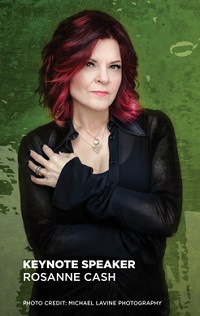
Like many other schools and organizations, Scalia Law School and CPIP have moved online for the time being—but that doesn’t mean we’ve stopped forging ahead and navigating new challenges. Because all George Mason University onsite events have been cancelled through August 8, we’ve moved our much-anticipated Music Law Conference back to September 10-11, 2020. We greatly appreciate the flexibility and understanding of every single person involved, not least our special guest and keynote speaker, Rosanne Cash. We hope you can still join us for the event in the fall—and, if you were unable to make the April dates, we hope this postponement works to your benefit!

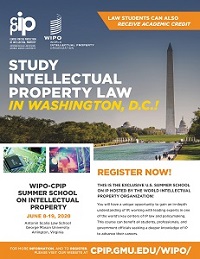
CPIP’s main event this summer, the WIPO-CPIP Summer School on Intellectual Property for this coming June 8-19, 2020, has moved online as a virtual program via WebEx. CPIP primarily will serve participants in the Americas, although we’ll also be welcoming a number of attendees from other parts of the world who have opted to stay with the U.S.A. program.

As of March, I joined the Board of Directors for The Circle Foundation, an organization in the Republic of Korea that supports innovation and entrepreneurship to strengthen the start-up ecosystem. This new role brings CPIP and Scalia Law School into another level of connection with Mason Korea’s excellent in-country campus and activities.

In April, I was a virtual guest speaker for CPIP Co-Founder—and now University of Akron Goodyear Tire & Rubber Chair of Intellectual PropertyMark Schultz’s WebEx event, Copyright and Social Justice: How the “Blurred Lines” Case Brought Overdue Recognition for African American Artist. The talk was co-sponsored by the Black Law Students Association and the Intellectual Property and Technology Law Association. Also in April, I gave a virtual presentation to admitted Scalia Law prospective students on Cannabis: Creating a New Regulated Economy.

CPIP and our colleagues have remained productive over these past weeks, from rescheduling events to publishing timely pieces. My article Distinguishing Different Kinds of Property in Patents and Copyrights—based on an early presentation at CPIP’s Annual Fall Conference—was published in the George Mason Law Review, and my recent op-ed, Avoiding Another Great Depression Through a Developmentally Layered Reopening of the Economy, appeared in The Hill. I was interviewed on WBAL for this piece as well. Finally, CPIP along with many other organizations from around the world signed onto an open letter to WIPO’s Director-General for World IP Day.

This past month and a half have undoubtedly been difficult. At CPIP, our thoughts go out especially to all creators and innovators who are facing new challenges as they strive to protect their livelihoods and intellectual property in this difficult time. We truly hope this May brings improvements, both locally and globally. Stay well, safe, and sane.


CPIP Welcomes Joshua Kresh as Deputy Director

Joshua Kresh

CPIP is proud to welcome Joshua Kresh to our leadership team! As Deputy Director, Joshua will report to CPIP Executive Director Sean O’Connor while managing and participating in CPIP’s day-to-day operations. Joshua will oversee CPIP’s academic research, policy, and fundraising efforts, working as well on planning and executing CPIP events such as conferences, meetings, fellowships, and roundtables. Joshua will also consult with Professor O’Connor and the other faculty directors to develop CPIP’s long-term academic and policy plans.

Before joining CPIP as Deputy Director, Joshua was an Associate with DLA Piper in Washington, D.C., where he practiced patent litigation. He received his law degree with honors from The George Washington University Law School, and he holds master’s and bachelor’s degrees in computer science from Brandeis University. Joshua is the Chair of AIPLA’s New Lawyers Committee and Co-Mentoring Chair of the Giles Rich American Inn of Court, and he is a registered patent attorney with the U.S. Patent and Trademark Office.

To read the rest of our announcement, please click here.


Music Law Conference with Rosanne Cash Moved to September 10-11, 2020

Rosanne Cash

We are excited to announce that the music law conference, The Evolving Music Ecosystem, which will be held at Antonin Scalia Law School in Arlington, Virginia, has now been moved to September 10-11, 2020. The keynote address will be given by Rosanne Cash, and it features two days of panel presentations from leading experts.

This unique conference continues a dialogue on the music ecosystem begun by CPIP Executive Director Sean O’Connor while at the University of Washington School of Law in Seattle. In its inaugural year in the D.C. area, the conference aims to bring together musicians, music fans, lawyers, artist advocates, business leaders, government policymakers, and anyone interested in supporting thriving music ecosystems in the U.S. and beyond.

For more information, and to register, please click here.


Registration Open for WIPO-CPIP Summer School on IP on June 8-19, 2020

WIPO Summer School flyer

CPIP has again partnered with the World Intellectual Property Organization (WIPO) to host the third iteration of the WIPO-CPIP Summer School on Intellectual Property from Antonin Scalia Law School in Arlington, Virginia, on June 8-19, 2020. Registration is now open, and we recommend that participants apply early, as we expect the program to be full. In order to accommodate the global response to COVID-19, we have moved the course online this year.

The course provides a unique opportunity for students, professionals, and government officials to work with leading experts to gain a deeper knowledge of IP to advance their careers. The course consists of lectures, case studies, simulation exercises, group discussions, and panel discussions on selected IP topics, with an orientation towards the interface between IP and other disciplines. U.S. law students can receive 3 hours of academic credit from Scalia Law!

For more information, and to register, please click here.


Spotlight on Scholarship

a pair of glasses, an apple, and a stack of books

Sean M. O’Connor, Distinguishing Different Kinds of Property in Patents and Copyrights, 27 Geo. Mason L. Rev. 205 (2019)

In this paper from our Annual Fall Conference, CPIP Executive Director Sean O’Connor explores the different meanings of “property” with respect to patents and copyrights. Prof. O’Connor explains that, contrary to the current conventional wisdom, the purpose of protection in early modern Europe was to incentivize public disclosure and commercialization, not private creation. To demonstrate this, he traverses the evolution of different kinds of property, including private knowledge, ad hoc grants of rights, rights in goods that embody intellectual property, and contractual assignments or licenses. Prof. O’Connor then describes how confusion over these different kinds of property has lead people to talk past each other in intellectual property debates, and he argues that a more nuanced understanding of the various property interests at stake might enable more constructive engagements going forward.

Charles Delmotte, The Case Against Tax Subsidies in Innovation Policy, 48 Fla. St. U. L. Rev. ___ (forthcoming)

In this paper from our Thomas Edison Innovation Fellowship, Charles Delmotte of NYU Law assesses the proposal for replacing intellectual property rights with tax subsidies for research and development (R&D) firms. Dr. Delmotte explains that innovation scholarship neglects economic insights on efficiencies, such as how information problems prevent the efficient operationalization of tax subsidies since innovation outcomes turn on unpredictable market processes that cannot be steered in advance. Turning to public choice theory, Dr. Delmotte points out that tax subsidies are particularly susceptible to diversion by the rent-seeking behavior of the politically affluent, and relying on economic realism, he argues that the best way to promote innovation is by securing stable intellectual property rights that undergird the background institutions that facilitate competition and entrepreneurship.


Activities, News, & Events

a lit lightbulb hanging next to unlit bulbs

In a new CPIP policy brief entitled The End of Patent Groupthink, CPIP Senior Fellow for Innovation Policy Jonathan Barnett highlights some cracks that have emerged in the recent policy consensus that the U.S. patent system is “broken” and it is necessary to “fix” it. Policymakers have long operated on the basis of mostly unquestioned assumptions about the supposed explosion of low quality patents and the concomitant patent litigation that purportedly threaten the foundation of the innovation ecosystem. These assumptions have led to real-world policy actions that have weakened patent rights. But as Prof. Barnett discusses in the policy brief, that “groupthink” is now eroding as empirical evidence shows that the rhetoric doesn’t quite match up to the reality. This has translated into incremental but significant movements away from the patent-skeptical trajectory that has prevailed at the Supreme Court, the USPTO, and the federal antitrust agencies.

We have several new posts on the CPIP blog, including the first installment of our new series on recent copyright law developments. In a post entitled Copyright Notebook: Observations on Copyright in the Time of COVID-19, CPIP Director of Copyright Research and Policy Sandra Aistars discusses several current copyright cases and issues, including how artists, authors, and copyright industries have taken unprecedented steps to bring enjoyment to our circumscribed lives. We published a similarly hopeful piece entitled IP Industries Step Up in This Time of Crisis on how bio-pharma industries and scientific publishers have made crucial information and materials available when they are needed the most. CPIP Director of Communications Devlin Hartline published a piece entitled Supreme Court Paves Way for Revoking State Sovereign Immunity for Copyright Infringement that looks at the Supreme Court’s decision in Allen v. Cooper. And CPIP Senior Fellow for Life Sciences Erika Lietzan published a piece entitled The Tradeoffs Involved in New Drug Approval, Expanded Access, and Right to Try on the various issues with approving new medicines.

CPIP Senior Scholar Kristen Osenga joined Professors Greg Dolin and Irina Manta in filing an amicus brief urging the Supreme Court to grant certiorari in Celgene v. Peter. The issue on appeal is one that was left unresolved in Oil States v. Greene’s Energy, namely, whether retrospective applications of inter partes review (IPR) proceedings under the 2011 American Invents Act are unconstitutional takings. The brief argues that, for several reasons, the Federal Circuit below reached the wrong conclusion in holding that they are not unconstitutional. First, IPRs are significantly different than ex parte and inter partes reexaminations, since patentees are not free to amend claims in order to resolve claim scope ambiguities. Second, empirical research shows that the economic impact of such IPRs is to devalue patents and chill investment. Finally, the cases relied on by the Federal Circuit to support its conclusion are inapposite or outdated. The amicus brief was featured in a recent article at IPWatchdog entitled Amici Urge Supreme Court to Grant Celgene’s Petition on Constitutionality of Retroactive IPRs.


Categories
C-IP2 News

CPIP Welcomes Joshua Kresh as Deputy Director

Joshua KreshCPIP is proud to welcome Joshua Kresh to our leadership team! As Deputy Director, Joshua will report to CPIP Executive Director Sean O’Connor while managing and participating in CPIP’s day-to-day operations. Joshua will oversee CPIP’s academic research, policy, and fundraising efforts, working as well on planning and executing CPIP events such as conferences, meetings, fellowships, and roundtables. Joshua will also consult with Professor O’Connor and the other faculty directors to develop CPIP’s long-term academic and policy plans.

“We are thrilled that Joshua is joining us as we expand CPIP further into innovation and international policy. Joshua’s extensive background in IP, as well as in computer science and bioinformatics, position him ideally to strengthen our tech and patent research,” said Professor O’Connor. “We also expect to leverage his policy and outreach work with AIPLA and the Giles Rich American Inn of Court to connect with the new generation of IP lawyers,” he continued.

Before joining CPIP as Deputy Director, Joshua was an Associate with DLA Piper in Washington, D.C., where he practiced patent litigation. He received his law degree with honors from The George Washington University Law School, and he holds master’s and bachelor’s degrees in computer science from Brandeis University. Joshua is the Chair of AIPLA’s New Lawyers Committee and Co-Mentoring Chair of the Giles Rich American Inn of Court, and he is a registered patent attorney with the U.S. Patent and Trademark Office. He previously served on the Intellectual Property Committee for the U.S. Court of Federal Claims Advisory Council.

About CPIP

The Center for the Protection of Intellectual Property (CPIP) is dedicated to the scholarly analysis of intellectual property rights and the technological, commercial, and creative innovation they facilitate. CPIP explores how stable and effective property rights in innovation and creativity can foster successful and flourishing individual lives and national economies.

Through a wide array of academic and public policy programming, CPIP brings together scholars, industry leaders, inventors, creators, and policymakers to examine foundational questions and current controversies concerning patents, copyrights, and other intellectual property rights. Ultimately, CPIP seeks to promote a healthy academic discussion, grounded in rigorous scholarship, and a well-informed public policy debate about the importance of intellectual property.

For more information about CPIP, please visit our website at: https://cip2.gmu.edu

Categories
Copyright

Copyright Notebook: Observations on Copyright in the Time of COVID-19

the word "copyright" typed on a typewriterThe Indomitable Spirit of Artists

Heroes are everywhere. We all give thanks for the selfless efforts of medical professionals, first responders, delivery drivers, gig economy workers, grocery and pharmacy staff, and the many other individuals who daily place themselves at the center of the coronavirus pandemic in order to make our quarantined lives safe and manageable. Now with working-from-home days blurring into nights and weeks rolling by in an undifferentiated haze, artists, scholars, and the industries that work with them are taking unprecedented steps to bring color, life, and knowledge to our circumscribed lives. Theatrical release movies are streaming to homes, operas and Broadway productions are available on the websites of shuttered arts venues to enjoy for free, bands are playing online gigs, authors have devised ways to make their works available for online enjoyment and distance learning in a myriad of settings, and scholarly publishers and newspapers are making relevant news reporting and research about the coronavirus free to users.

This should not be terribly surprising. Authors and artists of all varieties have always nurtured deep community roots. They are the very types of entrepreneurs and independent businesses who–alongside shop owners and local services–undergird our towns and cities and contribute to our well-being not only through their creativity, but also through their generosity when neighbors seek support. Writing in the New York Times, author David Sax said about the importance of small local businesses:

These are the entrepreneurs who matter now, more than ever. Not the ones on the covers of magazines, not the billionaires and recipients of venture capital checks, whose products we may use, but whose lives are distant and entirely removed from the day-to-day of our communities. If Casper, WeWork or some celebrity’s makeup company doesn’t survive this crisis, the impact on our lives will be negligible. Elon Musk will be fine. But if we lose our barber, the fruit store on the corner or the plumber who saved us in a flood, we will have lost a piece of ourselves.


This is the mindset with which I am approaching copyright in the time of COVID-19.

The National Emergency Library

Sadly, unprecedented moves by artists to share their work with the world on lockdown have not dissuaded opportunistic behavior online. Capitalizing on the shutdown, multi-millionaire Brewster Kahle of the Internet Archive, who has long argued for expanding rights to copy and make copyrighted works digitally available without the permission of authors, announced an “emergency” free library of copyrighted works, available to readers without a waiting list. While Kahle’s Internet Archive has been controversial since its inception, this new iteration apparently removes all limits on the number of users who can check out a work simultaneously – essentially turning it into an all-you-can-read free e-book service. This goes beyond even the limitations applicable to brick-and-mortar libraries that offer electronic lending.

Kahle’s opportunistic move did not pass unnoticed, however. Senator Thom Tillis, who as head of the Senate Subcommittee on Intellectual Property is deeply engaged in reviewing and updating U.S. intellectual property policy, promptly penned a letter to Kahle noting:

I am not aware of any measure under copyright law that permits a user of copyrighted works to unilaterally create an emergency copyright act.


Tillis is right – making the 1.4 million books Kahle has scanned into his database freely available to an unlimited number of users is inconsistent with current copyright law. Moreover, it is a step towards “losing a part of ourselves,” as Sax so aptly puts it. According to the Authors Guild, the mean income for a professional author is $20,300 annually. Authors are the epitome of the types of breadwinners various government programs should currently be trying to prop up, rather than barons of industry who should be taxed for the welfare of others.

While the Internet Archive has reportedly reached an agreement with the University of North Carolina Press and Duke University Press in the past weeks, this agreement is too little, too late, and it represents a pernicious trend among internet industry advocates to infringe first, seek agreement later. Terms like “efficient infringement” have emerged to describe such behavior.

Internet Archive’s behavior threatens to upend the promise of copyright protection as an invitation to a business negotiation between authors and larger, better resourced associates who wish to acquire rights in their works. Practitioners of so-called “efficient infringement” or “permissionless innovation” blatantly challenge individual authors to sue infringers if they dare, or otherwise to take whatever the infringer is willing to offer. The music industry has called this negotiating-with-a-gun-to-one’s-head approach the reason for the “value gap,” which is seen when comparing license terms among internet services that rely on protections like the Digital Millennium Copyright Act (DMCA) safe harbors to avoid liability for infringement and those services that negotiate for rights in the free marketplace. It is not surprising that lopsided business terms result in cases where infringers are empowered by circumstances or the law to adopt a “sue me” approach instead of negotiating in good faith.

Google v. Oracle

Another example of the “efficient infringement” approach to acquiring intellectual property is seen in Google v. Oracle. This long-litigated case will bring a Supreme Court holding on whether companies can slavishly copy the software code of others in order to save R&D and marketing costs. While this is a battle between industry behemoths, the outcome is important to anyone who relies on copyright protection because Google adopted the “sue me if you dare” approach and is effectively arguing that the bounds of fair use should incorporate instances of intellectual property appropriation to avoid business inconvenience.

This case has cost countless millions of dollars to litigate through two jury trials and two federal appeals and is now before the Supreme Court. If this is the path to enforcing one’s rights, it is clear that individuals and small businesses effectively own rights with no remedies should an infringer with deeper pockets emerge. The case likewise demonstrates how litigation can be inefficient and ill-suited to establishing business norms.

Despite the lengthy record, the case is quite straightforward. As Oracle so plainly put it in its brief:

Google has a problem. It committed an egregious act of plagiarism and now needs to rewrite copyright law to justify it. It cannot.

Java SE was one of the most creative and intricately designed works of software ever written. Its elegance attracted a wide audience of developers. Manufacturers of all sorts of devices and competing platform makers clamored to license the Java SE platform. Innovation flourished, just as the Framers imagined, and just as the rest of the American software industry thrived under those same constitutional incentives.

Google wanted its own platform. Given its vast resources, it could certainly have written one. But with a looming existential crisis, there was no time to innovate. Google could have taken any of the several Java SE licenses Oracle offered, but Google rejected Oracle’s compatibility imperative as inconsistent with its commercial objectives.

So Google opted to plagiarize and take the risk. Google copied 11,330 lines of computer code from Java SE, as well as the intricate organization and relationships among the lines of code. Google put the code in its competing product, Android, and successfully pitched it to Oracle’s customers, generating billions of dollars in revenue.


As I (together with other copyright scholars) argued in an amicus brief to the Court:

Congress has addressed the protection of computer software through the Copyright Act, including the code at issue in this appeal. In its 1980 amendments to the Copyright Act, Congress adopted the recommendations of the National Commission on New Technological Uses of Copyrighted Works (CONTU) and recognized computer programs as “literary works” enjoying the full extent of protection under the statute. Even at that relatively early stage in the development of the computer software industry, Congress considered versions of many of the arguments and issues present in this litigation, including whether computer code should be protected as a literary work, the degree to which computer programs can be considered “functional” or necessary “machine-controlled elements” (as opposed to expressive works protectable under the Copyright Act), and the interests of protecting and incentivizing innovation. After careful analysis and debate, CONTU recommended to Congress, and Congress legislated, that computer programs are protected under the Copyright Act with no qualifications that would differentiate software from any other type of literary work under the statute.

Since 1980, software development has grown exponentially, and its application continues to expand into new industries. Congress has amended the Copyright Act to address issues raised by technological advances in particular industries, by enacting, for example, the Computer Software Rental Amendments Act in 1990, the Digital Millennium Copyright Act in 1998, and the Music Modernization Act in 2018. Congress has not, however, amended the Copyright Act to decrease the scope of protection for computer programs or altered the statutory standard for fair use. Because the statutory protections for computer software remain the same as for all other creative works, adopting Google’s position would amount to a judicially created, software-specific amendment. It would also result in singling-out the protections afforded to computer programs, which contradicts the plain text of the Copyright Act.

Google and its amici try to characterize this as “efficient infringement,” or “permission-less innovation.” Yet its conduct is entirely contrary to the goals of copyright law as expressed in the Copyright Act or the Constitution. As a result, there is no reason to incorporate these considerations into fair use. It is clear that purposeful copying to avoid business inconvenience is not fair use, either in the statute as enacted or as interpreted by courts. Although Google casts its theory as “software-specific,” there is no reason why infringing parties could not regularly use it to justify copying any kind of protectable expression. Thus, to expand the fair use doctrine in the way Google advocates would set a dangerous precedent not limited to the software industry.


The Court has announced that it will begin hearing certain oral arguments by phone during the pandemic shutdown, but Google v. Oracle is not (yet) among those cases. As of April 13, 2020, the case was postponed to the October term.

One final (but somewhat different because it involves a state) recent example of an entity acting on the principle of “efficient infringement” occurs in the case of Allen v. Cooper. This case raises state sovereign immunity as a defense, but the underlying fact pattern is hauntingly similar.

Allen v. Cooper

The Supreme Court ruled in Allen v. Cooper that it violates state sovereign immunity to expose state entities to liability for alleged copyright infringement, absent the state’s consent.

As covered by Devlin Hartline here on the CPIP blog, the case involved “both actual and metaphorical pirates.” The actual pirate was Blackbeard, whose ship went down near the North Carolina coast in the 1700s. The metaphorical pirates are the government of the state of North Carolina, which allegedly infringed, then settled, then allegedly infringed again, the copyrighted photos and videos of the wreck shot by underwater photographer Rick Allen. Not content to repeatedly infringe Allen’s work, the state Legislature additionally passed a law deeming all photographs and videos made of North Carolina shipwrecks to be a matter of public record, and thus free for public use. Although Allen claimed that the state had committed willful infringement, the Supreme Court ultimately sided with North Carolina in ruling the Copyright Remedies Clarification Act of 1990 unconstitutional and holding that the Eleventh Amendment prohibits private actions against the state without the state’s consent.

As it stands, this case bodes ill for anyone who makes their living in the knowledge economy. If you create, research, code, write, document, interpret, or otherwise create intellectual work product that a state or state employee deems of value, the state apparently can take your work without permission. Although this is a more definitive statement of the lay of the land than was previously clear (since earlier case law had considered patent infringement, which differs in some relevant ways from copyrights), it is not altogether unexpected. Nevertheless, state infringements of copyright have been a growing problem. In the twenty years since the Fifth Circuit opined in Chavez v Arte Publico Press that there was no significant problem of copyright infringement by the states enabled by the Eleventh Amendment, more than 150 copyright infringement cases have been filed against states.

Unfortunately, the Court ruled that the CRCA was unconstitutional in its abrogation of state sovereign immunity because it did not properly link the CRCA to the prevention of unconstitutional injuries like the deprivation of property under Section 5 of the Fourteenth Amendment of the U.S. Constitution. Although Allen lost his appeal, the Supreme Court all but invited new legislation by Congress:

Congress likely did not appreciate the importance of linking the scope of its abrogation [of state sovereign immunity rights when it passed the CRCA] to the redress or prevention of unconstitutional injuries—and of creating a legislative record to back up that connection. But going forward, Congress will know those rules. And under them, if it detects violations of due process, then it may enact a proportionate response. That kind of tailored statute can effectively stop States from behaving as copyright pirates. Even while respecting constitutional limits, it can bring digital Blackbeards to justice.


Until Congress returns to normal business and can take this matter up, there are a few issues any potential drafters of new legislation should bear in mind.

First, as the Court explained, it will be important to link any new statute abrogating state sovereign immunity to the redress or prevention of unconstitutional deprivations under Section 5 of the Fourteenth Amendment. This means limiting any new legislation to violations of the Due Process Clauses of the Constitution. Next, it will be important to create a legislative record noting the scope of the problem justifying the proposal, given the Fifth Circuit’s comments in Chavez, which failed to recognize the volume of lawsuits being filed against states for copyright infringement.

It is also wise to articulate some of the numerous reasons why state remedies are inadequate to deal with the infringements of copyright by states or their instrumentalities. Because federal copyright law preempts state law, and copyright matters are tried only in federal courts, there are no plausible avenues for states to create novel, recognizable causes of action for infringement under their own laws. Moreover, in addition to the federal doctrine of state sovereign immunity, states are typically also immune from suit in their own jurisdictions; thus, there are not likely to be any state common law-created remedies. Because states are in the best position to articulate and demonstrate the adequacy of state remedies, if any, the burden of doing so should rest with the state.

Finally, it is worth considering that only federal law can provide the uniform protection against state infringements that authors require in order to publish their works. Thus, Congress should not delay acting to take up the Court’s invitation to bring state digital Blackbeards to justice.

Reflecting on the above cases and controversies as I cozy up to my laptop or sign into a virtual meeting, I am at once thankful for the technology that allows me to connect to others and to keep working, and fearful for my friends and clinic clients who are facing existential challenges to their livelihoods. These cases, similar to many before them, illustrate how intertwined we all are as users and creators of works. It is my hope that we all will use this quieter time to contemplate how interconnected we truly are, and that we will emerge from quarantine to embrace the spirit of the oft-heard virus slogan “we are all in this together.”