Categories
Copyright Innovation Patents Pharma

IP Industries Step Up in This Time of Crisis

the word "inspiration" typed on a typewriterThe global COVID-19 pandemic has challenged multiple aspects of modern society in a short time. Health and public safety, education, commerce, research, arts, and even basic government functions have had to change dramatically in the space of a couple months. Some good news in all this is the response of many companies in the intellectual property (IP) industries: they are stepping up to make sure crucial information and materials are available to speed research and development (R&D) towards vaccines, therapeutics, and medical devices. This blog post gives a sampling of the current initiatives facilitating the best innovative work the world has to offer.

Bio-pharmaceutical companies

Bio-pharmaceutical (bio-pharma) companies have been leading the charge, collaborating with academic and government partners to advance vaccine and therapy candidates on a fast track. While there have been isolated stories of some IP-related issues for rapid deployment and use of medical devices such as ventilators, the overall message is clear that research, development, and deployment have not been hindered by IP rightsholders. In fact, problems for distribution of medicines, personal protective equipment, and medical devices have little to do with IP rights but rather with hoarding and nationalistic impulses by governments.

Examples of rapid response are abundant. In February, the Department of Health and Human Services and its Biomedical Advanced Research and Development Authority (BARDA) partnered with the Janssen Research & Development unit of Johnson & Johnson to investigate a promising vaccine candidate. Janssen also committed to invest in the scale-up of production and manufacturing capacities to produce the vaccine candidate if it succeeds through clinical trials. By mid-March, 50 drugs that might fight the virus had been identified by collaborations of hundreds of scientists. Research continues apace and 80 clinical trials are proceeding, some on fast track status including a potential vaccine.

Beyond its core R&D, regulatory, manufacturing, and distribution mission, the bio-pharma industry is providing direct support to many places in need. This includes donations of medical supplies and personal protective equipment (PPE), existing treatments and medicines, and monetary and in-kind support.

At the same time, private incentives are more important than ever to get novel vaccines, drugs, and devices out to the world in safe, efficacious form and at scale. Dr. Anthony Fauci, Director of the National Institute of Allergy and Infectious Diseases, has long recognized that exclusive licenses of IP to bio-pharma industry partners are necessary to get innovative vaccines and drugs to the public:

“We always need a pharmaceutical partner,” [Fauci] told CQ Roll Call in October 2017. “I can’t think of a vaccine, even one in which we’ve put substantial intellectual and resource input, that was brought to the goal line without a partnership with industry. So this is a very natural process that we’re doing right now.”

He argued that for vaccines like Zika, which might predominantly be used in low-income countries, drugmakers don’t see a lot of financial incentive to get involved, which is why the NIH needs to grant exclusive licenses. But he argued that the process hasn’t had an impact on vaccine affordability.

“I have not seen in my experience situations in which we were involved in the development of a vaccine, particularly for low- and middle-income countries that really needed it, where the pharmaceutical companies priced it out of their reach,” Fauci said.

Likewise, as noted innovation scholars Daniel J. Hemel and Lisa Larrimore Ouellette point out in a recent article, Innovation Policy Pluralism, multiple vectors of public and private incentives and resources work together to advance pioneering innovation. Even in countries with a national health or single payer system, the government health program does not manufacture vaccines, drugs, or devices. Instead, it relies on private firms that in turn work closely and well with public and academic researchers to identify pressing problems, locate relevant basic science advances, and then translate those into actual vaccines, therapies, or devices.

The myth of patients and the public “paying twice” for bio-pharma innovation arising from public-private partnerships is pernicious. It conflates the distinction between basic science research and drug or vaccine candidates, on the one hand, with compounds that can be produced at scale, distributed safely, and that have passed arduous clinical trials to demonstrate safety and efficacy. In the United States, private companies must foot the entire bill for these clinical trials, which run into hundreds of millions of dollars over three phases that enroll thousands of subjects. Simply stated, publicly funded research does not result in a substance or compound that can be manufactured and distributed as is with no further R&D or clinical trials.

A related myth is that governments should use compulsory licenses and similar mechanisms to bypass IP rights holders in an effort to speed research and delivery of drugs and vaccines—when they emerge—to the public at low to no cost. First, there are important distinctions between compulsory licenses, U.S. Bayh-Dole style march-in rights, and government use under statutory provisions like 28 USC 1498, which we have outlined here. But across all of them, IP rights holders must still be compensated at a fair market license rate. Thus, there are no “savings” of IP royalties that could lower the price of vaccines or drugs. This makes sense as we don’t force manufacturers to produce drugs or vaccines for free. Even the Defense Production Act merely directs production, it does not require manufacturers to produce goods for free.

Finally, even if patents could be disregarded, we should be careful about encouraging “open source” or amateur production of regulated devices like ventilators. While the FDA has authorized some limited modifications of approved ventilators to accommodate the exigencies of COVID-19, this does not create a free-for-all in which wholesale changes or entirely new designs of the device or its components can be used. We need to take care that these modifications or new designs are actually safe and efficacious. Thus, while innovation like that of famed inventor James Dyson is most welcome, it does not actually solve the immediate problem of a shortage of ventilators as national regulators must still test and approve these untested devices for medical use. And at any rate, Dyson is not offering their new ventilators for free, even as they are designed to be produced at lower costs and sell at a lower point price in the market.

Thus, we need the bio-pharma industry more than ever to get through this pandemic. Large established firms and nimble start-ups have the resources and expertise to innovate and produce vaccines, drugs, and devices that will pass regulatory muster for safety and efficacy. Now is not the time to attack the patent system and weaken incentives for full-steam-ahead bio-pharma and medical device R&D.

Scientific publishing

Similar to the bio-pharma companies, publishers have been leading the way in making crucial scientific and technological information widely available in order to help fight the global coronavirus pandemic. An open letter from Kelvin Droegemeier, Director of the White House Office of Science and Technology Policy (OSTP) and member of President Trump’s Coronavirus Task Force, issued the call to arms last month (for example, see here, here, and here). Joined by government science leaders from eleven other countries—Australia, Brazil, Canada, Germany, India, Italy, Japan, Republic of Korea, New Zealand, Singapore, and United Kingdom—the letter called for publishers to make all research and data related to the coronavirus available immediately to the public. Publishers were quick to respond positively to the letter, pointing out that many journals had already been opened up to the public in an effort to support the dissemination of important scientific research and data when it is needed the most.

In the letter, the government science leaders stated: “To assist efforts to contain and mitigate the rapidly evolving COVID-19 pandemic, basic science research and innovation will be vital to addressing this global crisis. Given the urgency of the situation, it is particularly important that scientists and the public can access research outcomes as soon as possible.” The leaders asked the publishers to voluntarily agree to make their coronavirus-related publications, and the data supporting them, immediately accessible in PubMed Central and other public repositories. PubMed Central refers to the digital archive of biomedical and life sciences journal literature at the U.S. National Institutes of Health’s National Library of Medicine. The leaders also requested that the information be made available in both human and machine-readable format to allow for text and data mining using artificial intelligence.

The same day that the government science leaders sent their letter, Maria Pallante, President and CEO of the Association of American Publishers (AAP), issued a statement noting that the organization and its members would be happy to continue doing their part in making the research and data available to the public:

Publishers purposefully and continuously contribute to the advancement of science and medicine by investing billions of dollars in producing and disseminating high-quality, peer-reviewed journal articles. In this urgent and serious environment, we are grateful to the many publishers who are doing their part to communicate valuable discoveries, analyses, and data as quickly as possible, including by making their copyrighted articles pertaining to the virus freely available for public use during this crisis, in both text and machine-readable formats. Many publishers – both commercial companies and nonprofit societies – have been doing so for weeks.


Likewise, Elsevier, which specializes in publishing global information on science and health, has taken the lead in ensuring that relevant scientific information is available to the public. Back in January, Elsevier set up its Novel Coronavirus Information Center, offering free health and medical research information on the coronavirus and COVID-19, the disease that is causes. The Information Center is updated daily with the latest research information, including links to nearly 20,000 peer-reviewed journal articles on its ScienceDirect platform that are curated by clinicians and other experts. The information is intended for use by practitioners, such as nurses and doctors, as well by patients and their families. In response to the letter from the government science leaders, Elsevier announced in a press release that same day that the information would be made available to PubMed Central and other publicly funded repositories, including in machine-readable format that could be used for full text and data mining.

Kumsal Bayazit, the CEO of Elsevier, also released a statement that day underscoring Elsevier’s continued leadership on this front and concluding:

In working with the White House to improve the discoverability and utility of this important body of knowledge, we are now making it available to PubMed Central and other publicly funded repositories such as the WHO COVID database for full text and data mining and without any limitations for as long as needed while the public health emergency is ongoing. Through this partnership we hope to help researchers to keep up with the rapidly growing body of literature and identify trends as countries around the world address this global health crisis.


Numerous other publishers have stepped up as well. Wiley announced that it “is making all current and future research content and data on the COVID-19 Resource Site available to PubMed Central” and “other publicly funded repositories, such as the World Health Organization (WHO) COVID-19 database and Wellcome Trust.” The Resource Site was set up by Wiley in February in order to ensure rapid, public access to COVID-19 research, and in response to the request of the government science leaders, Wiley is now inputting that information into PubMed Central and other publicly-accessible databases. Likewise, Springer Nature stated: “We have made available, for free, all relevant research we have published and continue to publish, [and] are strongly urging our authors submitting articles related to this emergency to share underlying datasets relating to the outbreak as rapidly and widely as possible.” Other publishers, such as American Chemical Society, PLOS, STM Publishing, IOP Publishing, Emerald Group Publishing, F1000 Research, and eLife Research, have committed themselves to the cause of making their coronavirus research and data available publicly.

It is not just scientific research that is being freely shared by publishers. Textbooks for students affected by the pandemic have been made available as well. Wiley recognized the need “to ensure instructors who need to teach remotely have the necessary tools to help their students,” and it opened up its online textbooks so that instructors “can receive free access for their students for the remainder of the Spring 2020 term.” Barnes & Noble announced that it was joining VitalSource and other leading publishers to provide free online textbooks for students at schools where it operates a campus bookstore. Michael P. Huseby, CEO and Chairman of Barnes & Noble Education, said: “Our top priority remains providing schools and students with solutions during this time of unprecedented disruption, while simultaneously protecting the health and safety of our employees and customers.” Other textbook publishers, including Cengage, Gale, Cambridge University Press, among many others, have done the same in order to make the transition to online learning as smooth as possible by ensuring that students have online access to the textbooks that they need.

Categories
Patents

New CPIP Policy Brief: Barnett on the End of Patent Groupthink

a hand reaching for a shining key hanging among dull keysIn a new CPIP policy brief entitled The End of Patent Groupthink, CPIP Senior Fellow for Innovation Policy Jonathan Barnett highlights some cracks that have emerged in the recent policy consensus that the U.S. patent system is “broken” and it is necessary to “fix” it. Policymakers have long operated on the basis of mostly unquestioned assumptions about the supposed explosion of low quality patents and the concomitant patent litigation that purportedly threaten the foundation of the innovation ecosystem. These assumptions have led to real-world policy actions that have weakened patent rights. But as Prof. Barnett discusses in the policy brief, that “groupthink” is now eroding as empirical evidence shows that the rhetoric doesn’t quite match up to the reality. This has translated into incremental but significant movements away from the patent-skeptical trajectory that has prevailed at the Supreme Court, the USPTO, and the federal antitrust agencies.

Prof. Barnett first looks at how, for the past decade or so, the groupthink about “royalty stacking” and “patent holdup” has led to efforts by the FTC and DOJ Antitrust to limit the enforceability and licensing of standard-essential patents (SEPs) that underlie the global smartphone market. However, this past December, the DOJ and USPTO changed course, saying now that SEP owners should be treated just like any other patent owner and instead expressing concerns about the possibility of “patent holdout” by well-resourced infringers. As Prof. Barnett explains, the theories and stylized models that influenced these federal agencies are now being displaced by empirical data and real-world models that better reflect how the smartphone market actually operates.

Turning to the Supreme Court, Prof. Barnett discusses the overlooked dissent in Oil States by Justice Gorsuch, which was joined by Chief Justice Roberts, in 2018. On the one hand, the Oil States majority continued the Court’s recent spate of cases reflecting the groupthink skepticism towards patents. Justice Gorsuch’s dissent, on the other hand, perhaps reflects a nascent movement among some members of the Court to revisit this conventional wisdom. Prof. Barnett points out other underdiscussed examples of this growing phenomenon within the Court, from cabining the powers of the PTAB in SAS Institute, to questioning the PTAB’s immunization from judicial review in Cuozzo, to finding that federal agencies lack standing to invoke AIA challenges in Return Mail.

Finally, Prof. Barnett addresses the current move away from the old groupthink at the USPTO, where the current leadership has expressed its support of robust patent protection. For starters, empirical evidence has discredited the widely-repeated view that the USPTO is a “rubber stamp” that approves almost all patent applications. As to inter partes reviews (IPRs), Prof. Barnett notes that, early on, institutions and invalidations were the common outcome. While this could support the conclusion that “bad” patents were being struck down, the data is also consistent with the conclusion that the process is sometimes being used opportunistically to invalidate “good” patents. Responding to this concern, recent changes in the examination process, such as the narrower claim construction standard and broader claim amendment opportunities, may enable patentees to survive unjustified validity challenges at the PTAB.

Moving forward, Prof. Barnett suggests that the tide may be turning in the patent policy world as widely shared assumptions behind patent-skeptical groupthink are subjected to rigorous empirical scrutiny. The inescapable truth is that the U.S. innovation economy has flourished while commentators have suggested it should have languished under the supposed burdens of strong patent protection. Prof. Barnett points out that skeptics may have failed to appreciate how robust patents support private incentives to bear the high costs and risks of innovation and commercialization. Current signs of a “redirect” from the old groupthink are a welcome change for preserving the intricate infrastructure that supports a vigorous innovation ecosystem.

To read the policy brief, please click here.

Categories
Copyright

Supreme Court Paves Way for Revoking State Sovereign Immunity for Copyright Infringement

U.S. Supreme Court buildingLast week, the Supreme Court handed down its unanimous judgment in Allen v. Cooper, a copyright case involving both actual and metaphorical pirates. The actual pirate was Edward Teach, better known as Blackbeard, who captured a French ship in the Indies, renamed it Queen Anne’s Revenge, used it for piracy, and then later ran it aground near the North Carolina coast in 1718. The shipwreck was discovered nearly three centuries later in 1996 by a marine salvage company named Intersal. North Carolina, the owner of the shipwreck, entered into an agreement with Intersal for its recovery, and Intersal in turn hired Rick Allen, an underwater photographer, to document those efforts through video footage and still images.

Enter the metaphorical pirates. Allen accused North Carolina of infringing his copyrights in the videos and images, which led to a settlement agreement between the parties in 2013 and the state paying Allen $15,000 for any past infringement in 2014. However, even after the settlement agreement, Allen claimed that North Carolina continued to use his video footage and still images without permission. In fact, the state legislature passed a law declaring all photographs and video recordings of its shipwrecks to be a “public record” and thus free for all to use in 2015. Upset at the turn of events, Allen filed suit in the Eastern District of North Carolina in late 2015, with the Governor of North Carolina as the lead, nominal defendant.

Allen sought to have invalidated as unconstitutional and unenforceable North Carolina’s law purporting to inject his videos and images into the “public record,” and he claimed that the state was liable for willful copyright infringement. North Carolina moved to dismiss the complaint, arguing that it had sovereign immunity under the Eleventh Amendment, which bars suits against a state by private individuals in federal courts without the state’s consent. In its unanimous judgment, the Supreme Court sided with North Carolina, holding that the state’s sovereign immunity trumped Allen’s claims. This means that, as of now, states are free from liability for copyright infringement. But, in so holding, the Supreme Court paved the way for how Congress could revoke this constitutional protection from the states.

To understand the Court’s suggestion, a little background information is needed. Under the Copyright Act of 1976, it was generally understood that states could be liable for copyright infringement, even though this was not expressly spelled out in the Act. That implicit understanding was called into question in the Supreme Court’s 1985 decision in Atascadero, which held that the waiver of sovereign immunity by a state must be “unequivocal.” Courts then applied that holding to find that the Copyright Act did not clearly abrogate state sovereign immunity. This led to Congress passing the Copyright Remedy Clarification Act (CRCA) in 1990, which expressly abrogated state sovereign immunity for copyright infringement.

The CRCA, codified in Section 511, provides in part:

Any State, any instrumentality of a State, and any officer or employee of a State or instrumentality of a State acting in his or her official capacity, shall not be immune, under the Eleventh Amendment of the Constitution of the United States or under any other doctrine of sovereign immunity, from suit in Federal court by any person, including any governmental or nongovernmental entity, for a violation of any of the exclusive rights of a copyright owner provided by sections 106 through 122, for importing copies of phonorecords in violation of section 602, or for any other violation under this title.


When Congress enacted the CRCA in 1990, it was focused on exercising its Article I power under the Copyright Clause. And for good reason. A year earlier, in Union Gas, the Supreme Court had held that Congress could abrogate state sovereign immunity by utilizing an enumerated power under Article I—there, the Commerce Clause. However, in 1996, the Supreme Court expressly overruled Union Gas in Seminole Tribe, holding that Congress could not abrogate sovereign immunity under Article I. That decision was later walked back somewhat in Katz, where the Supreme Court carved out an exception in 2006 for the Bankruptcy Clause.

Allen argued that, as in Katz, an exception to Seminole Tribe should also be made for the Copyright Clause. The Court in Katz reasoned that the states submitted to the supremacy of the federal Bankruptcy Clause at the Constitutional Convention. So too, argued Allen, with the Copyright Clause. But Justice Kagan, who penned the opinion of the Court on behalf of herself and six other Justices, rejected this argument as foreclosed by Florida Prepaid, where the Court had held in 1999 that neither the Patent Clause nor the Commerce Clause could be used to revoke state sovereign immunity for patent infringement liability. Ruling for Allen here would mean overruling Florida Prepaid, and the Court, citing stare decisis, was unready to make that move.

But not all hope was lost for Allen. Section 5 of the Fourteenth Amendment provides another path to revoking state sovereign immunity. Under Section 5, Congress may pass “appropriate legislation” to protect persons from a state deprivation of property without due process of law. A law is “appropriate,” Justice Kagan wrote, where there is “a congruence and proportionality between the injury to be prevented or remedied and the means adopted to that end.” Infringement by the states certainly does deprive copyright owners of a property interest, the Court noted, but only if that infringement is intentional or reckless. Negligent infringement does not count. Nor does it count if the state offers an adequate remedy for the deprivation.

In assessing the “congruence and proportionality” of the CRCA, the Court examined the record behind it to understand the nature and extent of the state copyright infringement that Congress intended to address. The timing of the CRCA’s enactment becomes critical here. Recall that Congress thought it was legislating under Article I, not Section 5 of the Fourteenth Amendment, so it did not create a record geared for a Section 5 analysis. Nor did it narrowly tailor the CRCA to reach only intentional or reckless deprivations that were not adequately remedied by the states. Justice Kagan pointed out these shortcomings to hold that Allen’s Section 5 argument failed since the record was too thin and the CRCA swept too far.

The Court heavily discounted the evidence that was in the record when Congress enacted the CRCA. Indeed, Congress asked then-Register of Copyrights Ralph Oman to prepare a report documenting the problem. The lengthy report was a year in the making, and it included comments and letters from numerous copyright owners complaining about copyright infringement by the states. There were hearings in both the Senate and House that generated hundreds of pages of testimony. And both the Senate and House issued reports explaining the need for the CRCA. While the district court below found that there was “sufficient evidence” to sustain the abrogation of state sovereign immunity under Section 5, the Supreme Court was unimpressed with the evidence in the record.

However, the Court did provide a roadmap for how Congress could develop a satisfactory record and craft a statute that would pass muster under Section 5 of the Fourteenth Amendment:

Congress likely did not appreciate the importance of linking the scope of its abrogation to the redress or prevention of unconstitutional injuries—and of creating a legislative record to back up that connection. But going forward, Congress will know those rules. And under them, if it detects violations of due process, then it may enact a proportionate response. That kind of tailored statute can effectively stop States from behaving as copyright pirates. Even while respecting constitutional limits, it can bring digital Blackbeards to justice.


Thus, Congress could draft a more narrowly focused law abrogating state sovereign immunity for intentional or reckless copyright infringement, and it would be upheld if the record shows that the extent of the harm is proportionate to the response and that there are inadequate remedies available in the states. Congress has already gathered some relevant evidence. For example, there is the General Accounting Office report on state sovereign immunity for infringement actions from 2001 and there is the Senate hearing on state sovereign immunity and protection of intellectual property from 2002. Both of those records were generated when Congress realized that Article I might not support the CRCA after the Supreme Court handed down Florida Prepaid, and they contain further evidence of copyright infringement by the states.

If Congress were to hold more hearings, it could start by receiving testimony from the people and organizations that filed amicus briefs in support of Allen with the Supreme Court in this very case. The amicus briefs from Recording Industry Association of America et al., American Society of Media Photographers et al., Software & Information Industry Association, Oracle America, Dow Jones, Copyright Alliance et al., David Nimmer et al., Ralph Oman, and others highlight widespread copyright infringement by the states. Hopefully, Congress will take the hint from the Court and pass another law abrogating state sovereign immunity for copyright infringement. Sadly, it would probably not be too difficult for Congress to create a robust record that could survive judicial scrutiny under Section 5 of the Fourteenth Amendment.

Categories
Healthcare Pharma

The Tradeoffs Involved in New Drug Approval, Expanded Access, and Right to Try

The following post comes from CPIP Senior Fellow for Life Sciences Erika Lietzan, and it is cross-posted here from the Objective Intent blog with permission.

enlarged picture of a moleculeThis note explains some of the concepts swirling around in the media right now, relating to medicine approval. Much of what follows appears (or will appear) in an article on the U.S. “right to try” law, which I recently wrote with a colleague at the University of Bourgogne in Dijon, France. Some of the background discussion will be useful here.


Premarket Approval

A new medicine must be approved by FDA before it can be shipped in interstate commerce (effectively, before it can be sold commercially for use by patients). There are two pathways to market in the United States: a biologics license application for a biological drug and a new drug application for any other type of drug. FDA requires proof of safety and effectiveness, which takes the form of data from laboratory and animal (“preclinical” or “nonclinical”) testing as well as human (“clinical”) trials.

A variety of legal, scientific, and ethical considerations mean that developing the safety and effectiveness data for premarket approval of a medicine is iterative. That is, after trials in relevant animals show that it would be safe to begin testing in humans, the applicant begins with small safety tests (often in healthy volunteers) and moves gradually to larger and larger trials. During this time the medicine is considered “investigational” or “experimental.” And it can’t be introduced into interstate commerce.

The traditional approach involves three phases of testing.

  • Phase 1 trials entail the initial introduction of the investigational medicine in humans and focus on how the body reacts to the medicine — questions of absorption, distribution, metabolism, excretion, and side effects of increasing dose. These trials sometimes also generate early evidence of effectiveness, if the subjects are patients rather than healthy volunteers.
  • Phase 2 trials are usually controlled and assess the effectiveness of the medicine in patients, as well as common short-term side effects and risks. In a “controlled” trial, each subject is randomly assigned to one of two groups — one group receives the experimental medicine, and the other receives a “control” (typically either a placebo or a medicine that treats the condition) for comparison.
  • The pivotal trials proving statistically robust proof of effectiveness — phase 3 trials — often involve thousands of patients and clinical trial sites around the country or world.

The gold standard for proof of effectiveness is a prospective, randomized, controlled, double-blinded trial. Although randomized, controlled trials aren’t perfect, the design minimizes the potential for bias (which might happen, for example, if the patient or doctor knows who is receiving the test drug and who is receiving the control) as well as the problem of confounding variables. This form of evidence is superior to real world evidence and superior to personal experience and anecdotal information.

It’s possible for a trial to combine elements of phase 1 and 2, or phase 2 and 3 … there’s no law requiring companies to proceed through three discrete and sequential sets of trials. But the basic principle applies: you start small, you generate an adequate database in humans to characterize the drug’s safety profile, and you complete trials designed to support a statistically robust conclusion that the drug is effective (causes the result you observe).

The Tradeoff Involved

In theory, a new medicine must be shown safe and effective before it may be marketed. In reality, no medicine is perfectly safe or always effective in the patients for whom it is labeled. Patients are heterogeneous, and clinical responses vary. Side effects are inevitable; medicines are biologically active, and the relationship between a patient’s body and the chemical can be complex. As a result, when approving a new medicine for the market, the most a regulator can ask for is proof that the medicine’s benefits outweigh its risks for most people most of the time.

The challenge is that it is impossible to be certain about this. No premarket research and development program can generate complete information about a medicine’s clinical profile. Approval really means only that the medicine’s benefits outweigh its risks based on the data generated to date. Requiring premarket approval therefore always entails deciding when to make the call on benefit and risk — how much data must be generated before FDA makes this call.

This creates a tradeoff. On the one hand, while it is impossible to eliminate all uncertainty about the clinical profile of a proposed new medicine, more testing will always provide more certainty. On the other hand, testing delays the regulatory decision (and thus market entry), and requiring more testing delays the decision even longer. If the regulator still approves the medicine, the testing delayed access to a medicine that had a positive benefit-risk ratio the whole time. Patients who could have benefitted from the medicine had to wait. And if the medicine treated a serious or life-threatening disease, some patients — hundreds, thousands, or more — may have never had the chance to use the medicine. They may have died waiting.

How much information is enough for a decision on the risk-benefit profile of a new medicine depends on the relative weight given to two values — earlier (rather than later) release of new medicines to patients, on the one hand, and reduction of uncertainty about the effects of those medicines, on the other hand. Doctors, patients, regulators, and policymakers may disagree about the relative importance of avoiding errors (rejecting good medicines and approving bad medicines) and the cost of delay, just as they may disagree about the weight to be placed on particular benefits and particular risks.

Our legal framework give these calls to a regulator. A medicine may not be sold for use by a patient — even if the benefits exceed the risks from the perspective of the patient, even if avoiding delay is more important to the patient than knowing more about the drug — until a regulator agrees, based on its own assessment of benefits and risks. And it considers these at the population level, not the individual level.

Evolution in the Gatekeeping Model

Over the last half century, however, the regulatory gatekeeping model has evolved, as the broader relationship between the individual and state on matters of personal health has evolved. Our article explores this evolution in France and the United States, considering scientific developments, sociocultural changes, and broader legal pressures that contributed to the evolution. And we describe two innovations in the gatekeeping model: early decision mechanisms and early access mechanisms.

Earlier Decisions … e.g., Fast Track and Accelerated Approval

An early decision mechanism shifts the timing of the regulator’s benefit-risk judgment call to an earlier moment in time (and possibly an earlier moment in the process of generating evidence). Some early decision mechanisms are designed to accelerate premarket research and development, or regulatory review, with no change in the standard for approval. For example, in the United States, “fast track” designation entitles a company to more frequent meetings with FDA to discuss trial design and data needed for approval. It is available for a drug intended to treat a serious or life-threatening disease or condition, if it demonstrates the potential to address unmet medical needs for that disease or condition. Other early decision mechanisms permit approval on a different evidentiary basis. For example, U.S. law permits accelerated approval of a medicine intended for treatment of serious or life-threatening illness, based on data that do not show clinical benefit but rather are thought to predict it.

Earlier Access … Expanded Access

Early access mechanisms emerged during the worst years of the AIDS crisis and responded to the fact that better informed and newly empowered patients were willing to take greater risks in exchange for earlier access to new medicines. (But, to be clear, even before the AIDS crisis, FDA had permitted seriously ill patients access to experimental drugs.) Our article explores this history — in France and the United States — but I am just going to summarize current law here. Current law is reflected in the statutory provisions and regulation governing expanded access to investigational drugs and devices.

With expanded access, FDA still plays a gatekeeping role. Expanded access requires a showing that (1) the patient has a serious or immediately life-threatening disease or condition for which there is no comparable or satisfactory alternative therapy, (2) the potential benefit for the patient or patients justifies the potential risks, and the potential risks are not unreasonable in the context of the disease being treated, and (3) providing the drug will not interfere with clinical trials that could support marketing approval.

FDA will permit expanded access for individual patients as well as for groups of patients.

For an individual patient, the general criteria for expanded access must be satisfied, and (1) the treating doctor must determine that the probable risk to the patient from the drug is not greater than the probable risk from the disease, and (2) FDA must determine that the patient cannot obtain the drug any other way (for instance, by enrolling in a clinical trial). The agency ordinarily looks for completed phase 1 trials at doses similar to those proposed for the patient, together with preliminary evidence suggesting effectiveness. In some cases, however, FDA will permit a single patient access based on preclinical (animal) data or even mechanism of action.

In addition, the U.S. permits expanded access for groups of patients.

First, it permits widespread use. The ordinary standards for expanded access apply. If the medicine is intended to treat a serious disease or condition, FDA will look for data from phase 3 trials showing safety and effectiveness, but in some cases it will accept compelling data from phase 2 trials. If the medicine is intended to treat an immediately life-threatening disease, FDA will consider whether “the available scientific evidence, taken as a whole, provides a reasonable basis to conclude that the investigational drug may be effective for the expanded access use and would not expose patients to an unreasonable and significant risk of illness or injury.” This will “ordinarily consist of clinical data from phase 3 or phase 2 trials,” but it could comprise “more preliminary clinical evidence.”

Second, it permits use by “intermediate-size” groups. This is appropriate if patients cannot participate in the ongoing trials — because they do not meet enrollment criteria, because enrollment has ended, or even because the trial site is not geographically accessible. The agency’s regulations also describe use of this arrangement when a drug is not under development at all — for instance, because it is so rare that the sponsor cannot recruit patients for trials. For intermediate-size groups to enjoy early access, the ordinary standards for expanded access must be met. In addition, there must be (1) enough evidence of safety to justify a clinical trial at the same dose and duration in the same number of people, and (2) preliminary clinical evidence of effectiveness, or of a plausible pharmacologic effect, sufficient to make use a reasonable therapeutic option for the patients in question.

Right to Try

In 2018, the U.S. Congress passed a law that takes a different approach to the challenge of balancing the desire for robust data about new medicines, on the one hand, and the desire to allow individual patients access to incompletely tested but potentially beneficial compounds at their own discretion, on the other.

The new right-to-try law permits early access without a regulator’s involvement. Congress added a new section to the U.S. drug statute, which — when its terms are met — exempts certain drugs provided to certain patients from the gatekeeping provisions of that statute and from FDA’s regulations implementing those gatekeeping provisions. The patient in question must be diagnosed with a life-threatening disease or condition — generally meaning the likelihood of death is high unless the course of disease is interrupted. And the patient must have exhausted approved treatment options and must be unable to participate in a clinical trial involving the drug. The drug itself must be the subject of a pending marketing application or a clinical trial intended to form the primary basis of a claim of effectiveness in support of marketing approval, and it must have completed phase 1 trials. If these things are true, the drug may be provided to the patient.

The federal government does not play a role in determining whether these things are true. Neither the company nor the doctor seeks permission from FDA. If anyone plays a gatekeeping role, it is state-licensed doctors. Before the drug can be provided to the patient, a physician in good standing with the appropriate licensing board must determine that the patient has exhausted approved treatment options and cannot participate in a clinical trial. The right-to-try law specifies no actor to enforce the other two threshold eligibility requirements — that the patient’s disease is life-threatening and that the patient provided informed consent.

FDA’s role here is, at best, after the fact. The agency would have to learn of the procedure in the first instance and then, believing that the patient had not provided informed consent or did not suffer from a life-threatening disease, claim that the patient had not been eligible for right-to-try access. If true, the drug was not exempt from FDA’s gatekeeping authorities, and FDA could take enforcement action. But the agency will not learn about right-to-try treatments until the company’s annual summary of right-to-try uses, and the statute does not require identification of the investigators or patients. So these limitations may turn out to be a sham. To be fair, though, state law will usually impose its own informed consent obligation on treating doctors. And it may require that access proceed through the same kind of ethics review as FDA would have required.

Although the primary feature of the right-to-try law is its removal of FDA as a gatekeeper, the law also addresses two grounds on which companies supposedly decline to provide their medicines before approval. First, the law limits their liability exposure. A company faces no liability arising out of any act or omission with respect to medicine provided to patients under right-to-try. Second, the law limits FDA’s use of the data arising out of the patient’s use of the medicine. The agency cannot use a clinical outcome from right-to-try to delay approval of the medicine unless the sponsor requests that use or the agency finds that using the clinical outcome is critical to determining the medicine’s safety. (But it is not clear these are the real reasons companies decline to provide expanded access. Recent scholarship suggests that concerns about adverse regulatory outcomes and liability exposure would not have been well-founded.)

Comparing Expanded Access and Right-To-Try

The essence of the right-to-try law is elimination of the regulator’s role. Compassionate use under the right-to-try law is a matter for the company, doctor, and patient. FDA receives no information, has no review authority, and as a practical matter has no role. The right-to-try law also strips the agency of the authority to impose conditions on access. Ordinarily, even in expanded access situations, the sponsor of the trial (usually the drug company) notifies FDA of any serious and unexpected adverse reaction within 15 days. It also notifies investigators working with the drug. These rules do not apply. Nor do FDA’s rules relating to maintaining control of the investigational medicine or recordkeeping. And the agency has no power to call a halt to the process when patients are subject to unreasonable risk of injury or when the doctors lack the training and experience necessary to administer the drug. Only three FDA regulations relating to investigational medicines will apply: a regulation governing labeling, a regulation prohibiting promotion, and the regulation limiting how much the company can charge (only the direct costs of making the medicine available). And the agency will have to enforce these rules after the fact, when it receives the company’s annual summary.

Categories
CPIP Roundup

CPIP Roundup – February 29, 2020


Greetings from CPIP Executive Director Sean O’Connor

Sean O'Connor

Happy Leap Day! The extra day here in February has allowed us to be extra productive here at CPIP. For example, I am in Jakarta, Indonesia speaking on multiple panels at the Second IP & Innovation Researchers of Asia Conference as part of our international initiative. On Tuesday, we launch our partnership with Biz Launch at Arlington Economic Development, Mason Law Clinic @ BizLaunch. As mentioned in last month’s Roundup, BizLaunch and Mason will co-host this series of lectures and clinical sessions to assist local entrepreneurs with legal issues they confront as they bring their ideas to life.

I’d like to commend CPIP Director of Copyright Research and Policy Sandra Aistars for amazing impact in the policy world this past month. On February 3, she spoke on a panel titled “AI and the Visual Arts” during Copyright in the Age of Artificial Intelligence, a symposium hosted by the U.S. Copyright Office and the World Intellectual Property Organization. Then, along with CPIP Senior Scholar Mark Schultz, Sandra participated in a February 11 hearing before the Senate Subcommittee on Intellectual Property: The Digital Millennium Copyright Act at 22: What Is It, Why Was it Enacted, and Where Are We Now?. We are proud of both Sandra and Mark for their articulate testimony during this timely and important DMCA review process. Sandra also filed an amicus brief in Google v. Oracle this month, working hard over a holiday weekend to send it out on time. Thank you, as well, to our fellow scholars who signed their names to the brief!

This past Thursday, we were proud to host Professor Kara Swanson, Northeastern University School of Law, who led Scalia Law School faculty and students in a scholarly discussion on her upcoming article, “Race and Selective Memory: Reflections on Invention of a Slave.” This was a collaboration with our partners at the Institute for Intellectual Property & Social Justice who brought Professor Swanson to the DMV for their Seventeenth Annual IP and Social Justice CLE Seminar at Howard University.

Looking ahead, please save the date for Sandra’s fireside chat with Grammy-winning musician, composer, and jazz orchestra leader Maria Schneider on April 9 at Scalia Law School in Arlington. They will discuss art and the music business, as well as the legal issues confronting independent artists. Art & Entertainment Advocacy Clinic law students will also be present at this event to help any attending independent artists with entertainment law and copyright issues. Then, on April 15, WIPO Chief Economist Carsten Fink will visit Scalia Law School to present the 2019 World Intellectual Property Report as a co-sponsored event between WIPO and CPIP. We appreciate the efforts and participation of USPTO’s Office of the Chief Economist in making this event possible. More details are to come for both events.

This week, we announced the full line-up of speakers for CPIP’s music law conference, The Evolving Music Ecosystem, which will take place at Scalia Law School in Arlington on April 23-24! We appreciate the opportunity to host this incredible lineup of artists, academics, and industry leaders, and I encourage you to take a look at the event’s website and register today.

Finally, registration has opened for the WIPO-CPIP Summer School on Intellectual Property, which will be hosted at Scalia Law School for the third year in a row. This year’s dates are June 8-19, and we look forward to another excellent turnout of both U.S. and international students.

I look forward to seeing you at some of CPIP’s exciting events in the near future.


Speakers Announced for Music Law Conference with Rosanne Cash on April 23-24, 2020

Rosanne Cash

We have announced the speakers for CPIP’s music law conference, The Evolving Music Ecosystem, which will be held at Antonin Scalia Law School in Arlington, Virginia, on April 23-24, 2020. The keynote address will be given by Rosanne Cash, and it features two days of panel presentations from leading experts.

This unique conference continues a dialogue on the music ecosystem begun by CPIP Executive Director Sean O’Connor while at the University of Washington School of Law in Seattle. In its inaugural year in the D.C. area, the conference aims to bring together musicians, music fans, lawyers, artist advocates, business leaders, government policymakers, and anyone interested in supporting thriving music ecosystems in the U.S. and beyond.

Please click here to register, and click here to visit our conference website.


Registration Open for WIPO-CPIP Summer School on IP on June 8-19, 2020

WIPO Summer School flyer

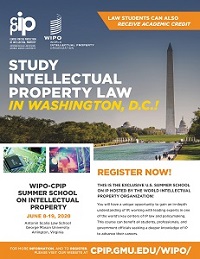
CPIP has again partnered with the World Intellectual Property Organization (WIPO) to host the third iteration of the WIPO-CPIP Summer School on Intellectual Property at Antonin Scalia Law School in Arlington, Virginia, on June 8-19. Registration is now open, and we recommend that participants apply early, as we expect the program to be full.

The course provides a unique opportunity for students, professionals, and government officials to work with leading experts to gain a deeper knowledge of IP to advance their careers. The course consists of lectures, case studies, simulation exercises, group discussions, and panel discussions on selected IP topics, with an orientation towards the interface between IP and other disciplines.

Please click here for more information.


Early Registration Extended for Advanced Patent Law Institute on March 12-13, 2020

Advanced Patent Law Institute flyer

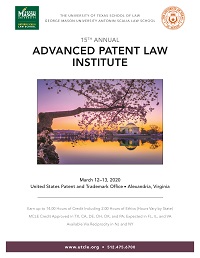
Antonin Scalia Law School and the University of Texas School of Law are presenting the 15th Annual Advanced Patent Law Institute at the U.S. Patent and Trademark Office (USPTO) in Alexandria, Virginia, on March 12-13. This conference offers a unique opportunity to join USPTO senior staff, leading practitioners, academics, and members of the federal judiciary for two days of presentations on the latest developments in patent law.

CPIP Director of Communications Devlin Hartline will be the Presiding Officer on the afternoon of March 12, where he will introduce Under Secretary of Commerce for Intellectual Property and Director of the USPTO Andrei Iancu, among others.

The early registration discount has been extended to March 4. For more information about the conference and to register, please click here.


Spotlight on Scholarship

a pair of glasses, an apple, and a stack of books

Erika Lietzan, The ‘Evergreening’ Metaphor in Intellectual Property Scholarship, ___ Akron L. Rev. ___ (forthcoming)

In this paper that will be published in the Akron Law Review, CPIP Senior Fellow for Life Sciences Erika Lietzan takes a deep dive into the scholarly dialogue about so-called “evergreening” by drug companies. Prof. Lietzan canvasses 342 journal articles from legal, medical, scientific, and economic fields and finds that, while the metaphorical term “evergreening” is not used consistently, its use can be boiled down to the normative claim that drug innovators should not be able to enjoy an exclusive market for innovations that stem from a separate innovation. Prof. Lietzan argues that policymaking should be based on descriptive, empirical scholarship, and the use of “evergreening” obscures the fact that we do not have such studies today.

Jonathan Barnett & Ted M. Sichelman, The Case for Noncompetes, ___ U. Chi. L. Rev. ___ (2020)

In this paper that will be published in the University of Chicago Law Review, CPIP Senior Fellow for Innovation Policy Jonathan Barnett and CPIP Senior Scholar Ted Sichelman take on the common argument that noncompete agreements deter innovation. They note that recent steps by legislators to limit the enforcement of noncompetes are not based on sound theory or empirics. On theory, they note that the positive effect of noncompetes in encouraging firms to make investments in intellectual and human capital is overlooked. And on empirics, they demonstrate that the two main bodies of evidence cited do not in fact support the nonenforcement of noncompetes. Given these complexities, Profs. Barnett and Sichelman suggest an error-cost approach to provide an economic rationale for the reasonableness standard of assessing such provisions found in the common law.


Activities, News, & Events

a lit lightbulb hanging next to unlit bulbs

CPIP Director of Copyright Research and Policy Sandra Aistars and CPIP Senior Scholar Mark Schultz testified before Senate Subcommittee on Intellectual Property about the problems with the Digital Millennium Copyright Act (DMCA). The hearing, entitled The Digital Millennium Copyright Act at 22: What Is It, Why Was it Enacted, and Where Are We Now?, is the first of ten such hearings that will evaluate the continued relevance of the DMCA. The Subcommittee is chaired by Senator Thom Tillis, and he has indicated that the DMCA has not “stood the test of time” and that he intends to “craft new legislation to modernize the DMCA for today’s internet.” Video from the hearing is available here, and you can download Prof. Aistars’ testimony here and Prof. Schultz’s testimony here. The hearing has been featured in several news articles, including at IPWatchdog, Law360, TorrentFreak, The Verge, and The Buchtelite.

CPIP Director of Copyright Research and Policy Sandra Aistars filed an amicus brief in the Google v. Oracle case that is currently before the U.S. Supreme Court. The brief was joined by eight other copyright scholars, including Stephen Carlisle, Jon Garon, Hugh Hansen, Devlin Hartline, Adam Mossoff, Chris Newman, Sean O’Connor, and Mark Schultz. The brief argues: “Google’s position is not only contrary to the statute—it would actively discourage innovation by original authors with knowledge that their work can be exploited without due compensation. It also would discourage intermediary business models built around generating, promoting, monetizing, and publishing original works of authorship, e.g., publishing houses. This is not what the Constitution had in mind.”

CPIP Senior Scholar Kristen Osenga has been busy this month. Prof. Osenga joined F. Scott Kieff for a Federalist Society teleforum entitled Litigation Update: FTC v. Qualcomm, which recapped the district court’s decision and discussed the arguments that were likely to be made in Qualcomm’s appeal to the Ninth Circuit in its antitrust litigation with the Federal Trade Commission. She also drafted a post at IPWatchdog detailing the oral argument before the Ninth Circuit. Prof. Osenga participated in a Federalist Society Regulatory Transparency Report Podcast entitled The New DOJ-USPTO-NIST Policy Statement on Remedies for Infringement of Standard-Essential Patents, which was moderated by Adam Mossoff. And she was featured in a recent article at Richmond Law, where she discussed her transition from engineering to patent law.


Categories
CPIP Roundup

CPIP Roundup – January 31, 2020


Greetings from CPIP Executive Director Sean O’Connor

As January 2020 draws to a close, I hope you have had a restful holiday season and a good start to the new decade. At CPIP, we are pushing forward with plans for an exciting new year, getting ready for some internal changes, and looking forward to the future.

In early December, I traveled to China to lecture on music law at Tsinghua University School of Law in Beijing and to meet with lawyers in firms and corporations regarding IP in China. At Mason, our students are back from the winter break and I am leading the second semester of the newly initiated Innovation Law Clinic. I am excited to announce that the Clinic is collaborating with BizLaunch, a unit of Arlington Economic Development, to assist entrepreneurs and advance Arlington as an innovation district—especially in preparation for Amazon’s impending arrival. Starting this semester, BizLaunch and Mason will be co-hosting a series of lectures and clinical sessions, entitled Mason Law Clinic @ BizLaunch, which will provide local entrepreneurs with ready access to legal information and assistance.

This past week, the CPIP team traveled to Miami Beach, Florida, for the fourth and final meeting of our Edison Fellowship for 2019-2020. We would like to thank our scholars and senior commentators for their investment of time, hard work, and generous feedback over the past year.

Looking further ahead, please note that CPIP’s The Evolving Music Ecosystem conference will now be a two-day affair, taking place at Scalia Law School in Arlington, Virginia, on April 23-24, 2020.

On a staffing note, you may have read in a CPIP email from last week that CPIP Deputy Director Kevin Madigan is leaving our team to join the Copyright Alliance as VP, Legal Policy and Copyright Counsel. Kevin has been an invaluable part of our team over the past four years and he will be greatly missed. Kevin’s contributions to CPIP are irreplaceable.

We look forward to continued work with him in his new role at the Copyright Alliance and we wish him all the best. Due to Kevin’s departure, we are now looking to hire a new Deputy Director. The job listing can be found here. Please circulate widely to help us fill this important CPIP position!


Registration Now Open for Music Law Conference on April 23-24, 2020

Registration is now open for CPIP’s music law conference, The Evolving Music Ecosystem, that will be held at Antonin Scalia Law School in Arlington, Virginia, on April 23-24, 2020. The keynote address will be given by Rosanne Cash, and it features two days of panel presentations from leading experts.

This unique conference continues a dialogue on the music ecosystem begun by CPIP Executive Director Sean O’Connor while at the University of Washington School of Law in Seattle. In its inaugural year in the D.C. area, the conference aims to bring together musicians, music fans, lawyers, artist advocates, business leaders, government policymakers, and anyone interested in supporting thriving music ecosystems in the U.S. and beyond.

Please click here to register, and click here to visit our conference website. We’ll be announcing the agenda and confirmed speakers soon!


WIPO-CPIP Summer School on IP on June 8-19, 2020

CPIP has again partnered with the World Intellectual Property Organization (WIPO) to host the third iteration of the WIPO-CPIP Summer School on Intellectual Property at Antonin Scalia Law School in Arlington, Virginia, on June 8-19, 2020. Registration is now open, and we recommend that participants apply early, as we expect the program to be full.

The course provides a unique opportunity for students, professionals, and government officials to work with leading experts to gain a deeper knowledge of IP to advance their careers. The course consists of lectures, case studies, simulation exercises, group discussions, and panel discussions on selected IP topics, with an orientation towards the interface between IP and other disciplines.

Please click here for more information.


Spotlight on Scholarship

Eric Claeys, Claim Communication in Intellectual Property: A Comment on Right on Time, 100 B.U. L. Rev. Online 4 (2020)

In this paper that was supported by a CPIP Leonardo da Vinci Fellowship Research Grant, CPIP Senior Scholar Eric Claeys responds to a recent article discussing how original acquisition applies to intellectual property law and policy. Prof. Claeys explains that property rights help people to derive value from ownable resources and to coordinate the behavior of different people. Through what he calls “claim communication,” property rights inform people about who gets priority in managing and producing value from the asset. Prof. Claeys argues that this distinct function of property rights is integral to understanding how original acquisition applies to intellectual property.

Jonathan Barnett, The ‘License As Tax’ Fallacy (forthcoming)

In this forthcoming paper, CPIP Senior Scholar Jonathan Barnett rebuts claims that intellectual property licenses act as a “tax” that limits access to technological assets, stunts innovation, and inflates prices for end-users. Such claims have motivated competition regulators and courts to take a skeptical view of intellectual property licensing. Prof. Barnett explains that this skepticism overlooks how licensing supports a robust innovation ecosystem by facilitating exchanges that create value, promoting the division of labor, and lowering entry costs for innovative firms.


Activities, News, & Events

Earlier this month, a group of intellectual property scholars, including Sandra Aistars, Devlin Hartline, Kevin Madigan, Adam Mossoff, Sean O’Connor, and Mark Schultz, filed comments with the U.S. Trade Representative in advance of its hearing to review the generalized system of preferences (GSP) eligibility of several countries. The GSP program provides for the duty-free importation of designated articles into the U.S., and the U.S. Trade Representative is considering whether South Africa is meeting its eligibility criterion by providing adequate and effective protection of U.S. intellectual property rights. The comments submitted argue that South Africa’s copyright regime fails to adequately protect U.S. copyrighted works, and that proposed changes to its law that would greatly expand fair use and fair dealing would only exacerbate the problem.

CPIP Director of Copyright Research and Policy Sandra Aistars testifies today at the U.S. Trade Representative hearing on the GSP eligibility of South Africa, where she is discussing how South Africa fails to provide adequate and effective protection for U.S. copyrighted works. The work of Prof. Aistars’ Arts & Entertainment Advocacy Clinic in helping to protect artists and authors was featured in a recent article at Scalia Law News. Prof. Aistars will be speaking next month at the 94th Annual CMPA Convention in South Carolina, and she will be panelist at the Copyright in the Age of Artificial Intelligence event that is being co-hosted by the U.S. Copyright Office and WIPO in Washington, D.C. Prof. Aistars will also attend the 2020 CSUSA Midwinter Meeting in Arizona, where she will participate in an executive committee meeting to decide issues affecting the organization.

CPIP Senior Scholar Kristen Osenga recently published an essay at the Hudson Institute entitled Saving Functional Claiming: The Mismatch of § 112 Reform in the § 101 Reform Debate. In the essay, Prof. Osenga explains how the proposed revisions to § 112(f) that were included in a recent bill to reform patent subject matter eligibility under § 101 would result in negative consequences for innovation. § 112(f) is the statutory provision that governs functional claiming, and the amendment would narrow it out of concerns over preemption. Prof. Osenga explains that this change actually reduce the effectiveness and reliability of patent rights for all innovators. Prof. Osenga also co-authored a white paper for the Federalist Society’s Regulatory Transparency Project entitled Putting the Public Back In “Public Interest” in Patent Law. The white paper explains how recent interference in the patent system by several administrative agencies fails to promote the public interest that the patent system is intended to serve.


Categories
C-IP2 News

CPIP Bids a Fond Farewell to Kevin Madigan and Seeks New Deputy Director

CPIP logoLongtime CPIP staff member Kevin Madigan is leaving the Center next week to become VP, Legal Policy and Copyright Counsel at the Copyright Alliance.

“I joined CPIP just over four years ago, and my time with the Center and Scalia Law has been rewarding on so many levels. The knowledge I’ve gained and the relationships I’ve cultivated are things that I’ll cherish for the rest of my life,” said Kevin Madigan. “I’m proud to have been a part of such a dynamic academic center, and I know CPIP will continue to thrive in my absence. I want to express my sincere gratitude to Sandra Aistars, Sean O’Connor, Adam Mossoff, Devlin Hartline, Matt Barblan, Mark Schultz, Kristina Pietro, and Mary Clare Durel,” he continued.

“We could not be happier for Kevin who has done impeccable work for us beginning as a Fellow and recently serving as Deputy Director. While we will miss him, we know that he will not be far away given our close relationship with CA,” said Sean O’Connor, Executive Director at CPIP.

As a result of Kevin’s departure, we are now seeking a new Deputy Director to join the CPIP team. This is an exciting position for an accomplished intellectual property professional seeking to advance their career at the interface of academia, industry, and public policy.

Reporting to CPIP’s faculty Executive Director, the Deputy Director manages and participates in CPIP’s day-to-day operations including academic and policy work as well as conferences, meetings, and other events. The Deputy Director also works with the Executive Director and other faculty directors to develop CPIP’s long-term academic and policy plans.

The position is designed for an individual with a J.D. degree and an interest in promoting innovation and creativity through CPIP’s academic and policy mission. The ideal candidate will have: strong experience in intellectual property law and policy; familiarity with the academic intellectual property community; and an understanding of government policy-making in Washington, D.C. and beyond. At least three years of IP law practice or IP policy experience are required.

The job listing is available at the following link: https://jobs.gmu.edu/postings/47630

Categories
Copyright

Proposed Open Access Regulation is a Solution in Search of a Problem

a lightbulb shatteringEarlier this week, a coalition of over 125 publishers and non-profit scientific societies joined the Association of American Publishers (AAP) in a letter to the White House expressing serious concerns with a proposed Administration policy that would override intellectual property rights and threaten the advancement of scientific scholarship and innovation. In a flawed attempt to advance open access goals, the policy would require the free and immediate distribution of any proprietary articles that report on research funded by a government agency. But overwhelming opposition by dozens of the most esteemed medical societies and research organizations reveals an ill-conceived and hasty proposal that would not only disregard long-established intellectual property rights, but would also adversely affect U.S. jobs, research, innovation, and global competitiveness.
Like other open access mandate proposals in the past, there has been no evidence offered that the untested models are viable or sustainable or that there are systematic failures in the current scholarly publishing market. In a policy brief published in 2017, CPIP identified similar proposals as nothing but solutions in search of a problem—clear examples of regulatory overreach lacking any empirical evidence of why they are needed and how they would be beneficial.

Proposed Policy Eliminates Any Opportunity to Commercialize

Proprietary articles that report on federally funded research—such as those published in leading medical and scientific journals—are currently subject to public access mandates that require them to be made publicly available no later than 12 months after publication. These mandates are meant to balance the interests of the public in accessing these works with those of publishers and non-profit organizations that bear the costs of producing them. It’s a framework that, while not perfect, reflects the Constitutional objective of securing exclusive rights to promote the progress of science and the useful arts.

Notwithstanding this long-understood trade-off between access and exclusivity, the proposed policy would require the immediate and free distribution of journal articles reporting on any amount of federally funded research. If implemented, the proposal would deny publishers any opportunity to recoup the investments made in development of these labor and cost-intensive works, and many journals and research organizations would simply no longer be able to operate. While the proposal may be rooted in a desire to benefit the public, its complete eradication of the already short 12-month embargo reveals a troubling unawareness of existing markets, the critical role of publishers, and the value of intellectual property.

Untested Model Reflects Unawareness of Creative Ecosystems

Unfortunately, proposals like this reflect a belief by some that in the digital age publishers are merely intermediaries who restrict access to works. Those who promote this narrative also tend to favor short-term access and distribution over sustainable industries, long term R&D, and free markets, but their efforts to impose sweeping open access provisions reveal an ignorance of the inner workings and contributions of the publishing industry.

The reality is that even when federal funding exists for underlying research, significant investments are required by non-profit journals and publishers to translate the research into high-quality articles. These organizations must dedicate time and resources to the review and selection of articles, management of the peer review process, editing, curating, distributing, and long-term stewardship.[i] The publishing industry employs thousands of Americans to carry out these tasks, and they fund their efforts at no cost to taxpayers. Additionally, the sale of journal subscription in hundreds of foreign countries contributes significantly to the U.S. economy and trade balance.

Perhaps most disturbing is that those promoting the proposal seem unaware or unconcerned with the potential devastating impact the policy would have on publishing and scientific communities and America’s leadership in research and innovation. Stakeholders representing the industries that stand to be most affected by an unfettered and unproven open access policy have been left out of discussions, resulting in an ill-considered and inequitable proposal. Furthermore, the fact that the details of Administration policies are sometimes not disclosed until they are announced and implemented raises serious questions about the development of a policy that could have such a significant impact on industries, jobs, and the U.S. economy.

Strong Opposition to an Unsound Policy

Taking into account these numerous problems, it’s not surprising that stakeholders have now joined together to voice their opposition to the proposed policy. Venerable institutions such as the American Medical Association, the American Cancer Society, and the New England Journal of Medicine are just a few of the dozens of scientific, medical, and publishing organizations to challenge the proposal. In addition to these stakeholder organizations, Senator and Chairman of the Subcommittee on Intellectual Property Thom Tillis recently voiced his concerns with the proposal in a letter to Secretary of the Department of Commerce, Wilbur Ross, and to White House Chief of Staff, Mick Mulvaney. He writes:

If the current policy is changed—particularly without benefit of public hearings and stakeholder input—it could amount to significant government interference in an otherwise well-functioning private marketplace that gives doctors, scientific researchers and others options about how they want to publish these important contributions to science.

As Senator Tillis and others point out, the proposed policy has been put forward with no input from stakeholders or public comment. No evidence has been presented that a revised policy is needed, nor has the existing marketplace been shown to be dysfunctional.

While the wide distribution of and access to scholarly articles is critical to advancing research and education, it shouldn’t be so overvalued as to disregard all that goes into producing them and the associated intellectual property rights. To do so would represent a short-term fix to a problem that has not been proven to exist and result in untold damage to publishing industries, the economy, and ultimately the public.

[i] For a detailed account of the value-add services provided scholarly publishers, see Professor Adam Mossoff’s article How Copyright Drives Innovation: A Case Study of Scholarly Publishing in the Digital World.

Categories
Copyright

Members of Congress the Latest to Question ALI’s Restatement of Copyright

the word "copyright" typed on a typewriterAs copyright wonks are surely aware, the American Law Institute (ALI) has been busy with its first foray into restating a body of federal statutory law, the Restatement of Copyright. Restatements have traditionally covered state common-law topics, such as employment, property, trusts, and torts, which are primarily governed by some combination of state statutory and judge-made law. Sometimes a federal statute plays a significant, though partial, role in a Restatement, as with the Foreign Sovereign Immunities Act in the Restatement (Fourth) of Foreign Relations. But never before has ALI produced a Restatement of a coherent and comprehensive federal statutory scheme—a fact that has diverse commentators scratching their heads.

Since its inception, many have expressed doubts about the Restatement of Copyright project. The U.S. Copyright Office, U.S. Patent and Trademark Office, American Bar Association IP Section, industry groups, judges, academics, and many others have communicated serious concerns that this Restatement will do more harm than good, yet ALI seems dead set on seeing it through. The latest to question the propriety of this project are Members of Congress who voiced concerns in a letter sent to ALI earlier this week. In the letter, Senator Thom Tillis and Representatives Ben Cline, Ted Deutch, Martha Roby, and Harley Rouda point out that in over 100 years of existence the ALI has never drafted a Restatement on law that is almost exclusively governed by federal statutes. The Members of Congress are primarily concerned with how the Restatement “attempts to diminish the importance of the statutory text or legislative history relating to that text” and replace it with “novel interpretations.”

The congressional letter has been well-received by the copyright community. Yesterday, AAP CEO and President Maria Pallante commended the Members of Congress for their “strong leadership” and called the Restatement of Copyright “a back door effort to circumvent the authority of Congress and undermine the copyright system that fuels our creative economy.” Copyright Alliance CEO Keith Kupferschmid applauded the Members of Congress for “voicing their concerns” and called on ALI to “address these and the many other significant and very real concerns that have been raised by the Senator and Representatives and many others who have spoken up.” And CreativeFuture complimented the insights of the Members of Congress while condemning this Restatement as being “driven by those who want to rewrite the law, which isn’t their job.”

Though certainly venerable, the Restatements over the last century have not been immune to attacks of perceived bias. Law review articles for years have made these claims (for example, see here, here, and here). The late Antonin Scalia highlighted such concerns in his acerbic dissent in Kansas v. Nebraska, when he stated in 2015 that “modern Restatements . . . are of questionable value, and must be used with caution” since “the Restatements’ authors have abandoned the mission of describing the law, and have chosen instead to set forth their aspirations for what the law ought to be.” Justice Scalia warned that “it cannot safely be assumed, without further inquiry, that a Restatement provision describes rather than revises current law.”

Unfortunately, ALI’s current Restatement of Copyright project suffers from the very problems that Justice Scalia described. The Reporter and other supporters have expressly stated that they view this Restatement as a chance to change the law—not simply to restate it. To that end, this Restatement literally rewrites the Copyright Act by paraphrasing the statutes rather than quoting them directly when presenting the supposed black-letter law. This will only lead to confusion as the proffered black-letter law is not the same as the actual law that must be applied by the courts.

A Restatement Or A Principles Project?

I participated in a panel discussion on this Restatement last year at the Fordham IP Conference, and I was genuinely surprised by how many of my fellow panelists were skeptical of the notion that we should have another copyright reference such as ALI’s Restatement of Copyright. My own view is that there’s plenty of room for more copyright treatises, but this particular project should be abandoned given the decision to recast the statutory text rather than to simply quote and interpret it. Other panelists were not nearly as positive. For example, Professor Justin Hughes of Loyola Law School offered his insights into what is really driving this project:

There is a very simple calculus of what is going on; that is, that Copyleft academics have felt themselves locked out of policymaking; have felt themselves ignored by the courts, rightly or wrongly; and are looking for a major lever. If you are not willing to do what is necessary to get legislation passed in Washington in IP — and it is not fun and it is ugly — so much the easier if you can just write black-letter law in a book with some other professors.

In fact, the Restatement of Copyright project originated as an ALI Principles project as part of a copyright reform initiative. In a letter to ALI in late 2013, Berkeley Law’s Professor Pamela Samuelson suggested that ALI “should undertake a copyright reform project” to “aid additional reform efforts” in copyright law. Her idea was that ALI would provide judges and lawyers with a set of “normative underpinnings” that they could use in practice to shape copyright law without statutory amendment. In particular, Prof. Samuelson cited “a dozen examples of common law copyright issues on which courts have been at odds that an ALI project might usefully address” that she had outlined in an article calling for copyright reform. These included digital first sale, statutory damages, conceptual separability, secondary liability, and whether fair use is a right. The letter stressed that ALI was “the institute most capable of taking on such a significant law reform project that would bring greater normative clarity, predictability, and balance to U.S. copyright law.”

Critically, in both the letter and article, Prof. Samuelson proposed that ALI undertake a Principles project—not a Restatement. The two serve different purposes and audiences. According to ALI’s Style Manual, “Restatements are primarily addressed to courts,” while “Principles are primarily addressed to legislatures, administrative agencies, or private actors.” Each “seeks to clarify and synthesize” a particular field of law; however, only Restatements are intended to “reflect the law as it presently stands or might appropriately be stated by a court.” Principles projects, by contrast, are “generally written as recommendations to particular institutions (e.g., legislatures, corporations).”

Nevertheless, ALI authorized the project as a Restatement even though its official Reporter also made clear in a letter to ALI that he envisioned a reform effort: Given the “bad state” of things, there “seemed to be a perfect environment for a deep reevaluation of copyright law.” Because this “has not happened. . . . it falls to the federal courts” to fix things since “Congress is unlikely to proceed any time soon with copyright reform.” Accordingly, the Reporter clearly intended a Principles project and not a true Restatement.

The Reporter also appears to hold a narrow and controversial view of copyright’s constitutional purpose, asserting that the Constitution “sets out an explicitly utilitarian rationale.” But, in Eldred v. Ashcroft the Supreme Court stated that copyright serves both public and private ends. The Court held that rewarding authors and promoting progress are “complementary”—and “not mutually exclusive”—“ends” since “copyright law serves public ends by providing individuals with an incentive to pursue private ones.” The Supreme Court reiterated its holistic approach more recently in Kirstaeng v. Wiley, where it unanimously noted that one of the “well settled” objectives of the Copyright Act is “rewarding authors’ creations.” By contrast, the Reporter appears willing to write authors’ rights out of the constitutional bargain—an approach again better suited for a normative Principles project and not a Restatement accurately describing the current state of the law.

Why Paraphrase When You Can Quote?

ALI’s Style Manual explains that each Restatement section is broken into three parts: (1) black-letter provision, which states the rule of law; (2) Comment, which explicates, analyzes, and illustrates the black-letter rule; and (3) Reporter’s Notes, which explain the sources provided and their place within the current law. Since earlier Restatements dealt with common-law issues, the black-letter provisions at the beginning of each section provided a coherent synthesis of the various sources of law. Copyright law, by contrast, already has a coherent body of black-letter law—the statutory provisions of the Copyright Act itself. The Style Manual provides that “Restatements are expected to aspire toward the precision of statutory language,” but such aspirations are unnecessary here since the precise statutory language already exists.

Nevertheless, the Restatement of Copyright project has approached the copyright field like it was any other, and the drafts of the Restatement to date show that the black-letter provisions are paraphrases of the underlying statutes and not the statutes themselves. It seems obvious that any attempt to restate the copyright statutes in different terms will lead to unnecessary confusion, but this is, for the time being, the route that has been chosen. The problem, of course, is that courts first and foremost must interpret and apply the words of the statute. Any deviation from the statutory language in the Restatement’s black-letter provisions will only give courts more work to do as they attempt to reconcile Congress’s actual black-letter law with ALI’s gloss upon it. This is a recipe for confusion, not clarity. Indeed, ALI has received numerous comments challenging this unique format.

For example, the U.S. Copyright Office submitted a letter to ALI in 2015 questioning the “nature and goals” of ALI’s undertaking and pointing out the obvious fact that “there can be no more accurate statement of the law than the law itself.” The Copyright Office noted that the Restatement’s black-letter provisions materially departed from Congress’s enactments and that “the accompanying discussion and illustrations evince selective and particularized views that do not present a balanced interpretation of the statute.” The Copyright Office accused ALI of treating “singular judicial decisions” as “well-established rules” while ignoring “contrary precedent,” and, after listing several specific examples, it suggested that “the Restatement project appears to run the risk of creating a pseudo-version of the Copyright Act that is inconsistent with the law as Congress enacted it.”

Similar views were expressed by the Register of Copyrights just last year. Register Karyn Temple concluded that “the project is a misguided one” since “an extensive body of positive copyright law already exists.” She pointed out the futility of restating “a body of positive federal law,” noting that there “can be no more accurate statement of the law than the words that Congress has enacted in the Copyright Act and those that the Copyright Office has adopted in its regulations.” Register Temple admonished ALI for “tinkering with complex statutory and regulatory provisions” given that it “will lead to confusion and misinterpretation” and “will inevitably alter sense and meaning.” She then suggested that ALI “reconsider the project as a whole” as “the attorney or judge who relies on it will often be misled.”

The Director of the U.S. Patent and Trademark Office, Andrei Iancu, submitted a comparable letter in late 2018, but unfortunately it’s not publicly available. In the letter, Director Iancu suggested “adapting the typical Restatement format to accommodate the specific characteristics of the Copyright Act.” Specifically, he noted that “the detailed, prescriptive provisions of the Copyright have historically been considered ‘black letter’ law,” and he argued that the “attempt to rephrase them . . . can only lead to ambiguity and contradiction” as “the meaning of the statute will be clouded or altered.” Director Iancu predicted “that the copyright Restatement project as currently conceived will create more confusion than enlightenment,” and he urged ALI to quote the statutory law itself as the black-letter statement of the law.

Likewise, Columbia Law’s Professor Jane Ginsburg sent a letter to ALI in 2015. Prof. Ginsburg called the Restatement “a fundamentally aspirational endeavor” that “gives the impression of a shadow copyright act,” and she questioned whether the project should even proceed under the guise of a Restatement instead of a Principles project. Over the past several years, many others have filed critical comments as well, including the Authors Guild and the New York City Bar. Indeed, comments have even been submitted by prominent figures such as Judge Pierre Leval of the Second Circuit and Judge Margaret McKeown of the Ninth Circuit. Unfortunately, however, most of the comments that have been filed are not readily available online at this time. Perhaps most revealing of what seems to be an underlying bias in those leading the project, I have yet to see a commentator suggest that the Restatement gets something wrong in a way that would actually benefit copyright owners. The “mistakes” all cut the other way.

As a closing thought, I’ll note that this project appears to create a Catch-22 for ALI. If the goal is to “reform” copyright law, then the Restatement will not accurately reflect the law and thus will be of little use to the courts—its intended audience. On the other hand, if the Restatement instead accurately captures the current state of the law, then the Restatement will do very little to move the reformatory needle. Behind all this might be a gambit that the Restatement is perceived to be an accurate reflection of the law, such that it’s followed, while in fact expressing a version of the law that is not actually true, but rather “aspirational” as Prof. Ginsburg said. In this way, the existing statutes could effectively be changed by the courts—at least in how they interpret and apply it. That’s a narrow needle to thread, and it’s hard to see how it could be done. I think ALI could create a useful secondary source for copyright law, but the reality is that this Restatement has been designed from the beginning to change the law—not merely to restate it.

Categories
Uncategorized

A Message From CPIP on Giving Tuesday

CPIP logoAs we enter the holiday season and look ahead to 2020, we hope that you will keep CPIP in mind as you plan your end-of-year giving. Your support is critical to ensuring that CPIP continues its activities and works to engage academics, creators, and innovators in a scholarly dialogue on the importance of intellectual property. CPIP’s programs, events, network of scholars, and in-house staff have made great strides in recent years to bring balance and reason to IP debates, but there is more work to be done. CPIP receives no funding from George Mason University, and it is only through the support of our partners that we are able to fulfill our mission.

Contributions help CPIP:

    • host conferences, roundtables, fellowship meetings, symposia and colloquia, the WIPO Summer School on Intellectual Property, and many other programs that promote an ongoing dialogue on the importance of IP rights


    • produce and support the production of a variety of scholarly articles and policy materials that explore the value of IP


    • employ an in-house staff of directors and communications specialists who work tirelessly to plan and execute CPIP programs and events


    • maintain and grow an international network of scholars, lawyers, and other professionals dedicated to the scholarly analysis of IP


As we look ahead to CPIP’s eighth year of operation, we are proud to be a leading academic voice in the discussion of intellectual property rights and the technological, commercial, and creative innovation they facilitate. We have an exciting lineup of programs and events planned for 2020 as well as research and policy work agendas that will focus on key IP issues. The generosity of our partners is essential to CPIP’s success, and we thank you in advance for your support.

Please visit https://cip2.gmu.edu/donate-to-cpip/ to learn more about ways to support CPIP.