Categories
Artificial Intelligence Conferences Copyright Fair Use

Panel 5A: Generative AI & Human Authorship (C-IP2 2023 Annual Fall Conference)

The following post comes from Jake L. Bryant, a student in the Intellectual Property Law LL.M. program at Scalia Law and a Research Assistant at C-IP2.

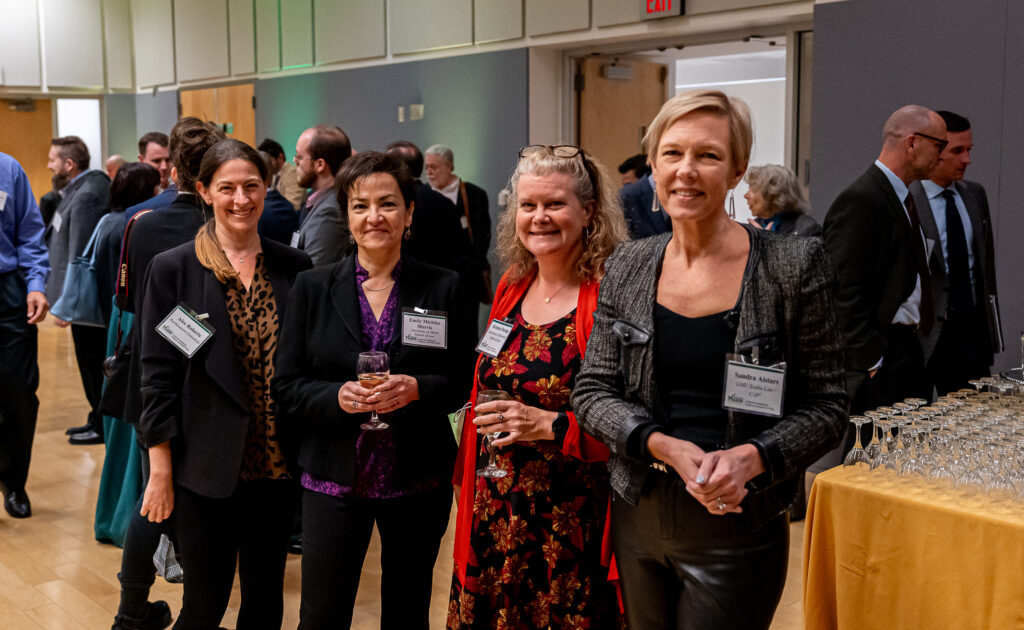
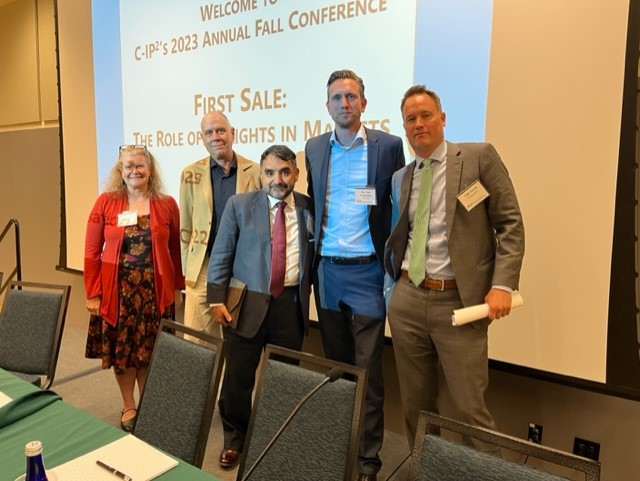
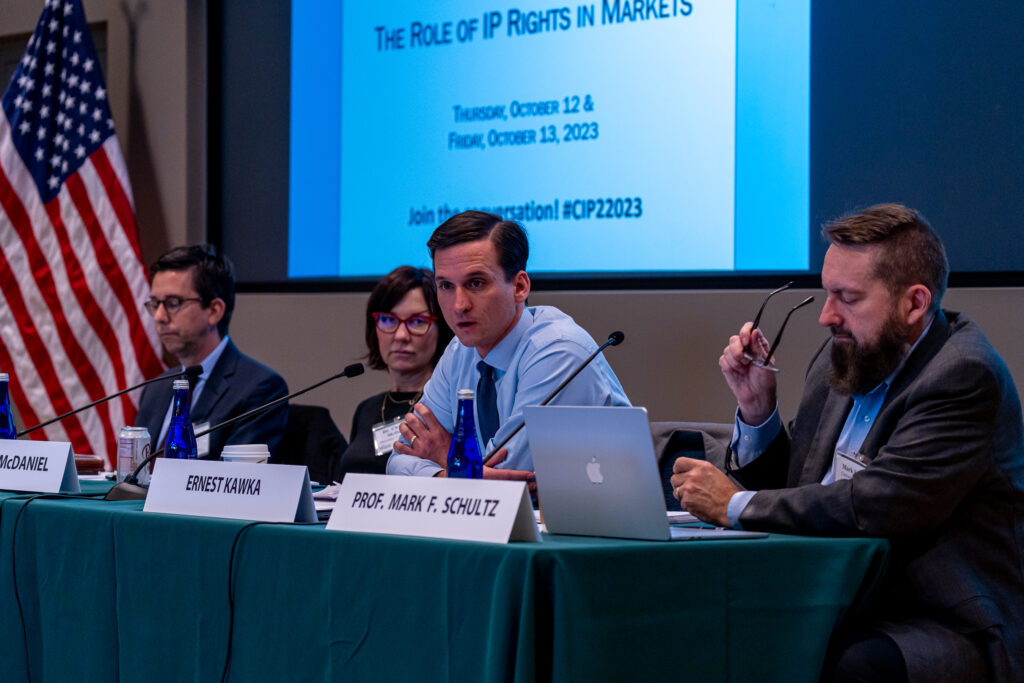
silver copyright symbolOn October 12th and 13th, the Center for Intellectual Property x Innovation Policy (C-IP2) hosted its 2023 Annual Fall Conference, this year titled First Sale: The Role of IP Rights in Markets. One topic that attracted significant attention was the role of copyright law in generative artificial intelligence. A discussion on Generative AI & Human Authorship, was highlighted in one of the key copyright panels of the event. The discussion included a number of distinguished speakers: John Tehranian, the Paul W. Wildman Chair and Professor of Law at Southwestern Law School; Van Lindberg, a partner at Taylor English Duma LLP specializing in IP law; Molly Torsen Stech, General Counsel for the International Association of Scientific, Technical, and Medical Publishers and an adjunct professor at American University School of Law; and Keith Kupferschmid, CEO of the Copyright Alliance. The panel was moderated by Sandra Aistars, a professor at the Antonin Scalia Law School at George Mason University and the Senior Fellow for Copyright Research & Policy at C-IP2. Speakers addressed how  copyright law fits with generative AI technology.
According to Tehranian, the copyright issues raised by generative AI are not new but are based on law that has been developing for decades, if not centuries. Notably, the Copyright Act of 1976 does not define the word “author.” Cases like the Ninth Circuit’s Naruto v. Slater (2018) and the D.C. District Court’s Thaler v. Perlmutter (2023), as well as guidelines from the Copyright Office have each analogized to earlier case law to hold that only human beings can be authors for copyright purposes. Nevertheless. answering the question of whether human AI developers and prompt engineers can be authors of the outputs of generative AI models is an open question in determining AI’s place within copyright law.

Approaches vary in shaping AI’s place in copyright jurisprudence, and, as the panelists acknowledged, no definitive right answer has been established. Generative AI has seen IP scholars and practitioners return to the old forge of jurisprudence, one where the exchange of opposing ideas sharpens the tools necessary to develop a viable solution for protecting the rights of all copyright interests involved. Protection of creative expression and room for innovation in copyright was the guiding star for each panelist, addressing the rights of AI developers, existing copyright owners, and any rights to be found for users of AI systems. As Tehranian stated, one should not be quick to deem existing copyright law and its protections inadequate for new technologies. Among other interests, the discussion addressed the importance of hearing the voices of the creators whose rights would be affected by new developments. Touching on seminal cases like Burrow-Giles Lithographic Co. v. Sarony (1884) and Andy Warhol Foundation for the Visual Arts v. Goldsmith (2023), the panelists discussed a host of issues, including the role of authorship related to photographers and prompt engineers, subject rights in photographs and other visual works, and the application of the fair use doctrine to the use of copyrightable works in training AI models.

Kupferschmid discussed the ingestion process in training artificial intelligence and the effects on different industries, staking out five key principles. First, he stated that the rights of creatives and copyright owners must be respected in formulating new legislation. Second, longstanding copyright laws must not be cast aside to subsidize new AI technologies. Third, the ingestion of copyrighted works by AI systems implicates the right of reproduction described in 17 U.S.C. § 106. Fourth, Kupferschmid argued that the ingestion of copyrighted materials is not categorically fair use. Rather, he contended that fair use analysis requires a fact-intensive inquiry and will likely show that ingestion by AI is rarely fair use. Finally, he posited that AI developers must obtain a license from copyright owners of works used to train their models. Kupferschmid also asserted that the ability of copyright owners to license their works to AI developers is a market that would be usurped by deeming AI ingestion a fair use.

Lindberg also acknowledged that fair use analysis requires a fact-intensive inquiry but contended that the ingestion of copyrighted works in training AI systems is likely to be and should be considered a fair use. While a copy is created in the ingestion of a work by an AI, Lindberg analogized the training process of AI systems to a hypothetical where a person takes a book and creates a statistical table calculating the number of nouns, verbs, adjectives, and other parts of speech and the probability of their ordering. He claimed that this is both transformative and outside the scope of the copyright owner’s market. Lindberg likewise suggested that, in most cases, there is no translation from any specific ingested material to the outputs generated by a given prompt. Thus, there is no likelihood of substantial similarity between works ingested and outputs created by using an AI system. Kupferschmid replied that Lindberg’s description of the data used in training the AI is the essence of copyrightable expression—the words chosen by the author, and the order in which they are placed. That an AI system translates this function into computer code makes it no less protectable expression than if a human were to translate an author’s protected work from English into French. Lindberg partially conceded the point but contended that any substantial similarity that resulted on outputs would occur as a result of overtraining or overfitting AI models  a result that most proponents of generative AI do not seek to encourage and one that he conceded is unlikely to fall within the scope of fair use. The panelists cited the Books3 data set, which has been used to train various large language AI models, as an example of a problematic example of training sets that could result in a variety of undesirable outcomes.

Tehranian agreed with Lindberg, stating that existing precedent could deem AI training a fair use. Acknowledging that the recent Supreme Court case Andy Warhol Foundation for the Visual Arts v. Goldsmith cut back on the weight afforded to certain transformative uses in fair use determinations, he distinguished that the Court did not reduce the weight of trans-purpose uses, where the copyrighted material is not used to create a new work but instead used for a purpose beyond the scope of an author’s market. While Tehranian stated that he did not necessarily agree that ingestion during AI training should be fair use, he concluded that the existing law creates a likelihood that it will be so.

The panel also discussed the NO FAKES Act, introduced that week by senators from both major parties. See Chris Coons et al., Draft Copy of the NO FAKES Act of 2023, Chris Coons (Nov. 28, 2023), https://www.coons.senate.gov/imo/media/doc/no_fakes_act_draft_text.pdf. Tehranian noted that this proposed legislation would  help protect against unauthorized uses of a person’s name, image, or likeness by creating a federal right of publicity, explaining that federal trademark law and state rights of publicity are currently inadequately equipped to handle these issues clearly and consistently.

Stech agreed with each of the five points described by Kupferschmid. Specifically, she argued that the quality of data ingested by AI weighs against a finding of fair use. She also argued in favor of granting copyright over images to the subjects of photographs. She stated that “there are two humans contributing creativity in a photograph,” and that photographers may not be the only authors of photographs including a human subject. Professor Aistars reminded the panel of a case involving model Emily Ratajkowski posting on social media a photograph taken of her by paparazzi in which she had covered her face with a bouquet of flowers. She was then sued for copyright infringement by the photographer. Stech, Tehranian, and Aistars all suggested that this serves as an example where subjects may deserve some rights in photographs taken of them.

Abstract questions surrounding the meaning and value of art and creation continue to force copyright law to tread carefully in providing legal protection to creative expression without becoming a deterministic judge of artistic value. Whether prompt engineers will be considered authors of AI-generated works, whether the ingestion of copyrighted material in training AI models is fair use, and whether the subjects of visual works are entitled to some rights in the images taken of them are all questions at the forefront of IP law in the 21st Century. How Congress and higher courts will address them is not yet known, leaving open the discussion for creatives and lawyers alike to help discern the proper scope of protection for generative AI, its outputs, and the visual arts. As the panelists acknowledged, predictions for the state of policymaking regarding AI are unclear, but there is one certainty. Protecting the rights of artists and their creative expressions must be the driving force behind the application of copyright law to works generated with new technologies.


Additional Resources:

Categories
Uncategorized

Using Economic Models to Evaluate the Efficacy of U.S. Patent Examination

By William Matcham

For the Center for Intellectual Property x Innovation Policy blog, in fulfillment of obligations for the Thomas Edison Innovation Law and Policy Fellowship


Folder tab reading "Patents"

Highlights:

    • Policymakers frequently debate the effectiveness of the U.S. patent system – critics claim that problems arise from the ineffective patent application and examination process.
    • We fill a large gap in the economics literature by building an economic model of the patent prosecution process.
    • The model implies that patent screening is relatively effective, in large part because the examiners are well motivated. However, restrictions on negotiations could improve screening outcomes.
    • We view our work as the first part of a broader research agenda assessing the effectiveness of resource allocation in public agencies that incentivize and fund innovation.

The Importance of Public Institutions in Fostering Innovation

In a forthcoming research article, Mark Schankerman and I estimate an economic model to evaluate the effectiveness of patent screening at the U.S. Patent and Trademark Office (USPTO). Part of a broader research program, the project shows how economic models can be used to study and improve the efficiency of resource allocation by innovation-related public agencies. I worked towards writing this paper in conjunction with the George Mason University Scalia School of Law’s 2022-2023 Thomas Edison Innovation Law and Policy Fellowship. I am very grateful for the thoughtful comments I received from Distinguished Commentators and scholars involved with the Fellowship.

Public agencies play a central role in fostering innovation through two primary channels: direct and indirect funding of public and private research, and allocating intellectual property rights, specifically patents. In the United States, for example, federal investment in Research and Development (R&D) activities amounted to $120.9B in 2015 alone. Moreover, nearly 400,000 patents were issued by the USPTO in the same year.

Despite their evident importance, little is known about whether innovation-supporting public institutions allocate resources efficiently and how organizational changes affect agency performance. In our first project on this topic, we study the U.S. patent system, focusing on the quality of screening—the allocation of property rights for innovation— by the Patent Office.

The Growing Policy Debate

The effectiveness of patent screening and its implications for the quality of patents is a hotly debated policy issue. There is growing concern among academic scholars and policymakers that patent rights are becoming an impediment rather than an incentive to innovation. These concerns have been prominently voiced in public debates, in recent U.S. Supreme Court decisions, and culminating in the Leahy-Smith America Invents Act of 2011, the most significant statutory change to the patent system in half a century.

Critics of the patent system claim that the problems arise mainly from ineffective USPTO screening, where patents are granted to inventions that do not represent a substantial inventive step—especially in emerging technology areas such as business methods and software. The issue is essential because granting “excessive” patent rights imposes social costs: higher prices and restricted quantities of patented goods, greater enforcement (litigation) costs, increased transaction costs of R&D, and the potential to undermine the process of cumulative innovation.

What We Do

We develop an economic model of the patent screening process, which incorporates incentives and intrinsic motivation of examiners and the actual structure of multi-round negotiation in the current system. By intrinsic motivation, we mean examiners’ desire to ensure their decisions align with the USPTO’s mission, which is to award inventors property rights over their invention, consistent with statutory and judicial prescriptions. We estimate the model using new negotiation-round-level data on examiner decisions and text data from 20 million patent claims. We conduct counterfactual, “what-if” analysis of how reforms to incentives, fees, and the structure of negotiations affect the quality and speed of patent screening.

Advantages and Uniqueness of Our Analytical Framework

The patent prosecution process is an advantageous context to study the effects of incentives and motivation on screening for two primary reasons. First, the multi-round negotiation between the applicant and examiner fits naturally into a specific economic modeling tool called a “dynamic game,” which forms the basis of our model. The model is “dynamic” in the sense that we allow multiple negotiations over time between the examiner and the applicant, and a “game” in the sense that both examiner and applicant make decisions that account for how the opposing party will respond. Such a model is necessary in this context because existing empirical (so-called reduced form) analyses are not capable of analyzing how examiners and applicants would both respond to changes in the patent screening regime. For this one needs a full model of the process, capable of doing such counterfactual analyses.

The second advantage of the patent context is the quality of data. The USPTO collects detailed data on all applications, not just granted patents. For this paper, we constructed a dataset covering around 55 million patent application decisions across 20 million patent claims between 2010-2015. For applications, we observe each examiner’s decision on each patent claim over all rounds of the negotiation. Advanced natural language processing (NLP) techniques assist us in measuring the “distance” between different patents, an important metric for understanding strategic behaviors by both applicants and examiners. Together with the characteristics of examiners and applicants, we use these data to estimate our model of the patent application process.

Key Findings

Our estimates imply several key empirical findings; we focus here on two of the core insights:

    1. Intrinsic motivation plays a significant role in contributing to the accuracy of patent screening. Junior examiners are more motivated than seniors on average, but there is considerable variation within both groups. Further, using the estimated parameters, counterfactual analysis shows that removing intrinsic motivation increases the frequency of examiners granting invalid patents fourfold. This finding highlights the importance of designing human resource policies that effectively select examiners with high intrinsic motivation and ensure they sustain this motivation throughout their careers.
    2. Innovators pad their patent applications, but the examination process screens much of this out. By this, we mean that applicants initially claim greater property rights than are warranted by the true “inventive step” of their innovation. Moreover, there is substantial variation in the degree of padding across patent applications. This result highlights the importance of effective screening. We estimate the average level of padding at around 8-10%. This exaggerated scope of the patent applications, in turn, implies that approximately 80% of claims start below the distance threshold for patentability and thus should be rejected. The multi-round screening process substantially narrows the scope of patent rights sought and, in so doing, reduces that number to about 7% among granted claims (though nearly one in five granted patents contains at least one patent claim that does not meet the threshold).

Reforms to the Patent Screening Process

Our counterfactual experiments reveal the effects of a range of specific policy changes the USPTO could consider. To take one example, limiting the negotiation rounds would substantially reduce the granting of invalid patents and, naturally, improve the speed of prosecution. However, such a limit would force abandonments by applicants who only need to make moderate adjustments to meet the required standards. This in turn could dissuade inventors from developing their valuable ideas in the first place. On net, we find that the benefits of reducing negotiation rounds outweigh the costs, suggesting that rounds restrictions are worthy of consideration.

Concluding Remarks

Our study serves as an important first piece of research highlighting the crucial role of intrinsic motivation in public agencies, particularly in the context of innovation-promoting institutions. It exposes the complex trade-off between the speed and quality of application processing and applicants’ incentives to innovate. We believe this work lays a strong foundation for further academic inquiry into the efficiency of resource allocation in innovation-supporting public agencies.

Categories
Communications

C-IP2 Fall 2023 Progress Report (June-August 2023)


Headshot of Joshua KreshGreetings from C-IP2 Interim Executive Director Joshua A. Kresh

I am pleased to report that we had a productive summer and are looking forward to several upcoming events this fall.

In June we ran the sixth iteration of the WIPO-U.S. Summer School on Intellectual Property, where we virtually welcomed students from around the world. Several sessions of the Summer School were recorded for C-IP2’s YouTube channel, the two currently available videos being the fireside chat I hosted with WIPO Deputy Director General Lisa Jorgenson and the panel on “Industry 4.0” C-IP2 co-hosted with the Arizona State University Consortium for Science, Policy and Outcomes. In July we held our first joint Copyright and Trademark Roundtable, covering “IP in the Metaverse.” Please see the full report below for more details on these events.

We have been busy planning our 2023 Annual Fall Conference and several private roundtables for later this year and early next year. I hope to see many of you at our events over the coming year.

I am also happy to say that the call for applications for our next round of the Thomas Edison Innovation Law and Policy Fellowship will go out soon. Please reach out to me at jkresh@gmu.edu if you are interested in applying or if you have recommendations.


C-IP2 Hosted & Co-Hosted Events

2023 WIPO-U.S. Summer School on IP
From June 5-16, C-IP2 partnered with the World Intellectual Property Organization (WIPO) to host the sixth iteration of the WIPO-U.S. Summer School on Intellectual Property. The exclusive, two-week summer course was held online this year to accommodate participants from all over the world. We had over 60 students and young professionals joining us from 20 countries including Algeria, Bangladesh, Brazil, Canada, China, Colombia, Greece, India, Indonesia, Italy, Japan, Mexico, Peru, Philippines, the Republic of Korea, the Russian Federation, Saudi Arabia, Turkey, the United States of America, and Ukraine. Several U.S. law students took the course for U.S. IP law credit.

The Summer School program provides an opportunity to senior students, young professionals, and government officials to acquire deeper knowledge of each domain of IP and the role functions of WIPO. As WIPO’s only U.S.-based Summer School, the WIPO-U.S. Summer School program focuses on IP law in the United States of America.

The program consists of lectures, case studies, simulation exercises, and group discussions on IP topics, with an orientation towards the interface between IP and other disciplines. A certificate of participation is awarded to participants who successfully complete the program requirements and U.S. law students also take the course for credit.

A number of sessions were recorded for C-IP2‘s YouTube channel, where they will be added to our 2023 WIPO-U.S. Summer School on IP playlist. The two videos available at this time are a fireside chat with WIPO Deputy Director General Lisa Jorgenson, hosted by Joshua Kresh, and “Industry 4.0: Formal & Tacit Manufacturing Knowledge in Tech Transfer & IP,” a panel co-hosted with the Arizona State University Consortium for Science, Policy and Outcomes.

2023 “IP in the Metaverse” Roundtable
From July 12-13, C-IP2 hosted an in-person roundtable on “IP in the Metaverse” in Lake Placid, NY. The Roundtable brought together industry members and academic scholars to discuss trademarks and copyrights in the Metaverse….

“Metaverse” is a portmanteau of the words “meta”—meaning “to transcend”—and “verse”—from “universe.” Neal Stephenson, author of Snow Crash, is widely credited with coining the term. In Stephenson’s novel, the main character, Hiro Protagonist, shops, socializes, and battles with real life and virtual enemies in the metaverse via his avatar. Today, companies and consumers alike are confronting what it means to transcend the boundaries of current online spaces to work, study, shop, and play in interconnected, immersive digital spaces.

Over the course of the two-day roundtable, scholars developed a better understanding of the challenges and opportunities the metaverse presents through a series of linked discussions focusing on copyright and trademark issues. They framed the metaverse itself, acknowledging that what it is and how it is developed and defined and affects participants and shapes practices. Attendees contemplated specific intersections with copyright and trademark practices and doctrines—in particular, first sale/exhaustion, the theme of our 2023 Annual Fall Conference.


News and Speaking Engagements

Welcome to Professor Olufunmilayo B. Arewa, who joins the faculty for George Mason University Antonin Scalia Law School this academic year as Professor of Law and C-IP2 as Senior Fellow for Entrepreneurship and Senior Scholar!

The Fall 2023 semester at Antonin Scalia Law School began on August 21, and C-IP2 Affiliates are teaching the following courses:

      • Professor Sandra Aistars is teaching the Arts & Entertainment Law Advocacy Clinic this academic year. The clinic has expanded its services to offer representation to artists before the Copyright Claims Board (CCB), in partnership with Joe Keeley and his new firm Michael Best & Friedrich LLP. Mr. Keeley was a long-time advisor to both House and Senate leadership on IP issues and played a key role in enacting the CASE Act. Professor Aistars is also teaching “Scholarly Writing.”
      • Professor Olufunmilayo Arewa is teaching “Corporate Acquisitions and “Private Equity.”
      • Professor Tun-Jen Chiang is teaching “Patent Law” and “Trade Secrets.”
      • Professor Eric Claeys is teaching “Property.”
      • Joshua Kresh and Dale Lazar are co-teaching the Innovation Law Clinic.
      • Professor Seán O’Connor is teaching “Intellectual Property Law” and “Contracts.”
      • Professor Christopher Newman is teaching “Freedom of Speech & First Amendment Law” and “Copyright.”

In June, Professor Sandra Aistarsarticle Visualizing Copyright Law: Lessons from Conceptual Artists was listed on SSRN’s Top Ten download list for “LSN: Copyright (Topic).” Her 2022-2023 Edison Fellowship article, Copyright’s Lost Art of Substantial Similarity, is scheduled to be published in Vanderbilt Journal of Entertainment & Technology Law, Vol. 26 (Forthcoming 2023).

Our sincerest thanks to Mr. Masami Kawase, who came to C-IP2 from the Japan Patent Office (JPO) in 2021 as a Visiting Scholar and completed his stay at the end of June. He worked on a paper using statistical analysis to value U.S. and Japanese patents; while he finished his primary research, he is still working on the project. As Mr. Kawase returns to Japan and his position at the JPO, we are grateful for his contribution over these past two years and wish him all the best in his future work!

C-IP2 Advisory Board Member the Honorable Paul Michel spoke at US Inventor’s virtual July 5 event on the Patent Eligibility Restoration Act (PERA).

C-IP2 Advisory Board Member Karen Marangi (RELX) spoke at the U.S. Chamber of Commerce virtual July 10 discussion.

2022 C-IP2 Leonardo da Vinci Research Fellowship Grant recipient Gabriel Araújo Souto posted his paper Low Access to ICT Products in Brazil: Blame on Intellectual Property Rights or Heavy ICT Tariffs? to SSRN.

2022-2023 C-IP2 Thomas Edison Innovation Law & Policy Fellow William Matcham submitted his final paper, Multivariate Ordered Discrete Response Models, with co-author Tatiana Komarova to SSRN.

Congratulations to C-IP2 Senior Fellow for Innovation Policy & Senior Scholar Kristen Osenga, who was awarded a 2023 Distinguished Scholarship Award by her colleagues at the University of Richmond!

C-IP2 Advisory Board Member Judge Randall R. Rader spoke on a webinar on “Promoting and Respecting Economically Vital American Innovation Leadership Act (PREVAIL) of 2023” for US Inventor on August 2.

On August 3-4, Antonin Scalia Law School Professors T.J. Chiang (C-IP2 Senior Scholar), Seán M. O’Connor (C-IP2 Faculty Advisor), and Christopher Newman (C-IP2 Scholar) presented intellectual property scholarship at the 2023 IP Scholars Conference at Cardozo School of Law in New York City: Professor Chiang on Excessive Precautions and Trade Secret Law, Professor O’Connor on Copyright as a Matter of Style, and Professor Newman on Fair Use: Against Weighing. Professor Mark Schultz (C-IP2 Senior Scholar) presented on “Video on Demand: New Frontiers in Regulation of Cultural Policy, Industrial Policy & Copyright,” and Professor Emily Michiko Morris (C-IP2 Senior Fellow for Life Sciences & Scholar) presented on “Patent Thickets.” 2022-2023 Edison Fellow Mary Catherine Amerine also presented on Protecting Public Interests in Public Art.

C-IP2 has been proud to help fund the forthcoming book Artists and Markets in Music: The Political Economy of Music During the Covid Era and Beyond by Cameron M. Weber, Ying Zhen, and J.J. Arias (Routledge, 2024).

2021-2022 Edison Fellow Molly Torsen Stech‘s Edison paper Co-Authorship Between Photographers and Portrait Subjects (Vanderbilt Journal of Entertainment & Technology Law, Vol. 25, 2022) was selected to be included in the 2023 edition of the Entertainment, Publishing and the Arts Handbook (Thomson Reuters (West)) (see also a C-IP2 blog post by Ms. Stech on her article).


Sandra Aistars (C-IP2 Senior Fellow for Copyright Research and Policy & Senior Scholar; Founding Director, Arts & Entertainment Advocacy Clinic; Clinical Professor of Law, George Mason University Antonin Scalia Law School)

    • In June, Professor Aistars’ article Visualizing Copyright Law: Lessons from Conceptual Artists was listed on SSRN’s Top Ten download list for “LSN: Copyright (Topic)”
    • During the virtual 2023 WIPO-U.S. Summer School on IP, hosted by C-IP2, taught a session entitled “Fundamentals of Copyright” and moderated a panel on “Copyright in the Creative Industries” on June 12; hosted a fireside chat with U.S. Copyright Office General Counsel and Associate Register of Copyrights Suzanne Wilson on June 14; and participated in an “IP Office Hours” session on June 16
    • Planned and participated in C-IP2‘s July 12-13 IP in the Metaverse Roundtable Discussion in Lake Placid, NY
    • On July 19, presented to the NYC Bar Association on “Hot Topics in Copyright Law and AI : Emerging Topics in Copyright and Authorship” as a panelist
    • 2022-2023 Edison Fellowship article, Copyright’s Lost Art of Substantial Similarity (September 7, 2023; George Mason Legal Studies Research Paper No. LS 23-14) is scheduled to be published in Vanderbilt Journal of Entertainment & Technology Law, Vol. 26 (Forthcoming 2023)
    • Is again teaching the Arts & Entertainment Law Advocacy Clinic this academic year. The clinic has expanded its services to offer representation to artists before the Copyright Claims Board (CCB), in partnership with Joe Keeley and his new firm Michael Best & Friedrich LLP. Mr. Keeley was a long-time advisor to both House and Senate leadership on IP issues and played a key role in enacting the CASE Act. 

Olufunmilayo B. Arewa (C-IP2 Senior Fellow for Entrepreneurship & Senior Scholar; Professor of Law, George Mason University Antonin Scalia Law School)

    • This fall, Professor Arewa joined the George Mason University Antonin Scalia Law School faculty as Professor of Law and C-IP2 as Senior Fellow for Entrepreneurship and Senior Scholar.

Jonathan Barnett (C-IP2 Senior Scholar; Torrey H. Webb Professor of Law, USC Gould School of Law)

Chief Judge Susan G. Braden (Court of Federal Claims (Ret.); C-IP2 Jurist in Residence)

    • On June 5, attended the Annual Supreme Court Historical Society Dinner at the Supreme Court
    • On June 6, co-taught a session entitled “Enforcing Rights: U.S. Patent Litigation” with Joshua Kresh for the virtual 2023 WIPO-U.S. Summer School on IP, hosted by C-IP
    • On June 27-29, attended D.C. Circuit Judicial Conference in Cambridge, MD
    • In June, was appointed to the ABA’s Task Force on Law, Society, and the Judiciary and was an author of the Task Force Report, which was issued on July 29
    • Law review article “Section 1498(A) is Not a Rx to Reduce Drug Prices” (FDLI 2023, with Joshua A. Kresh) is cited in C4IP policy statement “Reaffirm and Refine: A Government Agenda for Intellectual Property” (Frank Cullen, Andrei Iancu, David Kappos, Judge Paul Michel, and Judge Kathleen O’Malley; July 2023) 

Daniel R. Cahoy (C-IP2 Senior Scholar; Robert G. and Caroline Schwartz Professor, The Pennsylvania State University’s Smeal College of Business; Research Director, Center for the Business of Sustainability)

    • This summer, was appointed Department Chair of Risk Management by Penn State’s Smeal College of Business

Terrica Carrington (C-IP2 Practitioner in Residence; VP, Legal Policy and Copyright Counsel, Copyright Alliance)

    • On August 8, spoke during a session on “New Enforcement Tools For Stakeholder: Copyright Claims Board (CCB)” during a program on U.S.-Mexico Current Developments in IP Protection and Enforcement hosted by the Entertainment Software Association (ESA) and the U.S. Patent and Trademark Office (USPTO). Attendees included the Director General (DG) and Deputy DGs for Enforcement and Public outreach at the Mexican Patent and Trademark Office (IMPI) and the USPTO IP Attaché for Mexico, Central America and the Caribbean.

Theo Cheng (C-IP2 Practitioner in Residence; Arbitrator and Mediator, ADR Office of Theo Cheng LLC; Adjunct Professor, New York Law School)

    • On June 5, was a panelist on a program entitled “Litigation vs. ADR: Choosing the Right Dispute Resolution Process,” which was part of the 5th Annual Alternative Finance Bar Association Conference that was held in New York City
    • On June 13, was a panelist on a program entitled “Ethical Issues Arising in the Mediation Context,” which was part of the Annual Meeting of the Copyright Society that was held in Newport, RI
    • On June 28, was a panelist on a program entitled “The Business of ADR,” which was sponsored by the ADR Committee of the New York County Lawyers’ Association in New York City.
    • On July 3, Lexis Nexis published Mr. Cheng’s latest Practice Note entitled “Pleading Practice in Arbitration Proceedings”
    • On July 11, gave a presentation to the newly elected board of the Asian Pacific American Lawyers Association of New Jersey on “The Roles and Responsibilities of a Nonprofit Board and its Members”
    • On July 12, the New York State Bar Association Entertainment, Arts & Sports Law Journal published Mr. Cheng’s column entitled “When You Need a Confidential and Immediate Resolution of a Dispute – Think Mediation!”
    • On July 19, was a panelist on two programs that were a part of the New York State Bar Association Dispute Resolution Section’s Commercial Arbitration Training for Arbitrators and Counsel that was held in New York City. The first was entitled “Diversity, Inclusion and Elimination of Bias – Implicit Bias, Serving a Diverse Population, and Sensitivity to Culture and Other Differences, Including Heuristics Affecting Arbitrators’ Exercise of Judgment and Decision-Making.” The second was entitled “Arbitration Ethics.”
    • On July 31, the ABA Dispute Resolution Section published Mr. Cheng’s article entitled “Preliminary Hearings in Domestic Arbitration” in their online newsletter Just Resolutions

Tun-Jen Chiang (C-IP2 Senior Scholar; Professor of Law, George Mason University Antonin Scalia Law School)

Lolita Darden (C-IP2 Scholar; Visiting Associate Clinical Professor and Director, Intellectual Property and Technology Clinic, The George Washington University Law School)

    • On June 20, was the presenter for WALA’s Copyright “Basics” online session
    • In June, moderated “Amplifying our Voices: Working with Institutional Communications and Public Relations Departments” as part of the Lutie Lytle Workshop
    • On July 18, presented at WALA’s Trademark “Basics” Workshop
    • In July, presented “Teaching Materials that Bridge the Gap between Theory and Practice” at the 2023 Aspen Leading Edge Conference
    • In July, was a panelist on “How Technological Advances are Impacting Patent Litigation” at USPTO’s Indo-Pacific Judicial Conference

Charles Delmotte (C-IP2 Scholar; Assistant Professor of Law, Michigan State University College of Law)

    • Was named among the “Top 100 Tax Professors in the Nation” by Google Scholar H-Index All for his scholarship. Professor Delmotte’s most recent published article is Predistribution Against Rent-Seeking: The Benefit Principle’s Alternative to Redistributive Taxation (2023), which was features in Cambridge University Press’s journal Social Philosophy and Policy 

Gregory Dolin (C-IP2 Senior Scholar; Associate Professor of Law, University of Baltimore School of Law)

    • Was quoted in June 5 Newsweek article “Federal Judge Fights Colleagues Trying to Force the 95-Year-Old to Retire,” June 5 Bloomberg Law article “Newman Again Denied New Cases Amid Judicial Fitness Probe (1),” and June 8 ABA Journal article “Lawyer for federal appeals judge barred from new cases finds orders ‘incredible’ and ‘stunning’”
    • Was mentioned in July 26 Yahoo Finance piece “‘We the People, a Summer Celebration’ Honors America’s Invisible History at President James Madison’s Montpelier”
    • Joined the Clause 8 podcast for August 1 episode “Exclusive Interview with Judge Pauline Newman’s Attorney, Greg Dolin”

John F. Duffy (C-IP2 Senior Scholar; Samuel H. McCoy II Professor of Law and Paul G. Mahoney Research Professor of Law, University of Virginia School of Law)

    • With Judge Paul Michel, was featured in June 2 JD Supra article “Can Judge Michel (and John Duffy) Convince the Supreme Court to Revisit Subject Matter Eligibility?” by Kevin Noonan, Ph.D.

Jon M. Garon (C-IP2 Senior Scholar; Professor of Law and Director of the Intellectual Property, Cybersecurity, and Technology Law program, Nova Southeastern University Shepard Broad College of Law)

    • In August, was the Keynote Speaker and spoke on “The Metaverse in the Context of Legal Strategy 4.0” at the International Conference on Legal Strategy (CIEL) in Punta Cana, Dominican Republic
    • In August, presented “Orientation for Newer Faculty: Lessons from the Law Professor’s Desk Reference” at the University of New Hampshire Franklin Pierce Law School

David Grossman (C-IP2 Practitioner in Residence; Senior Director of Technology Transfer & Industry Collaboration, Office of Technology Transfer, George Mason University)

    • Was featured and quoted in the June 2 George Mason University news article “Innovation Awards celebrate Mason researchers” on the May 9 Mason Innovation Awards ceremony
    • On June 8, taught a simulation session entitled “Transfer of Technology and Licensing” for the virtual 2023 WIPO-U.S. Summer School on IP, hosted by C-IP2

Christopher Holman (C-IP2 Senior Fellow for Life Sciences & Senior Scholar; Professor of Law, University of Missouri-Kansas City School of Law)

    • This summer, published articles on Patently-O including “Recitation of a Previously Unappreciated Mechanism of Action Does Not Overcome Prima Facie Obviousness of Drug Combination” (posted June 15) and “‘Bald Girls Do Lunch’ Unable to Sway the Federal Circuit in Case Involving Deuterated Drug for Alopecia Areata” (posted August 26)

Camilla A. Hrdy (C-IP2 Scholar; Professor of Intellectual Property Law, University of Akron School of Law)

    • Article The Value in Secrecy (91 Fordham Law Review 557 (2022)) has been judged one of the best law review articles related to intellectual property law in the last year and selected for re-publication in the 2023 edition of the Intellectual Property Law Review published annually by Thomson Reuters (West)
    • In June, article Abandoning Trade Secrets (with co-author Mark A. Lemley; 72 Stanford Law Review 1 (2021)) was cited by a U.S. District Court in the Northern District of Ohio in Health Care Facilities Partners LLC v. Jack Diamond, 2023 WL 3847289 (N.D. Ohio, June 5, 2023)
    • Article Beyond Trade Secrecy: Confidentiality Agreements That Act Like Noncompetes (written with co-author Christopher B. Seaman; 133 Yale Law Journal (forthcoming 2023)) was posted as comment to the Federal Trade Commission on April 13, 2023, and was accepted for presentation at the 2023 Conference on Empirical Legal Studies at University of Chicago Law School. On August 3, Professor Hrdy presented the article at IP Scholars 2023 at Cardozo Law in New York City, and will shortly present the same article at the IP Colloquium at Indiana University Bloomington, in Bloomington, Indiana on September 14, 2023; the St. John’s Intellectual Property Law Colloquium at St. John’s Law School on October 2, 2023, in Queens, New York; the 2023 Conference on Empirical Legal Studies at University of Chicago, in Chicago on October 13-14, 2023; and the Georgetown Law Conference on Trade Secret Law in Washington, D.C. on November 8, 2023

Justin (Gus) Hurwitz (C-IP2 Senior Scholar; Senior Fellow and Academic Director, Center for Technology, Innovation, and Competition, University of Pennsylvania Carey Law School)

    • Joined the Cyberlaw Podcast for June 6’s Episode 461, “Debating AI Regulation” (write-up and link for episode available both at Reason and Lawfare)
    • Joined the Cyberlaw Podcast for July 25’s Episode 469, “AI Leaders Bring Washington a Bag of Promises”
    • On July 20, submitted an amicus brief in U.S. Supreme Court’s Loper Bright v. Raimondo

Steven D. Jamar (C-IP2 Senior Scholar; Associate Director, Institute for Intellectual Property and Social Justice (IIPSJ); Professor Emeritus, Howard University School of Law)

    • On June 12, taught a session entitled “An IP Social Justice Perspective on Copyright Protection for AI Implementations” for the virtual 2023 WIPO-U.S. Summer School on IP, hosted by C-IP2

Joshua Kresh (C-IP2 Interim Executive Director)

    • On June 6, co-taught a session entitled “Enforcing Rights: U.S. Patent Litigation” with Judge Susan G. Braden (Ret.) for the virtual 2023 WIPO-U.S. Summer School on IP, hosted by C-IP2
    • On June 8, hosted a fireside chat with WIPO Deputy Director General for Patents and Technology Lisa Jorgenson (a recording of the session is available on YouTube)
    • Law review article “Section 1498(A) is Not a Rx to Reduce Drug Prices” (FDLI 2023, with the Honorable Susan G. Braden) is cited in C4IP policy statement “Reaffirm and Refine: A Government Agenda for Intellectual Property” (Frank Cullen, Andrei Iancu, David Kappos, Judge Paul Michel, and Judge Kathleen O’Malley; July 2023)
    • With Dale Lazar, is co-teaching the Innovation Law Clinic for the Fall 2023 semester

Dale Lazar (C-IP2 Practitioner in Residence; Director, Patent Program, Innovation Law Clinic)

    • On June 6, taught a session entitled “Establishing Rights: U.S. Patent Prosecution” for the virtual 2023 WIPO-U.S. Summer School on IP, hosted by C-IP2
    • With Joshua Kresh, is teaching the Innovation Law Clinic at George Mason University Antonin Scalia Law School. The course has students representing innovators on a pro bono basis. The students are supervised by volunteer attorneys.

 Daryl Lim (C-IP2 Senior Scholar; H. Laddie Montague Jr. Chair in Law; Associate Dean for Research and Innovation; Founding Director, Intellectual Property Law and Innovation Initiative; and co-hire, Institute for Computational and Data Sciences, Penn State University)

    • In April, spoke with C-IP2 Advisory Board Member and C4IP Chairman of the Board Andrei Iancu on “Renewing American Innovation” as part of Penn State Dickinson Law’s Profiles in Leadership Series

Irina D. Manta (C-IP2 Senior Scholar; Professor of Law, Hofstra University School of Law)

    • Published a June 8 article, “SCOTUS Decides Jack Daniel’s v. VIP Products,” on Reason 

Hina Mehta (C-IP2 Practitioner in Residence; Director, University Commercialization Program Director, University Commercialization Program at Virginia Innovation Partnership Corporation (VIPC))

    • Was quoted in August 18 EIN Newsdesk article “VIPC Awards Commonwealth Commercialization Fund Grant to ​​Liberty University’s Synthetic Crustacean Innovation”

Emily Michiko Morris (C-IP2 Senior for Life Sciences and Scholar; C-IP2 2021-2022 Edison Fellow; David L. Brennan Endowed Chair, Associate Professor, and Associate Director of the Center for Intellectual Property Law & Technology, University of Akron School of Law)

Lateef Mtima (C-IP2 Senior Scholar; Professor of Law, Howard University School of Law; Founder and Director, Institute for Intellectual Property and Social Justice (IIPSJ))

    • On June 6, presented a paper during NYU School of Law’s Classical Liberal Institute (CLI)‘s Colloquium on Philosophical Methods in Intellectual Property
    • On June 13, taught a session entitled “Case Study: Bringing Traditional Knowledge to Global Markets for the Benefit of Local Communities” for the virtual 2023 WIPO-U.S. Summer School on IP, hosted by C-IP2
    • On June 12, participated on a panel on “Anonymity, Deepfakes & Trademarks Right and Rights of Publicity” at the Stanford Digital Economy Best Practices Conference at Stanford University School of Law
    • On June 22, participated in a Practising Law Institute (PLI) program on Fundamentals of Copyright Law in the Data Era 2023 NY, teaching a segment on “Intermediary Liability and the DMCA”
    • From July 12-13, participated in C-IP2‘s IP in the Metaverse Roundtable Discussion in Lake Placid, NY

Loren Mulraine (C-IP2 Senior Scholar; Professor of Law, Director of Music and Entertainment Law Studies, Belmont University – College of Law)

    • From July 12-13, participated in C-IP2‘s IP in the Metaverse Roundtable Discussion in Lake Placid, NY

Christopher M. Newman (C-IP2 Scholar; Associate Professor of Law, George Mason University Antonin Scalia Law School)

Seán M. O’Connor (C-IP2 Faculty Advisor; Faculty Advisor, Innovation Law Clinic; Professor of Law, George Mason University Antonin Scalia Law School)

    • On June 6, recorded a panel for Practicing Law Institute: IP Discussions with Joshua Simmons on “Moral Rights” with Joshua Simmons, Amy Adler, and Adrienne Fields
    • On June 29, chaired a session on “Copyright Law: Re-thinking the Fundamentals” at IP Researchers Europe Conference (IPRE) 2023 in Geneva, Switzerland
    • From July 12-13, participated in C-IP2‘s IP in the Metaverse Roundtable Discussion in Lake Placid, NY
    • At the end of July and into early August, led workshops on technology transfer and innovation law for WIPO and the National Intellectual Property Management Office (NIPMO) in South Africa
    • On August 4, presented the paper “Copyright as a Matter of Style” at the Intellectual Property Scholars Conference (IPSC) held at Cardozo School of Law (Yeshiva University)
    • Was quoted in August 23 VOA News article “AI Firms Under Fire for Allegedly Infringing on Copyrights”

Kristen Jakobsen Osenga (C-IP2 Senior Fellow for Innovation Policy & Senior Scholar; Associate Dean of Academic Affairs, Austin E. Owen Research Scholar and Professor of Law, University of Richmond School of Law)

    • Taught a session entitled “Fundamentals of U.S. Patent Law” on June 6 and participated in an “IP Office Hours” session on June 16 for the virtual 2023 WIPO-U.S. Summer School on IP, hosted by C-IP2
    • Administered the University of Richmond’s program in Cambridge (July 21-August 6)
    • In Summer 2023, was awarded a 2023 Distinguished Scholarship Award by colleagues at the University of Richmond

Eric Priest (C-IP2 Senior Scholar; Associate Professor and Faculty Director, Asian Studies, Law, Law-JD, University of Oregon School of Law)

Michael Risch (C-IP2 Senior Scholar; Vice Dean and Professor of Law, Villanova University Charles Widger School of Law)

    • Was interviewed for June 15 KCBS Radio segment “Twitter may have to pay up millions of dollars over copywrite [sic] infringements”
    • Was interviewed for July 7 KCBS Radio spot “Twitter’s Attorney Alleged the Meta is Stealing Information”
    • Was interviewed for July 11 KCBS Radio spot “A comedian just sued two AI companies, what precedent does this set?”

Alexandra Jane Roberts (C-IP2 Senior Fellow for Trademarks; Professor of Law and Media, Northeastern University School of Law)

    • In June, was quoted in ReutersBloomberg, and National Law Journal on the U.S. Supreme Court’s decision in VIP v. Jack Daniel’s
    • Was quoted in June 20 The Fashion Law article “Off-White Lands U.S. Registration for “FOR WALKING” Trademark”
    • Taught a session entitled “Overview & Fundamentals of Trademarks” on June 13 and a simulation session entitled “Protecting Brands in a Modern Economy” on June 14, and participated in an “IP Office Hours” session on June 16, for the virtual 2023 WIPO-U.S. Summer School on IP, hosted by C-IP2
    • Was cited in July 5 Law360 article “5 Sports & Betting Cases To Watch In The 2nd Half of 2023″
    • Planned and participated in C-IP2‘s July 12-13, IP in the Metaverse Roundtable Discussion in Lake Placid, NY
    • Was cited in July 20 Washington Post article “He’s tried to ‘liberate’ colors for years. His latest: the ‘Barbiest pink.”
    • Was quoted in July 21 Northeastern Global News article “What is the future of the Birkin bag after the death of Jane Birkin? Will counterfeits overtake real bags?”
    • Was cited in July 25 World Trademark Review article “From Twitter to X: Elon Musk faces major trademark challenges following sudden rebrand”
    • Was cited in July 26 Law360 article “The Biggest Trademark Decisions Of 2023: A Midyear Report”
    • Was quoted in July 26 NBC News article “Elon Musk’s X takes @X handle from longtime Twitter user”
    • Was quoted in July 26 The Verge article “Can Elon Musk really use that X logo for Twitter?”
    • In August, presented “Multi-Level Lies” on the morning plenary panel at Intellectual Property Scholars Conference (IPSC) at Cardozo

Keith Robinson (C-IP2 Senior Scholar; Professor of Law, Wake Forest University School of Law) )

    • Wrote a June 14 guest post for Patently-O on “How We Can Bridge the Innovation Gap”

Zvi S. Rosen (C-IP2 Scholar; Assistant Professor of Law, Southern Illinois University School of Law)

Mark F. Schultz (C-IP2 Senior Scholar; Goodyear Tire & Rubber Company Chair in Intellectual Property Law, University of Akron School of Law; Director, Center for Intellectual Property Law and Technology)

    • On June 9, taught sessions entitled “Fundamentals of Trade Secrets” and “Real World Value of Trade Secrets in a Global Innovation Economy” and a simulation session entitled “Best Practices for Protecting Trade Secrets” and moderated a panel on “Trade Secrets in Global Business” for the virtual 2023 WIPO-U.S. Summer School on IP, hosted by C-IP2
    • From July 12-13, participated in C-IP2‘s IP in the Metaverse Roundtable Discussion in Lake Placid, NY
    • On August 4, presented on “Video on Demand: New Frontiers in Regulation of Cultural Policy, Industrial Policy & Copyright” at the Intellectual Property Scholars Conference (IPSC) at Cardozo School of Law

Amy Semet (C-IP2 Scholar; Associate Professor, University at Buffalo School of Law)

    • In early June, presented her article “An Empirical Examination of Venue in Patent Cases” in June at the Annual Meeting on Law and Society conference in San Juan, Puerto Rico

Saurabh Vishnubhakat (C-IP2 Senior Scholar; Professor of Law, Yeshiva University Benjamin N. Cardozo School of Law)

Dr. Bhamati Viswanathan (C-IP2 Scholar; Faculty Fellow, New England Law | Boston)

    • From July 12-13, participated in C-IP2‘s IP in the Metaverse Roundtable Discussion in Lake Placid, NY

Scholarship & Other Writings

Sandra Aistars, Copyright’s Lost Art of Substantial Similarity (September 7, 2023). George Mason Legal Studies Research Paper No. LS 23-14, Vanderbilt Journal of Entertainment & Technology Law, Vol. 26 (Forthcoming 2023)

Jonathan Barnett, “Game over at the Federal Trade Commission,” The Hill (July 18, 2023)

Charles Delmotte (2022). Predistribution Against Rent-Seeking: The Benefit Principle’s Alternative to Redistributive Taxation. Social Philosophy and Policy, 39(1), 188-207 (Published online by Cambridge University Press, 14 August 2023)

Jon M. Garon, An AI’s Picture Paints a Thousand Lies: Designating Responsibility for Visual Libel (August 3, 2023). Journal of Free Speech Law | 3:425 | 2023

Jon M. Garon, Protecting Public Health Amidst Data Theft, Sludge, and Dark Patterns: Overcoming the Constitutional Barriers to Health Information Regulations (March 1, 2023). Akron Law Review, Vol. 56, No. 2, 2023

Chris Holman, “‘Bald Girls Do Lunch’ Unable to Sway the Federal Circuit in Case Involving Deuterated Drug for Alopecia Areata,” Patently-O (August 26, 2023)

Chris Holman, “Recitation of a Previously Unappreciated Mechanism of Action Does Not Overcome Prima Facie Obviousness of Drug Combination,” Patently-O (June 15, 2023)

Camilla Alexandra Hrdy, The Value in Secrecy (August 2, 2021). Fordham Law Review, Vol. 91, p. 557, 2022

Camilla Alexandra Hrdy and Mark A. Lemley, Abandoning Trade Secrets (February 7, 2020). Stanford Law Review, Vol. 73 (Forthcoming)

Camilla Alexandra Hrdy and Christopher B. Seaman, Beyond Trade Secrecy: Confidentiality Agreements That Act Like Noncompetes (March 11, 2023). Yale Law Journal, Vol. 133, Forthcoming

Camilla Alexandra Hrdy and Daniel Harris Brean, The Patent Law Origins of Science Fiction (December 1, 2022). Columbia Journal of Law & the Arts

Gus Hurwitz, “What’s an agency to do? That’s for Congress to say,” The Hill (June 6, 2023)

Gus Hurwitz and Geoffrey Manne, “Antitrust Regulation by Intimidation,” WSJ Opinion (July 24, 2023)

Tatiana Komarova and William Matcham, Multivariate Ordered Discrete Response Models (February 11, 2023)

Daryl Lim, “Address Algorithmic Collusion with Compliance by Design,” ProMarket (June 20, 2023)

Irina Manta, “SCOTUS Decides Jack Daniel’s v. VIP Products,” Reason (June 8, 2023)

Lateef Mtima, Content Moderation on the Internet: Section 230 of the Communications Decency Act, 69 The Practical Lawyer 3-11 (preview)

Matt Nuccio and Judge Susan G. Braden (Ret.), “Support ‘The Innovation Restoration Act of 2023,’” aNb Media (July 7, 2023)

Kristen Osenga, “Opinion: A predictable patent system benefits all Americans,” The Virginian-Pilot (July 18, 2023)

Keith Robinson, “Guest post by Prof. Robinson: How We Can Bridge the Innovation Gap,” Patently-O (June 14, 2023)

Zvi Rosen, “AI ‘Authorship’ Muddies the Waters of Copyright Law Claims,” Bloomberg Law (August 3, 2023)

Ilya Shapiro, Richard Epstein, Todd J. Zywicki, Gus Hurwitz, & Geoffrey A. Manne, Brief of the Manhattan Institute and Professor Richard Epstein, Todd Zywicki, Gus Hurwitz, and Geoffrey Manne as Amici Curiae Supporting Petitioners in Loper Bright Enterprises, et al., v. Gina Raimondo, Secretary of Commerce, et al. (July 20, 2023)

Gabriel Araújo Souto, Data Portability: a Necessary Right for Users and Competitors of Digital Platforms (October 12, 2018)

Cameron M. Weber, Ying Zhen, J.J. Arias, Artists and Markets in Music: The Political Economy of Music During the Covid Era and Beyond, 1st ed. Abingdon, Oxon: Routledge, 2024

Categories
C-IP2 News

C-IP2 2023 Summer Progress Report (March-May 2023)

Headshot of Joshua KreshGreetings from C-IP2 Interim Executive Director Joshua A. Kresh

I am happy to provide our first progress report since I took over on May 25th as Interim Executive Director following Professor Seán O’Connor’s return to full-time research and teaching. With this Summer 2023 Progress Report, I am pleased to provide you with updates on what we and our friends and affiliates have been working on from March through May 2023.

May was also personally exciting for my family with the birth of our first child, Aviva Lea Kresh.

In the past few months, C-IP2 hosted a virtual conference on Culture & IP: Analogs to Intellectual Property in Different Cultures. We also hosted a virtual High Tech Roundtable on IP Licensing & Policy, along with a virtual follow-on to our 2022 BioPharma Roundtable.

Additionally, I am delighted to announce that Judge Susan G. Braden, who has served as our Jurist in Residence, joined our Advisory Board.

Please keep an eye on the website and our email communications for upcoming events, including our 2023 Annual Fall Conference.

In the meantime, to all who are celebrating in and outside of the United States, we wish you a safe and happy Independence Day!


C-IP2 Hosted & Co-Hosted Events

Follow-Up Meeting for December 2022 BioPharma Roundtable
On March 22, C-IP2 held a virtual meeting, led by Senior Fellow for Life Sciences & Scholar Professor Emily Michiko Morris, as a follow-up to our December 2022 BioPharma Roundtable to discuss potential areas of academic research.

Co-Sponsored Conference
C-IP2 co-sponsored the Race + IP ’23 Conference, which was hosted April 13-15 in person and online ­­by the University of Pittsburgh School of Law.

High Tech Roundtable on IP Licensing & Policy
On April 18, C-IP2 held a small virtual roundtable, led by Senior Fellow for Innovation Policy & Senior Scholar Dean Kristen Osenga, to identify major areas of interest in high tech licensing and IP and to pinpoint topics of discussion and potential areas for academic research.

Virtual Conference
On April 27-28, C-IP2 hosted a virtual conference on Culture & IP: Analogs to Intellectual Property in Different Cultures. Cultures influence the development of Intellectual Property systems, and Intellectual Property systems influence how cultures develop. This conference focused on that interplay through the lens of analogs to Intellectual Property in various cultures, bringing together scholars from around the globe to discuss how Intellectual Property systems and their analogs co-exist, influence, and inform each other. You can watch the recordings of the conference on C-IP2’s YouTube channel.

Clinic Event
On April 18, Scalia Law’s Arts & Entertainment Advocacy Clinic, led by Professor Sandra Aistars, and Washington Area Lawyers for the Arts (WALA) co-hosted “My Work, Out in the World! Copyright Implications in Public Performances,” an online event in which Student Advocates from the clinic held a discussion on Copyright Law and Public Performance with producers from George Mason University’s Green Machine.


News and Speaking Engagements

Professor O’Connor Returns to Faculty: After successfully steering Scalia Law’s Center for Intellectual Property x Innovation Policy (C-IP2) through a rebranding and expansion that resulted in a Top 20 ranking for the Law School’s IP Program, Professor Seán O’Connor is returning to full time research and teaching. O’Connor will continue on as C-IP2’s Faculty Advisor, while Managing Director Joshua Kresh will assume the role of Interim Executive Director. Read the full announcement.

In March, C-IP2 Jurist in Residence Chief Judge Susan G. Braden (Ret.) joined C-IP2‘s Advisory Board.

2022-2023 Edison Fellow Molly Torsen Stech‘s Fellowship paper, Co-Authorship Between Photographers and Portrait Subjects, has been published in the Vanderbilt Journal of Entertainment and Technology.

2023-2024 Edison Fellow Dr. Nicola Searle presented on the panel “Playing games and knowing the IP score: content and more in the Metaverse” at the March Seventh Session of the WIPO Conversation on Intellectual Property and the Metaverse (more information on the event). A recording of the event is available online.

2023-2024 Edison Fellow Dr. Nicola Searle (Goldsmiths, University of London), who is a Visiting Fellow at the Centre for Innovation Management Research (CIMR) of Birkbeck, University of London, was featured in an April 12 CIMR video on “her key areas of research and contribution of knowledge.”

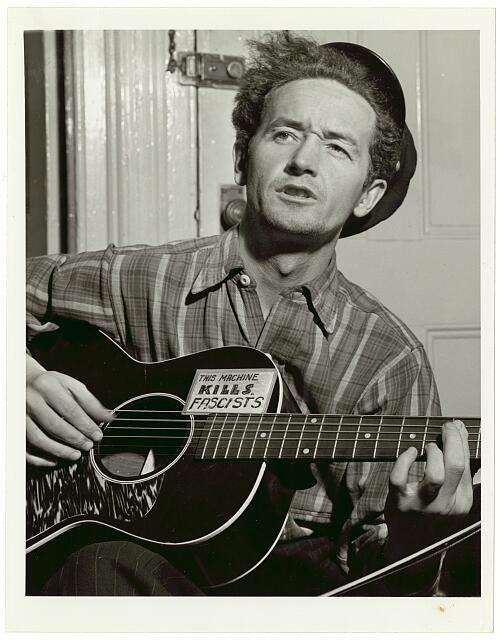
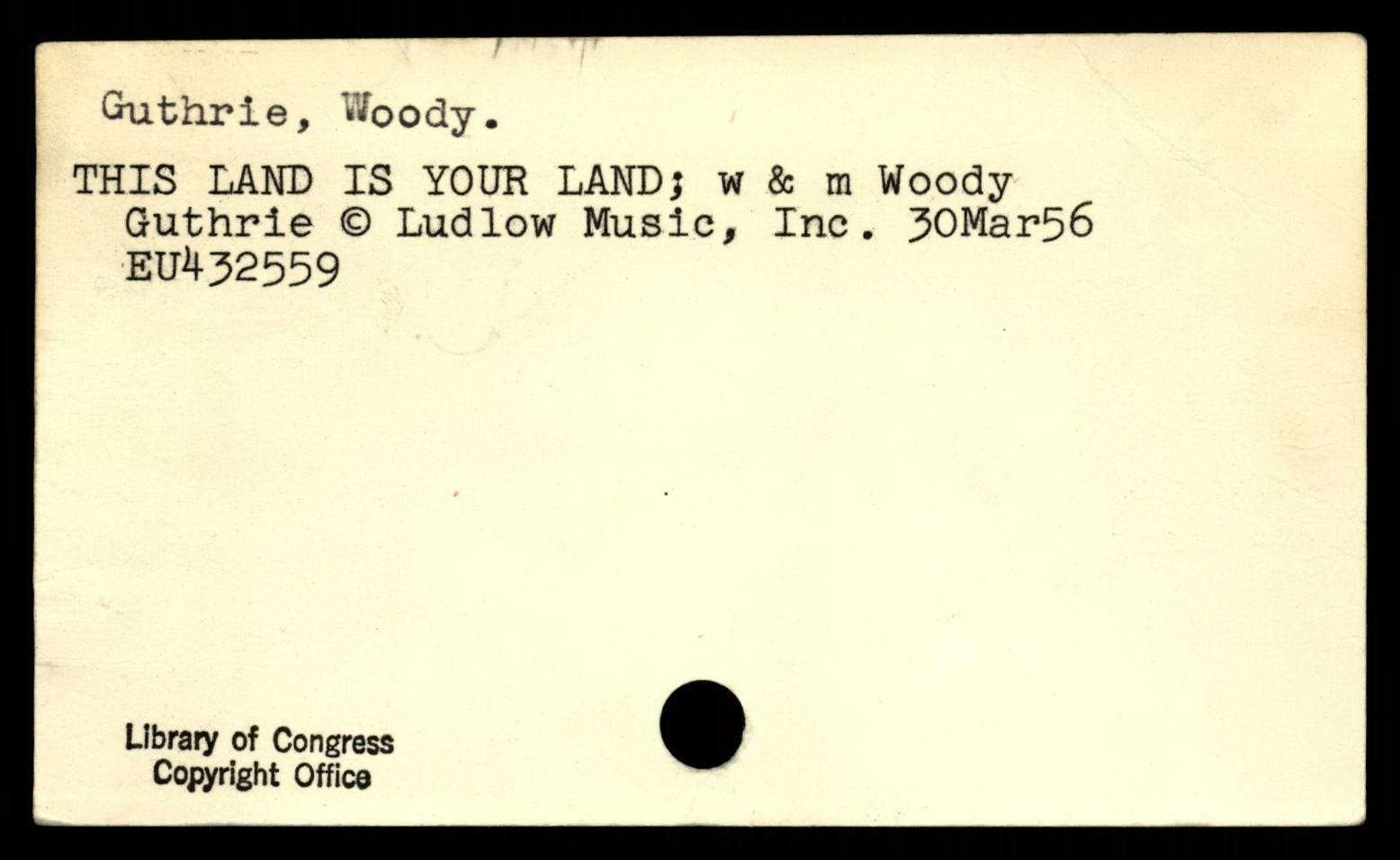
On April 25, 2021-2022 Edison Fellow Dr. Jason Lee Guthrie (Clayton State University) published a post on C-IP2‘s blog entitled “For You and Me or Private Property?: Evaluating the Copyright Claim in Woody Guthrie’s ‘This Land Is Your Land‘” on his Fellowship research.

In May, C-IP2 Board Member the Hon. Paul R. Michel (Ret.) and C-IP2 Senior Scholar Professor John F. Duffy submitted an amicus brief in support of the petitioners in CareDx, Inc. et al. v. Natera, et al. IPWatchdog also covered the brief in the May 31 article “SCOTUS Requests Response in CareDx Eligibility Petition Following Michel/ Duffy Brief.”


Sandra Aistars (C-IP2 Senior Fellow for Copyright Research and Policy & Senior Scholar; Founding Director, Arts & Entertainment Advocacy Clinic; Clinical Professor of Law, George Mason University Antonin Scalia Law School)

    • On March 3, spoke on the Warhol v. Goldsmith case at the IP & Social Justice CLE and Microsoft Tech Law Summit
    • Was featured in the C-IP2 March 28 blog post “Publishers prevail in lawsuit against Internet Archive”
    • This spring, accepted a publication offer from Vanderbilt Journal of Entertainment and Technology Law for her forthcoming 2022-2023 Edison Fellowship paper, Copyright’s Lost Art of Substantial Similarity
    • Spoke at the Fordham Intellectual Property Institute’s 30th Annual IP Conference, held April 13-14
    • On April 18, Scalia Law’s Arts & Entertainment Advocacy Clinic, led by Professor Aistars, and Washington Area Lawyers for the Arts (WALA) co-hosted the online event “My Work, Out in the World! Copyright Implications in Public Performances.” Student Advocates from the clinic discussed Copyright Law and Public Performance with producers from George Mason University’s Green Machine.
    • Led planning for and participated in C-IP2‘s April 27-28 virtual conference Culture & IP: Analogs to Intellectual Property in Different Cultures
    • In May, spoke on a copyright panel at the AIPLA 2023 Spring Meeting in Seattle, WA
    • In May, participated in a recording for Kaplan’s AccelPro™ IP Law podcast
    • Article Visualizing Copyright Law: Lessons from Conceptual Artists was posted to SSRN in May and has been published in Akron Law Journal as part of the IP Scholars Symposium Professor Aistars participated in during winter 2023 [SSRN / Akron Law Review]

Jonathan Barnett (C-IP2 Senior Scholar; Torrey H. Webb Professor of Law, USC Gould School of Law)

    • On April 17, spoke on a virtual Council for Innovation Promotion (C4IP) panel entitled “Does Section 1498 Really Allow the Government to Ignore Patent Protections?”
    • Spoke on the May 31 ITIF virtual panel on “The Importance of the Innovation Ecosystem”

Chief Judge Susan G. Braden (Court of Federal Claims (Ret.); C-IP2 Jurist in Residence)

    • In March, joined C-IP2‘s Advisory Board
    • Co-authored the March 2 Amicus Curiae of Law Professors, Scholars, and Former Government Officials Brief with Professor Adam Mossoff in Arbutus BioPharma Corp. v. Moderna, In. et al, C.A. No. 22-252 (D. Del. ) opposing the Department of Justice’s “Statement of Interest” and supporting Moderna’s Motion to Dismiss on 29 U.S.C. Section 1498 (a) grounds, with which the District Court agreed on March 10, 2023. See Arbutus BioPharma Corp. and Genevant Sciences GMBHModerna, Inc and Modernatx, Inc., Case No, 2:22-cv 0052 (D. Del. March 10, 2023) (reaffirming Nov. 2, 2022, decision).
    • On March 3, was mentioned in Law360 article “Ex-Judges Worried About Where COVID Vax IP Row Will Go” and Bloomberg Law article “Venue Could Be Worth Billions In Covid Vaccine Royalty Clash”
    • On March 8, was mentioned in Law360 article “Moderna Tries to Kick Ex-Judge Out Of COVID Vax IP Row”
    • On March 10, was mentioned Law360 article “Judge Not Convinced by DOJ’s ‘Say-So’ In Vax IP Row”
    • Co-authored March 20 IPWatchdog article “U.S. Taxpayers Should Not Be Paying For Private Patent Infringement” with Professor Adam Mossoff
    • Was interviewed for March 22 Fox News article “Biden’s DOJ is quietly trying to orchestrate taxpayer-funded bailout of Moderna” on Arbutus Biopharma Corp v. Moderna Inc.
    • On March 22, appeared on Mike Emanuel’s “Reporter Lives Segment” of Fox News on the DOJ’s Statement of Interest in the Moderna case (also ran on FNC, FBN, and affiliates across the United States)
    • On March 30, the Administrative Conference of the United States issued the report “Patent Small Claims: Report to the U.S. Patent & Trademark Office,” initiated by Judge Braden, who also was a consultative Group Member and Contributor
    • On April 17, was presenter for the Council for Innovation Promotion (C4IP) webinar “Does Section 1498 Really Allow The Government To Ignore Patent Protections?”
    • Co-authored April 18 IPWatchdog article “Support ‘The Innovation Restoration Act of 2023′” with Matt Nuccio, Executive Board Member of the United Inventors Association (UIA)
    • On April 29, submitted Comment regarding the U.S. International Trade Commission Investigation No. 332-596: “COVID-19 Diagnostics and Therapeutics: Supply, Demand, and TRIPS Agreement Flexibilities”
    • Was mentioned in May 9 Bloomberg Law article “They’ve Got Next: Government Contracts Fresh Face Elizabeth Jochum”
    • On May 11, participated in meetings with Senate and House IP Subcommittee staff about patent preliminary injunction legislation as part of a delegation from the United Inventors Association
    • On May 18-19, participated in a private Patent Advisory Committee meeting at the USPTO regarding the public hearing on the USPTO Proposed Fee Schedule
    • On May 26, participated in a meeting with the former Director of AUTM regarding a potential field hearing on patent preliminary injunction legislation

Daniel R. Cahoy (C-IP2 Senior Scholar; Robert G. and Caroline Schwartz Professor, The Pennsylvania State University’s Smeal College of Business; Research Director, Center for the Business of Sustainability)

    • Was quoted in May 12 UConn Today article “Business Law Professor Robert Bird Honored for Impactful, Enduring Contributions to the Discipline”

Terrica Carrington (C-IP2 Practitioner in Residence; VP, Legal Policy and Copyright Counsel, Copyright Alliance)

    • On March 21, spoke about the Copyright Claims Board during the panel “More Tools in Your Tool Belt: Protecting Copyright in 2023″ at the USC Gould School of Law Intellectual Property Institute
    • Spoke on a panel about the Copyright Claims Board (CCB) on April 13 at the 30th Annual IP Conference at Fordham Law School
    • Helped to plan and organize C-IP2‘s April 27-28 virtual conference on Culture & IP: Analogs to Intellectual Property in Different Cultures

Theo Cheng (C-IP2 Practitioner in Residence; Arbitrator and Mediator, ADR Office of Theo Cheng LLC; Adjunct Professor, New York Law School)

    • On March 9, moderated a panel entitled “Early Stages: Arbitration Initiation and the Preliminary Conference,” which was presented as part of the 2023 ABA Arbitration Training Instituteheld in New York City
    • On March 14, presented a webinar on “Professional Liability Insurance for ADR Professionals” before the ABA Dispute Resolution Section’s Practice Management Committee
    • On March 24, was a co-panelist on an program entitled “Effective Use of Technology: Case Management,” which was presented as part of the 2023 AAA-ICDR Panel Conference held in Rancho Mirage, CA
    • On March 28 and 30, was the trainer on two Zoom-based programs sponsored by the New York State Courts’ Office of Alternative Dispute Resolution entitled “NYS Unified Court System Anti-Bias Training,” which approximately fifty New York attorneys’ fees disputes arbitrators attended
    • On March 30, the New York State Bar Association Entertainment, Arts & Sports Law Journal published Mr. Cheng’s column entitled “A Reminder About Ethics in Negotiation”
    • On April 13, gave a presentation entitled “ADR Ethics Through Movies and Television” before the Justice Marie L. Garibaldi American Inn of Court for ADR. The program involved showing various clips from movies and television shows to help illustrate and stimulate discussion regarding certain ethical codes, canons, and principles.
    • On May 16, spoke on a program hosted by the New York City Bar Association entitled “Adding Mediating to Your Career: How to Get Started in 2023,” which is now available on demand here
    • On May 23, was the trainer on a Zoom-based program sponsored by the New York State Dispute Resolution Association entitled “Anti-Bias Training for ADR Practitioners,” which was attended by over 150 arbitrators and mediators 

Eric Claeys (C-IP2 Senior Fellow for Scholarly Initiatives & Senior Scholar; Professor of Law, George Mason University Antonin Scalia Law School)

    • In April, participated in a discussion of his book Natural Property Rights (forthcoming, Cambridge University Press) that was hosted by The Cato Institute. A recording of the discussion is available online.
    • The ideas in Professor Claeys’s forthcoming book, Natural Property Rights, are explored in C-IP2 Scholar Professor Lolita Darden‘s recent article Balancing the Inequities in Applying Natural Property Rights to Rights in Real or Intellectual Property (Texas A&M Journal of Property Law)

Lolita Darden (C-IP2 Scholar; Visiting Associate Clinical Professor and Director, Intellectual Property and Technology Clinic, The George Washington University Law School)

Charles Delmotte (C-IP2 Scholar; Assistant Professor of Law, Michigan State University College of Law)

    • 2019-2020 Edison Fellowship article Toward a Blockchain-Driven Tax System has been accepted for publication by the Virginia Tax Review, Volume 43, Number 01, Summer 2023 

Gregory Dolin (C-IP2 Senior Scholar; Associate Professor of Law, University of Baltimore School of Law)

    • Was interviewed for March 22 Fox News article “Biden’s DOJ is quietly trying to orchestrate taxpayer-funded bailout of Moderna” on Arbutus Biopharma Corp v. Moderna Inc.
    • Was quoted in March 27 Yahoo Finance story “In NCLA Amicus Win, en Banc Fifth Circuit Rules Against Biden’s Federal Employee Vaccine Mandate”
    • On April 21, was mentioned in Law360 article “Fed. Circ. Judge Says Colleagues Can’t Run Investigation,” Bloomberg Law article “Judge Newman Seeks to Move Fitness Complaint From Fed. Cir. (1),” and Reuters article “Probe of federal appeals judge tests aging US courts”
    • On May 11, was mentioned in Law360 article “Judge Newman Sues Fed. Circ. To Halt Probe Of Her Fitness” and Reuters article “US judge’s lawsuit to block probe leads courts to ‘uncharted waters'”

John F. Duffy (C-IP2 Senior Scholar; Samuel H. McCoy II Professor of Law and Paul G. Mahoney Research Professor of Law, University of Virginia School of Law)

    • In May, with C-IP2 Board Member the Hon. Paul R. Michel (Ret.), submitted an amicus brief in support of the petitioners in CareDx, Inc. et al. v. Natera, et al.
    • Was mentioned in a May 31 IPWatchdog article “SCOTUS Requests Response in CareDx Eligibility Petition Following Michel/ Duffy Brief”

Tabrez Ebrahim (C-IP2 Scholar; Associate Professor, California Western School of Law)

    • Helped organize C-IP2‘s April 27-28 virtual conference on Culture & IP: Analogs to Intellectual Property in Different Cultures and spoke one the panel “The Future of IP and Religion”

Jon M. Garon (C-IP2 Senior Scholar; Professor of Law and Director of the Intellectual Property, Cybersecurity, and Technology Law program, Nova Southeastern University Shepard Broad College of Law)

    • Was quoted in February 28 Law.com article “Litigants Can Recover Copyright Damages Over 3 Years, 11th Circuit Rules in Case Splitting Appeals Courts”
    • In March, published a working draft article on ChatGPT entitled A Practical Introduction to Generative AI, Synthetic Media, and the Messages Found in the Latest Medium
    • In March, presented on “Ethical, Legal, Academic, and Practical Considerations for ChatGPT, Dall-E and Similar Generative AI for Today’s and Tomorrow’s Classroom” at the Nova Southeastern University Learning and Educational Center
    • On March 30, participated on the panel “It’s a Small Metaverse” at the University of Pennsylvania Carey Law School
    • Was a guest speaker on the March 30 Secure Insights podcast episode “From Small Breaches to Big Risks: The Urgent Need for Cybersecurity in Healthcare!”
    • In late April, presented “Today, Tomorrow, or Never: Ethical, Legal, and Business Considerations for ChatGPT, Bard, Dall-E and Similar Generative AI” for the American Bar Association’s Business Law Section Cyberspace Law Committee at the Business Law Section Hybrid Spring Meeting 2023 (materials at SSRN)

David Grossman (C-IP2 Practitioner in Residence; Senior Director of Technology Transfer & Industry Collaboration, Office of Technology Transfer, George Mason University)

    • Was featured and quoted in the June 2 George Mason University news article “Innovation Awards celebrate Mason researchers” on the May 9 Mason Innovation Awards ceremony

Christopher Holman (C-IP2 Senior Fellow for Life Sciences & Senior Scholar; Professor of Law, University of Missouri-Kansas City School of Law)

    • On April 14, gave a presentation on “Amgen v. Sanofi and the Viability of Chemical Genus Claims” at the Institute for Intellectual Property & Information Law (IPIL) Advisory Council Dinner and Intellectual Property Student Organization (IPSO) Lunch Program, University of Houston Law Center, Houston, TX
    • Was mentioned in May 26 Patently-O post “The Silent Echo: Supreme Court’s Non-Engagement with the Federal Circuit in Amgen v. Sanofi” 

Camilla A. Hrdy (C-IP2 Scholar; Professor of Intellectual Property Law, University of Akron School of Law)

    • On March 27, participated in the 25th Annual Symposium on Intellectual Property Law and Policy hosted by the Center for Intellectual Property Law & Technology at the University of Akron School of Law
    • Published an April 25 guest post on Patently-O entitled “Hrdy & Seaman: Are NDAs unenforceable when they protect more than trade secrets?”

Justin (Gus) Hurwitz (C-IP2 Senior Scholar; Senior Fellow and Academic Director, Center for Technology, Innovation, and Competition, University of Pennsylvania Carey Law School)

Hon. Prof. F. Scott Kieff (C-IP2 Senior Scholar; Fred C. Stevenson Research Professor, The George Washington University Law School)

    • On March 23, was quoted in NewsBusters article “EXCLUSIVE: Experts Agree TikTok Is Serious National Security Threat”
    • On April 11, spoke at ITC Masters™ 2023 for a session on “Patent Abuse and the ITC: Separating Fact from Fiction”
    • Was mentioned in April 24 GW Today post “GW Law Installs Three Endowed Professors of Intellectual Property and Technology Law” as beingcelebrated as the Stevenson Bernard Professor of Law

Joshua Kresh (C-IP2 Interim Executive Director)

    • In May, took on the role of Interim Executive Director for C-IP2 following Professor Seán O’Connor‘s transition to the role of Faculty Advisor for the Center

Dale Lazar (C-IP2 Practitioner in Residence; Director, Patent Program, Innovation Law Clinic)

    • In March, presented a lecture entitled “Drafting Claims (and the Specification) That Will Be Infringed” for the 18th Annual Advanced Patent Law Institute sponsored by the University of Texas and George Mason University
    • Continued to teach the Innovation Law Clinic at George Mason University Antonin Scalia Law School for the Spring 2023 semester

Dr. John Liddicoat (C-IP2 Scholar; Senior Research Associate and Affiliated Lecturer, Faculty of Law, University of Cambridge)

Irina D. Manta (C-IP2 Senior Scholar; Professor of Law, Hofstra University School of Law)

    • Co-hosted April 17 Strangers on the Internet podcast episode “Special: Exclusive Interview with VulgaDrawings Cartoonist Lily O’Farrell” with Michelle Lang. A brief write-up of the episode by Prof. Manta was published April 18 on Reason’s The Volokh Conspiracy.

Hina Mehta (C-IP2 Practitioner in Residence; Director, University Commercialization Program Director, University Commercialization Program at Virginia Innovation Partnership Corporation (VIPC))

    • On April 20, attended the “Technology for Good” conference at the 11th Tom Tom Festival in Charlottesville, Virginia

Emily Michiko Morris (C-IP2 Senior for Life Sciences and Scholar; C-IP2 2021-2022 Edison Fellow; David L. Brennan Endowed Chair, Associate Professor, and Associate Director of the Center for Intellectual Property Law & Technology, University of Akron School of Law)

    • Planned and participated in March 22 C-IP2 virtual follow-up meeting with a number of the December 2022 BioPharma Roundtable participants to review key takeaways and confirm next steps for the Center to take in the biopharmaceutical space

Lateef Mtima (C-IP2 Senior Scholar; Professor of Law, Howard University School of Law; Founder and Director, Institute for Intellectual Property and Social Justice (IIPSJ))

    • Moderated and participated on panels during the March 2-3 IP & Social Justice CLE and Microsoft Tech Law Summit
    • On March 9, gave talk on “From Safe Harbors to Circumventing Technology Blockades: Navigating the Digital Millennium Copyright Act” at the Practising Law Institute in New York City
    • Was interviewed in March 27 Michaelson Institute for Intellectual Property blog post “Inventor Fails to Patent BIPOC Emojis: What Happened? An IP Expert Explains” regarding unsuccessful attempts to patent emoticons with diverse skin tones
    • On April 19, spoke on the Communications Decency Act at the AEI Section 230 Spring Summit
    • In April, spoke at the Race + IP ’23 conference
    • Helped to plan and spoke at C-IP2‘s April 27-28 virtual conference on Culture & IP: Analogs to Intellectual Property in Different Cultures

Loren Mulraine (C-IP2 Senior Scholar; Professor of Law, Director of Music and Entertainment Law Studies, Belmont University – College of Law)

    • Spoke at C-IP2‘s April 27-28 virtual conference on Culture & IP: Analogs to Intellectual Property in Different Cultures
    • Was featured in May 30 Spencer Fane LLP post “Loren Mulraine Joins Intellectual Property Panel at Virtual C-IP2 Conference”

Seán M. O’Connor (C-IP2 Faculty Advisor; Faculty Advisor, Innovation Law Clinic; Professor of Law, George Mason University Antonin Scalia Law School)

    • Was quoted in a March 9 Bloomberg piece on the fair use case between a Black Eyed Peas song and a unicorn meme
    • Attended the Fifth IP & Innovation Researchers of Asia Conference (IPIRA 2023), which was hosted in Singapore in a hybrid format from March 1-3. Professor O’Connor moderated a session on digital copyright, presented in a plenary session entitled “Intellectual Property as Engine for Innovation: How to Implement a Balanced Approach?,” also stepped in to serve as moderator for a session on “IP & Competition,” and served on the Conference’s scientific committee (IPIRA 2023 full program).
    • After successfully steering Scalia Law’s Center for Intellectual Property x Innovation Policy (C-IP2) through a rebranding and expansion that resulted in a Top 20 ranking for the Law School’s IP Program, Prof. O’Connor is returning to full time research and teaching and will continue on as C-IP2’s Faculty Advisor

Kristen Jakobsen Osenga (C-IP2 Senior Fellow for Innovation Policy & Senior Scholar; Associate Dean of Academic Affairs, Austin E. Owen Research Scholar and Professor of Law, University of Richmond School of Law)

    • In March, spoke on efficient infringement at the Best Practices in Intellectual Property (BPIP) conference in Tel Aviv, Israel
    • In March, presented on efficient infringement at the Best Practices in Intellectual Property conference
    • Planned and participated in April 18 C-IP2 High Tech Roundtable on IP Licensing & Policy to identify major areas of interest in high tech IP licensing and policy and to pinpoint topics of discussion and next steps for the Center in this space
    • Was interviewed on her role as Associate Dean for Academic Affairs for April 27 University of Richmond School of Law post “Reflecting on a new adventure”
    • In April, presented at a debate for the AIPLA Standards & Open Source Committee meeting on the dispute about the Avanci Business Review Letter (Avanci BRL)
    • Spoke on the May 31 ITIF virtual panel on “The Importance of the Innovation Ecosystem”
    • In May, filed a statement at the S. International Trade Commission (USITC) regarding the COVID-19 potential expansion of the TRIPS waiver. (The statement is posted on the USITC website but requires an EDIS account to view.)
    • In May, participated in a Hudson Institute roundtable on “The Role of Remedies: Patent Injunctions & the Innovation Economy”
    • Participated in a May 31 ITIF roundtable on “The Importance of the Innovation Ecosystem”

Yogesh Pai (C-IP2 Scholar; Assistant Professor, National Law University Delhi (NLUD); Co-Director, Centre for Innovation, Intellectual Property and Competition at NLUD)

    • In March, chaired a session on Intellectual Property Management during the Fifth IP & Innovation Researchers of Asia (IPIRA) conference in Singapore

Michael Risch (C-IP2 Senior Scholar; Vice Dean and Professor of Law, Villanova University Charles Widger School of Law)

    • Gave a media interview for March 16 Delaware Valley Journal article “Bucks County Sues Social Media Companies over Harm to Kids”
    • Article Procedural Posture and Social Choice was published in Minnesota Law Review
    • On April 14, spoke at a symposium on “IP Protection and AI” hosted at Rutgers Law School and sponsored by the Rutgers Business Law Review
    • Was quoted in April 6 Delaware Valley Journal article “Is the Manhattan DA’s Case Against Trump Well-Founded or a Political Sham?”
    • Professor Risch coaches a robotics team that won second place Inspire and first place Innovate rewards at the Pennsylvania FTC Robotics Championship in March and qualified for the FIRST Tech Challenge World Championship in April, where the team won the Control Award
    • On May 13, was a Commentator at the 2023 Lastowka Cyber Law Colloquium at Washington & Lee Law
    • Was interviewed for May 14 KCBS Radio: On Demand segment “What regulations are being considered as AI becomes more accessible”

Alexandra Jane Roberts (C-IP2 Senior Fellow for Trademarks; Professor of Law and Media, Northeastern University School of Law)

    • Was quoted about “review hijacking” on Amazon in the February 28 Law.com article “FTC Bags First Settlement in Probe of ‘Review Hijacking’ in E-Commerce”
    • Was quoted on college athletes’ name, image, and likeness deals in the Wall Street Journal in March 4 article “More Big Brands Brave the Rocky Terrain of Endorsement Deals With College Athletes”
    • Was quoted on a class action lawsuit over “boneless wings” in the Wall Street Journal in March 19 article “A Boneless-Wing Lawsuit Ruffles Feathers of Chicken Devotees”
    • Was quoted on the FTC’s order requesting information about advertising from various social media platforms in the Washington Post March 21 article “New FTC Order Pressures Tech Platforms Over Fraudulent Ads”
    • Was quoted on two MLB/Red Sox applications to register “Boston” as a trademark in Sportico March 22 article “Red Sox Seek ‘Boston’ Trademark to Control City Name in Sports Sales,” the Boston Herald March 24 article “Red Sox are trying to trademark ‘Boston’ for clothes, entertainment services: ‘These are absurd filings,'” and the Boston Globe March 24 article “MLB dropping ‘Boston’ trademark application it had filed on behalf of Red Sox”
    • In March, received the INTA Ladas Award for her forthcoming paper A Poetics of Trademark Law and presented the same project at Boston University School of Law’s Intellectual Property Workshop
    • On April 13, hosted a discussion about VIP v. Jack Daniels at Northeastern University School of Law with Professor Rebecca Tushnet entitled “Bad Spaniels: trademark parody and fair use doctrines.” A recording of the event is available online.
    • In April, was quoted in the Washington Post, The Verge, Ars Technica, Firstpost, Vox, Wired, Bloomberg Law, and interviewed on podcast Moderated Content about potential litigation over Twitter assigning blue checks to some accounts that did not enroll in Twitter Blue in April
    • In May, was quoted in Bloomberg on the OMG Girlz case and cultural appropriation in the courtroom, in Sportico and Yahoo Sports on a trademark dispute over “chaos” for lacrosse, in Well+Good about false advertising claims against “fitfluencer” Brittany Davis, and again in Sportico and Yahoo Sports on the Washington Commanders’ trademark applications

Zvi S. Rosen (C-IP2 Scholar; Assistant Professor of Law, Southern Illinois University School of Law)

Mark F. Schultz (C-IP2 Senior Scholar; Goodyear Tire & Rubber Company Chair in Intellectual Property Law, University of Akron School of Law; Director, Center for Intellectual Property Law and Technology)

Amy Semet (C-IP2 Scholar; Associate Professor, University at Buffalo School of Law)

    • Presented her article on “An Empirical Examination of Venue in Patent Cases” on April 14 at PatCon at Northwestern Law

Dr. Stephanie M. Semler (C-IP2 Practitioner in Residence; Adjunct Professor, George Mason University, Antonin Scalia Law School; Supervising Attorney, Arts & Entertainment Advocacy Clinic)

    • Continued to support the Arts & Entertainment Advocacy Clinic at George Mason University Antonin Scalia Law School for the Spring 2023 semester in her role as a Supervising Attorney

Brenda Simon (C-IP2 Senior Scholar; ProFlowers Professor of Internet Studies and Professor of Law, California Western School of Law)

Eric M. Solovy (C-IP2 Practitioner in Residence; Vice President and Legal Counsel, Qualcomm)

    • In March, joined Qualcomm as Vice President and Legal Counsel

Saurabh Vishnubhakat (C-IP2 Senior Scholar; Professor of Law, Yeshiva University Benjamin N. Cardozo School of Law)

    • Presented his article on “Secret Design Litigation” on April 14 at PatCon at Northwestern Law

Dr. Bhamati Viswanathan (C-IP2 Scholar; Faculty Fellow, New England Law | Boston)

    • Helped to plan and moderated a panel for C-IP2‘s April 27-28 virtual conference on Culture & IP: Analogs to Intellectual Property in Different Cultures

Scholarship & Other Writings

Sandra Aistars, Visualizing Copyright Law: Lessons from Conceptual Artists (May 18, 2023). Akron Law Review, Vol. 56, pp. 101–133 (2023), George Mason Legal Studies Research Paper No. LS 23-04 [SSRN / Akron Law Review]

Jonathan Barnett, “The Antitrust Assault On the Startup Economy In the U.S.,” RealClearMarkets (May 12, 2023)

Jonathan Barnett, Antitrust Mercantilism: The Strategic Devaluation of Intellectual Property Rights in Wireless Markets (April 20, 2023). Berkeley Technology Law Journal, Forthcoming, USC CLASS Research Paper No. CLASS23-2

Hon. Susan G. Braden & Adam Mossoff, “U.S. Taxpayers Should Not Be Paying for Private Patent Infringement,” IPWatchdog (March 20, 2023)

Hon. Susan G. Braden and Matt Nuccio, “Support the ‘Innovation Restoration Act of 2023′,” IPWatchdog (April 26, 2023)

C-IP2 Staff, “C-IP2 Statement on Interactions between Courts and the FDA,” C-IP2 Blog (April 20, 2023)

C-IP2 Staff, “Publishers prevail in lawsuit against Internet Archive,” C-IP2 Blog (March 28, 2023)

C-IP2 Staff, “Trump Interview Lawsuit Exposes Uncertainty in a Corner of Copyright Law,” C-IP2 Blog (April 20, 2023)

Lolita Darden, Balancing the Inequities in Applying Natural Property Rights to Rights in Real or Intellectual Property, 9 Tex. A&M J. Prop. L. 493 (2023)

Charles Delmotte, Toward a Blockchain-Driven Tax System, 43 VA. TAX. REV 1 (forthcoming 2023)

Jon M. Garon, A Practical Introduction to Generative AI, Synthetic Media, and the Messages Found in the Latest Medium (March 14, 2023)

Patrick Russell Goold and David A. Simon, On Copyright Utilitarianism (April 3, 2023). 99 Indiana Law Journal __ (forthcoming 2024)

Jason Lee Guthrie, For You and Me or Private Property?: Evaluating the Copyright Claim in Woody Guthrie’s “This Land Is Your Land” (April 25, 2023)

Ashleigh Hamidzadeh, Johnathan Liddicoat, and Kathleen Liddell, Should Europe Adopt a Policy Like the US MODERN Labeling Act?, European Health & Pharmaceutical Law Review, Volume 7, Issue 1 (2023) 36-38

Christopher M. Holman, A 2023 Review of Legislation Aimed at Increasing Generic and Biosimilar Competition, 42 Biotechnology Law Report 68 (2023)

Chris Holman, Amgen Scores Partial Victory in Efforts to Maintain OTEZLA Exclusivity, Patently-O (April 21, 2023)

Chris Holman, “Multiple dependent claims, blaze marks, and ipsis verbis support,” Patently-O (March 9, 2023)

Chris Holman, Overlapping Ranges in Claims and Prior Art Result in Invalidation of Patent on Transdermal Patch for Parkinson’s Disease, Patently-O (April 15, 2023)

Chris Holman, Petitioner’s Failure to Argue that Prior Art was Analogous to Challenged Patent Results in Reversal of IPR Decision, Patently-O (May 11, 2023)

Chris Holman, Some Thoughts on Amgen v. Sanofi, Patently-O (May 23, 2023)

Camilla Alexandra Hrdy and Daniel Harris Brean, The Patent Law Origins of Science Fiction (December 1, 2022)

Camilla A. Hrdy, Hrdy & Seaman: Are NDAs unenforceable when they protect more than trade secrets?, Patently-O (April 25, 2023)

John Liddicoat, Editorial [as guest editor for this edition], 7 European Health & Pharmaceutical Law Review 1 (2023) 1-4

Geoffrey Manne and Gus Hurwitz, “Day of Reckoning Looms for Lina Khan’s FTC,” RealClearMarkets (April 26, 2023)

Irina Manta, “New Lawsuit Against Florida Public School Library Book Bans,” The Volokh Conspiracy, Reason (May 17, 2023)

Irina Manta, “Strangers on the Internet” Podcast Episode 25: Exclusive Interview with Writer Aimee Lutkin, The Volokh Conspiracy (March 15, 2023)

Irina Manta, Strangers on the Internet Podcast Episode 28: “Exclusive Interview with VulgaDrawings Artist Lily O’Farrell,” The Volokh Conspiracy, Reason (April 18, 2023)

Kristen Jakobsen Osenga, “OpenSky: ending another round of IPR abuse whack-a-mole,” IAM (March 11, 2023)

Jack Ring, “Professors Erika Lietzan and Kristina Acri Argue That Current Data Do Not Support Evergreening Allegations,” C-IP2 Blog (May 2, 2023)

Michael Risch, Procedural Posture and Social Choice, (March 11, 2022). Minnesota Law Review, Vol. 107, p.1621 (SSRN | Minnesota Law Review)

Zvi Rosen, “Why a State-Based Overhaul of US Copyright Law is a Bad Idea,” Bloomberg Law (March 14, 2023)

Alexandra Jane Roberts, A Poetics of Trademark Law (March 31, 2022). Berkeley Technology Law Journal, Vol. 38, No. 1, 2023

Molly Torsen Stech, Co-Authorship Between Photographers and Portrait Subjects, 25 Vanderbilt Journal of Entertainment and Technology Law 53 (2023)

Lisa A. Tucker and Michael Risch, Precedent Unbound: The Supreme Court’s Summary Elimination of Liberal Lower Court Rulings (March 19, 2023). Florida Law Review, Vol. 76, (2024 Forthcoming)


Categories
Biotech Healthcare Patents Pharma

Professors Erika Lietzan and Kristina Acri Argue That Current Data Do Not Support Evergreening Allegations

By Jack Ring

Overlaid images of pills, a gloved hand of someone expecting a pill, and an eyedropperIn their forthcoming paper, Solutions Still Searching for a Problem: A Call for Relevant Data to Support “Evergreening” Allegations,[1] C-IP2 Senior Scholars Erika Lietzan of Mizzou Law and Kristina Acri of Colorado College call for relevant data to support evergreening allegations and accompanying policy proposals. “Evergreening” is often described as brand drug companies securing additional patents and FDA exclusivities, which grant greater market exclusivity than the initial exclusivities.[2] Evergreening has long been the subject of criticism and policy reform.

The article evaluates empirical data commonly offered to substantiate evergreening and explains that the data, while largely accurate, does not support proposed policy changes. The authors argue that the most relevant data points for policymakers are (1) when brands face competition and (2) what drives the timing of that competition. The authors indicate that no empirical studies answer these questions, so this article concludes by proposing a study designed to properly consider these factors.

I.              Background

Evergreening allegations stem from protections on brand drugs that advocates view as too many patents or FDA exclusivities, which, they claim, improperly extend the drug’s exclusivity.[3] FDA exclusivities include exclusive periods of approval or markets as well as processes for bringing generic drugs to market. Under the Federal Food, Drug, and Cosmetic Act (FDCA), the FDA approves all new drugs before they are sold.[4] However, the FDCA does not define “drug” or “new drug,” which may refer to an active ingredient, a finished product, or both.[5] While the FDCA does not specify, the FDA in practice approves products (finished medicines as they are sold in the market), not active ingredients (active molecules and components of finished products).[6]

The FDCA controls the processes of bringing a generic drug to market.[7] As critics point out, some statutory processes bar generic drugs from entering the market until the patents expire. However, this is not always the true.[8] Moreover, the FDCA provides different forms and lengths of exclusive approval as a reward for drug makers performing the preclinical and clinical research needed to bring a drug to market. These range from six months for performing pediatric studies[9] to seven years for “orphan” drugs intended to treat a rare disease or condition.[10]

Much of the evergreening allegations and outcry focus on exclusivities stemming from continuing innovation. Continuing innovation is common because developing new molecular entities is time- and cash-consuming. Therefore, brand companies benefit from identifying new uses for new molecular entities. Moreover, those new medical uses (indications) may be eligible for new patents and statutory exclusivities. Protections for continuing innovation, however, are narrow and only prevent the approval of generic drugs for that new, specific use.[11]

II.            The Hastings Project and Current Data for Policymakers

The University of California Hastings College of Law hosts a database that (1) identifies the earliest and latest expiring patent or exclusivity for new drugs and (2) calculates the number of months between those dates.[12] The authors undertook a large audit of the Hastings Database. Like the Hastings Database, major empirical studies offered to support the allegation of “evergreening” focused on counting patents and exclusivities.[13] The Hastings Database utilizes three counting metrics: earliest protection end date, latest protection end date, and delta between the two called “months added.” The authors’ audit raised questions regarding the inferences drawn about competition from patent and exclusivity counts generally.

The authors argue that the Hastings Database is insufficient to inform policy debate because it does not provide the most relevant piece of information for policymakers: when new drugs face competition and why. The Hastings Database estimates new drug entry and competition based on the latest protection date for a drug’s applicable exclusivities. However, the exclusivities used to calculate that date do not prohibit all new drug entry. Therefore, because new drugs could enter the market before the latest protection date, that data point does not serve as a relevant data point for policymakers seeking to drive timely generic competition. In the authors’ own data review, every new chemical examined had a generic drug available before the latest expiry date listed in the Hastings Database. The authors’ audit confirmed their skepticism of the “latest protection end date” as a proxy for the likely generic entry date. Actual generic competition date will likely launch at least five years earlier, with nearly 18% launching more than ten years sooner.[14]

III.          Takeaways and the Call for Relevant Data

While the authors audited the Hastings Database and analyzed their own dataset, they recognized their research still did not provide the answers to the most important questions: (1) when do generic drugs reach the market and (2) what drives that timing? A study designed to consider the market entry date of the first generic drug based on any brand product containing a particular new active ingredient would determine the factors driving that market entry date.

The publication closes by describing this better study and calling for this data. At a high level, the study would focus on each new molecular entity approved since 1983 with the relevant dates being the “Initial Protection End Date” and the “NCE Competition Date.” Initial Protection End Date would start with the first approved brand product containing the NCE. NCE Competition Date would be the commercial launch date for the first product, approved on the basis of an abbreviated application (relying on the brand company’s research), to contain that same NCE for the same indication(s). They recommend a database covering all new molecular entities since 1984 to allow policymakers to study these trends. The database would allow policymakers to see exactly how long brand companies with new chemical entities enjoy a market without competition from another company marketing the same chemical entity for the same use on the basis of the brand company’s own research. Where the Generic Competition Date (actual commercial launch date) is later than the Initial Protection End Date, one would need to investigate the reason for its timing. Perhaps the generic company had difficulty making a bioequivalent, the market is too small, or the generic company faced manufacturing issues.

IV.          Policy Implications

As the authors make clear, policymaking based on latest expiration date (the Hastings Database approach) before consideration of actual market entry (the authors’ proposed study) would be premature. The number of patents and exclusivities, and the difference between the earliest and latest expiration date of patents and exclusivities, do not illustrate evergreening. Yet, current policy proposals rely on this counting method used by the Hastings Database to support reforms. This is reliance on data to with no correlation to the purported issue. This article, rather, provides a sketch of how a proper database could be built and a study could be conducted to measure evergreening. Evergreening claims can only be substantiated with proper empirical data. Unless empirical data shows that evergreening is a problem, policy solutions are unnecessary.


[1] Erika Lietzan and Kristina Acri née Lybecker, Solutions Still Searching for a Problem: a Call for Relevant Data to Support “Evergreening” Allegations, 33 Fordham Intell. Prop., Medifa & Ent. L.J. (forthcoming 2023), https://papers.ssrn.com/sol3/papers.cfm?abstract_id=4230310#.

[2] For an overview of arguments that drug companies obtain too many patents and too much exclusivity, which raises prices, see Erika Lietzan, The “Evergreening” Metaphor in Intellectual Property Scholarship, 53 Akron L. Rev. 805, 848-851 (2020); see also Erika Lietzan, The Evergreening Myth, Regulation 24, 25 (Fall 2020).

[3] E.g., Robin Feldman & Evan Frondorf, Drug Wars: A New Generation of Generic Pharmaceutical Delay, 53 Harv. J. on Legis. 499, 510 (2016); Michael A. Carrier, A Real-World Analysis of Pharmaceutical Settlements: The Missing Dimension of Product Hopping, 62 Fla. L. Rev. 1009, 1016 (2010).

[4] 21 U.S.C. § 355(a).

[5] The term “drug” is ambiguous at FDA. The FDA approves brand products, not active ingredients, and those products are copied by generic companies. As a result, a brand’s active ingredient may be spread over multiple products. 21 U.S.C. § 321(g).

[6] FDA defines “active ingredient” as “any component that is intended to furnish pharmacological activity or other direct effect in the diagnosis, cure, mitigation, treatment, or prevention of disease, or to affect the structure or any function of the body of man or other animals.” 21 C.F.R. § 314.3(b). The active ingredient includes the ester, salt, or other noncovalent derivative of the molecule responsible for the physiological or pharmacological action of the drug substance. 21 C.F.R. § 314.3(b). That molecule, in turn, is the “active moiety.”

[7] See 21 U.S.C. §§ 355(j)(2)(A)(vii)–(viii), 355(j)(2)(B)(i).

[8] These circumstances include when (1) the patent claims a method of use for which the generic company does not seek approval, or (2) the brand company does not sue for patent infringement after a paragraph IV certification. 21 U.S.C. §§ 355(j)(2)(A)(vii)(IV); id. § 355(j)(2)(B)(i).

[9] 21 U.S.C. § 355a. Pediatric exclusivity is awarded after the research is complete, when the brand company submits a report to the agency that “fairly” responds to the written request. Id. § 355a(d)(4).

[10] Id. § 360bb(a)(2).

[11] Moreover, generic companies seeking to enter the market can choose not to seek approval for the new indication. 21 C.F.R. § 314.127(a)(7). For example, if a brand drug treats conditions A, B, and C and condition C is still subject to a patent or statutory exclusivity, a generic drug company could still receive approval to sell their drug to treat condition A and B.

[12] See Evergreen Drug Patent Search, https://sites.uchastings.edu/evergreensearch.

[13] This includes pieces by Robin Feldman, a Hastings professor. Robin Feldman, May Your Drug Price be Evergreen, 5 J.L. & Biosci. 590, 590 (2018); Amy Kapczynski et al., Polymorphs and Prodrugs and Salts (Oh My!): An Empirical Analysis of “Secondary” Pharmaceutical Patents, 7 PLOS Online 12 (2012).

[14] Lietzan & Acri, supra note 1, at 44–46.

Categories
Copyright

For You and Me or Private Property?: Evaluating the Copyright Claim in Woody Guthrie’s “This Land Is Your Land”

By Jason Lee Guthrie

For the Center for Intellectual Property x Innovation Policy blog, in fulfillment of obligations for the Thomas Edison Innovation Law and Policy Fellowship

Al Aumuller, Woody Guthrie, half-length portrait, facing slightly left, holding guitar 1943

In early 1940, Woody Guthrie was on the road to New York City, and he was tired. Tired of traveling. Tired of the cold. Tired of having to hobo and hitchhike his way across America (again). He nearly froze to death in a Pennsylvania snowstorm along the way. He eventually made it to New York, though, alive but exhausted.

He was also tired of hearing Kate Smith’s patriotic anthem “God Bless America” on the radio. It had been an instant hit since its debut more than a year prior, but its ubiquity bothered Guthrie as did its use of religious imagery to inspire nationalist feeling. He was so tired of hearing it that when he finally got to New York he wrote his own song in response. Entitled “God Blessed America,” the song’s first three verses were an artistic rendering of his recent travels across “golden valleys” and “diamond deserts.” The fourth verse shifted somewhat in tone, though, and perhaps revealed something about Guthrie’s philosophical outlook:

Was a big high wall there / That tried to stop me
A sign was painted / Said: Private Property
But on the back side / It didn’t say nothing
God blessed America for me

“This Land” in Court

This song would eventually replace the line “God blessed America for me” with “This land was made for you and me” and change its title to “This Land Is Your Land.” The song’s development has been discussed in previous scholarship.[1] Here, I’ll focus on revisions only insofar as they relate to its copyright claim. The validity of this claim has received significant scholarly attention in recent years and even spilled over into public discourse as the copyright has been challenged in court. Research that I conducted while completing a Thomas Edison Innovation Law and Policy Fellowship revealed important details that can reframe scholarly discourse about the copyright in “This Land,” and may inform legal arguments if it is challenged again.[2]

As of this writing, the most recent litigation occurred in 2016 when the law firm of Wolf Haldenstein Adler Freeman & Herz filed a complaint on behalf of the band Satorii against The Richmond Organization (TRO), current publishers of “This Land” and other Guthrie works.[3]  In 2015, the same firm successfully litigated a high profile case against Warner/Chappell Music, Inc. that established “Happy Birthday” in the public domain.[4] Buoyed by this success, the firm hoped to similarly invalidate the copyright claim in both “This Land” and the civil rights anthem “We Shall Overcome.”[5] While the cases involving “Happy Birthday” and “We Shall Overcome” were relatively clear-cut, the facts of the copyright claim in “This Land” are more complicated and warrant an in-depth look.

Writing – and Protecting – “This Land”

Having a song undergo several rounds of revision was a normal part of Guthrie’s creative process. Also common to Guthrie’s process was the practice of pairing original lyrics with an established melody.[6] “This Land” is an example of this practice as the melody line and chord progression are based on an old Carter Family song entitled “Little Darling, Pal of Mine,” which itself was based on a gospel hymn entitled “Oh My Loving Brother.”[7]

The original lyric sheet for “This Land” evidences its evolution as lines from the first draft are crossed out and replaced with new ones.[8] The earliest known recording of the song was made in the mid-1940s with producer Moe Asch, and by that time the references to “God Bless America” had been dropped.[9] It was recorded again in the late 1940s and a third time in 1951.[10] As initiates into the byzantine world of music copyright will know, however, copyright in these specific sound recordings is distinct from a copyright in the words and music of the song itself.

“This Land” debuted on the radio in the mid 1940s as merely one song in Guthrie’s vast repertoire. One of the ways that musical acts on the radio generated income at this time was to sell songbooks to listeners that contained the sheet music for tunes they heard on the air.[11] Guthrie had been creating such songbooks for years by this point, and in 1945 he created one that included “This Land” along with other titles. Mimeographed from a handmade manuscript and advertised at a selling price of 25 cents, this document included an explicit copyright claim on both its cover and first page.[12] Such a notice met the basic requirements for claiming copyright at the time. Moreover, Guthrie was generally aware of these requirements and had made efforts to comply with them before.[13]

Card Catalog Entry for Woody Guthrie, “This Land is Your Land,” March 30, 1956

Yet, “This Land” was not officially registered with the Copyright Office until 1956. By this time, Guthrie was profoundly debilitated by Huntington’s Disease. Management of his affairs was handled by his second wife, Marjorie Mazia Guthrie, and her designees. It is possible that when they submitted the application for copyright registration they were unaware of the songbook’s existence. In the mid-1950s, “This Land” was just beginning to achieve the popular recognition it would eventually enjoy, and a hastily drawn songbook he had made a decade prior would likely not even register on their radar as they worked to untangle the myriad contracts and assignments of rights Guthrie had signed since he arrive in New York.[14]

The question of the copyright claim’s legitimacy hangs on a comparative evaluation of the 1945 manuscript and the 1956 registration. Records in the archives of the Woody Guthrie Center demonstrate that the successive entities who managed the copyright, including TRO, believed the 1956 registration to be valid.[15] Yet, when the copyright was challenged in 2004, the Electronic Frontier Foundation (EFF) discovered the 1945 manuscript and positioned it as evidence of “first publication.”[16] That case, like the one in 2016, eventually settled without ruling on the validity of the copyright claim, but the question of first publication will be important if suit is filed again in the future. TRO correctly filed for an extension of the 1956 registration in the twenty eighth year timeframe required at the time (i.e. pre-1976 Copyright Act). If the copyright clock legally began with the publication of the 1945 manuscript, however, the extension window was missed and the song would have fallen into the public domain twenty eight years later in 1973.

Conclusion

Ultimately, if a ruling is made, it will come down to a judge’s decision on whether the 1945 manuscript should count as first publication. When I began this research, I had hoped to produce a definitive recommendation similar to what Robert Brauneis was able to do with his work on “Happy Birthday.”[17] While I am not able to say definitively whether or not the copyright claim in “This Land” is valid, I do believe the case for its validity is stronger than many previous commentators have suggested.

It does not take a professional musicologist to note several differences in the sheet music from 1945 and 1956. They are in different keys and different time signatures. The melodies notated are both recognizable as “This Land,” but they have differences that even an untrained ear can easily distinguish. There are differences in the lyrics as well. For example, the 1945 manuscript has “Canadian Mountain” in place of the more familiar “Redwood Forest” in the first verse, and that difference is just one of many. Even the title on the 1945 manuscript is simply “This Land” rather than the full “This Land Is Your Land.” These discrepancies suggest a strong case that the manuscript accompanying the 1956 registration can reasonably be considered an updated arrangement or version deserving of its own unique copyright. If a judge were to rule the 1956 registration valid, then the current copyright claim would stand as legitimate.

The stakes of “This Land”’s copyright legitimacy are not insignificant. Nora Guthrie, Woody’s daughter and President of Woody Guthrie Publications, has stated explicitly why the claim is still asserted: “Our control of this song has nothing to do with financial gain. . . . It has to do with protecting it from Donald Trump, protecting it from the Ku Klux Klan, protecting it from all the evil forces out there.”[18] In my research, I did not find any scholarship that advocated for “This Land” to become public domain that also seriously addressed the ramifications of that outcome. The copyright claim may be disputed, but it is the only thing currently keeping the song from being appropriated into any number of commercial or political purposes that would have been anathema to Guthrie. It would be ideal, perhaps, if there were a mechanism other than copyright to restrict harmful use of “This Land,” but absent such a mechanism copyright is, in this case, the only thing helping to prevent appropriation and commodification.


References

[1] Most biographies of Guthrie have a section that covers the composition of “This Land Is Your Land.” See Robert Santelli, This Land Is Your Land: Woody Guthrie and the Journey of an American Folk Song (Philadelphia: Running Press, 2012) for an accurate yet accessible narrative. See John Shaw, “The Textual History of ‘This Land Is Your Land” in This Land That I Love: Irving Berlin, Woody Guthrie, and the Story of Two American Anthems (New York: PublicAffairs, 2013), 211-218 for a more detailed analysis.

[2] Jason Lee Guthrie, “This Copyright Kills Fascists: Debunking the Mythology Surrounding Woody Guthrie, ‘This Land is Your Land,’ and the Public Domain,” Information & Culture 58, no. 1 (2023): 17-38.

[3] Plaintiff’s Complaint, ECF No. 6, Saint-Amour et al v. The Richmond Organization, Inc. (TRO Inc.), June 15, 2016, (S.D.N.Y. 2016) (No. 16 Civ. 4464).

[4] Christine Mai-Duc, “All the ‘Happy Birthday’ song copyright claims are invalid, federal judge rules,” Los Angeles Times, September 22, 2015, https://www.latimes.com/local/lanow/la-me-ln-happy-birthday-song-lawsuit-decision-20150922-story.html.

[5] Niraj Chokshi, “Who Owns the Copyright to ‘This Land Is Your Land’? It May Be You and Me,” New York Times, June 17, 2016, https://www.nytimes.com/2016/06/18/business/media/this-guthrie-song-is-your-song-a-lawsuit-claims.html

[6] See, for example, Alonzo M. Zilch’s own Collection of Original Songs and Ballads (Songbook), April 1935, Item 87, Woody Guthrie Notebooks (Diaries), Woody Guthrie Center Archives, Tulsa, Oklahoma (hereafter WGC), Guthrie’s earliest known songbook, which included the quote: “At times I cannot decide on a tune to use with my words for a song. Woe is me! I am then forced to use some good old, family style tune that hath already gained a reputation as being liked by the people.”

[7] Ed Cray, Ramblin’ Man: The Life and Times of Woody Guthrie (New York: W. W. Norton & Company, 2004), 165-166.

[8] https://www.rollingstone.com/wp-content/uploads/2022/02/This-Land-v1.jpg?w=1280

[9] Woody Guthrie, “This Land Is Your Land (Alternate Version),” c. mid-1940s, on Woody at 100: The Woody Guthrie Centennial Collection, Smithsonian Folkways, 2012.

[10] See Woody Guthrie, “This Land Is Your Land”, c. late-1940s, on This Land Is Your Land: The Asch Recordings, Vol. 1, Smithsonian Folkways, 1997; and Woody Guthrie, “This Land Is Your Land,” 1951, on This Land Is My Land: American Work Songs: Songs to Grow On, Vol. 3, Smithsonian Folkways Archival, 2007.

[11] Peter La Chapelle, I’d Fight the World: A Political History of Old-Time, Hillbilly, and Country Music (Chicago: The University of Chicago Press, 2019), 165-166.

[12] “‘Ten Songs of Woody Guthrie’ 1945 Pamphlet,” Electronic Frontier Foundation, June 29, 2007, https://www.eff.org/document/ten-songs-woody-guthrie-1945-pamphlet.

[13] See, for example, Copyright Office to Woody Guthrie, September 22, 1937, Series 4, Box 6, Folder 3, Maxine Crissman “Woody and Lefty Lou” Radio Show Collection, WGC; and Copyright Office to Woody Guthrie, n.d., Series 4, Box 6, Folder 4, Maxine Crissman “Woody and Lefty Lou” Radio Show Collection, WGC.

[14] Joe Klein, Woody Guthrie: A Life, 2nd ed. (New York: Random House, 1999), 430-432.

[15] See, for example, Harold Leventhal to Woody Guthrie, August 27, 1956, Series 2, Box 2, Folder 13, Woody Guthrie’s Correspondence Collection, WGC; Harold Leventhal to Cisco Houston, November 25, 1958, Series 3, Box 1, Folder 10, Harold Leventhal Collection, WGC; Al Brackman to Harold Leventhal, January 13, 1959, Series 1, Box 1, Folder 16, Harold Leventhal Collection, WGC; Jay Mark to Harold Leventhal, December 7, 1959, Series 3, Box 1, Folder 8, Harold Leventhal Collection, WGC; Al Brackman to Harold Leventhal, December 22, 1959, Series 1, Box 1, Folder 16, Harold Leventhal Collection, WGC; and Howard S. Richmond to Harold Leventhal, December 28, 1959, Series 3, Box 1, Folder 8, Harold Leventhal Collection, WGC.

[16] Fred von Lohmann, “This Song Belongs to you and Me,” Electronic Frontier Foundation, August 24, 2004, https://www.eff.org/deeplinks/2004/08/song-belongs-you-and-me; and Parker Higgins, “This Song (Still) Belongs to You and Me,” Electronic Frontier Foundation, February 2, 2015, https://www.eff.org/deeplinks/2015/02/song-still-belongs-you-and-me.

[17] Robert Brauneis, “Copyright and the World’s Most Popular Song,” Journal of the Copyright Society of the U.S.A 56, no. 2–3 (Winter-Spring 2009): 335–426.

[18] Ben Sisario, “A Fight to Make ‘We Shall Overcome’ and ‘This Land is Your Land’ Copyright Free,” New York Times, July 12, 2016, https://www.nytimes.com/2016/07/13/business/media/happy-birthday-is-free-at-last-how-about-we-shall-overcome.html. For an interesting account of the relationship between Woody Guthrie and Donald Trump’s father Fred, see Will Kaufman, “Woody Guthrie, ‘Old Man Trump’ and a real estate empire’s racist foundations,” The Conversation, January 21, 2016, https://theconversation.com/woody-guthrie-old-man-trump-and-a-real-estate-empires-racist-foundations-53026. For a recent example of appropriation, see Daniel Desrochers, “Woody Guthrie’s family to Josh Hawley: Stop using his lyrics, ‘insurrectionist’,” The Kansas City Star, March 13, 2023, https://www.kansascity.com/news/politics-government/article272998185.html.

Categories
Pharma

C-IP2 Statement on Interactions between Courts and the FDA

a gavel lying on a table in front of booksCourts have recently questioned Food and Drug Administration (FDA) determinations. The FDA is the administrative agency whose job is to evaluate scientific data to determine if a drug is safe and effective enough to be approved, and post-approval, to continue to evaluate such data to determine if a drug should remain available.  
Generally, the most expensive part of bringing a drug to market is the clinical trials necessary to obtain FDA approval. Courts substituting their evaluations of scientific data and overruling the FDA would harm innovation, future pharmaceutical research, and funding. While courts can and should review agency policies and decisions under the administrative procedures act, courts should not substitute their opinions for expert agency decisions. 

Categories
Copyright Infringement Journalism

Trump Interview Lawsuit Exposes Uncertainty in a Corner of Copyright Law

Will Donald Trump’s lawsuit against Bob Woodward and publisher Simon & Schuster[1] finally resolve the question of who owns the copyright over interviews? While the complaint has other challenges, it calls out a surprisingly muddled and unresolved area of copyright law.

One might assume that the copyright ownership of interviews is a settled question. But two major questions have never been resolved:

    1. Are interviewee’s responses to an interviewer’s questions copyrightable?
    2. If they are, then who owns that copyright?

C-IP2 2022-2023 Edison Fellow Mary Catherine Amerine presciently identified and analyzed these issues in a 2017 article in the Marquette Intellectual Property Law Review.[2] We relied on her article and current expertise in producing this blog post.

Courts were considering the first question as early as the 1960s, when the estate of Ernest Hemingway claimed that Papa Hemingway, a book that included lengthy quotes from conversations between Hemingway and an interviewer, infringed the estate’s copyright over the interviews themselves.[3] The court ruled on an implied license theory and thus dodged the copyrightability of Hemingway’s conversational statement as captured in an audio recording. In dicta, the court speculated that an interviewee would need to make some clear statement bracketing parts of their extemporaneous responses to an interviewer’s questions “to mark off the utterance . . . from the ordinary stream of speech, . . . to adopt it as a unique statement and that he wished to exercise control over its publication.”[4]

A decade later, a different court employed different reasoning to rule against Jerry Falwell’s copyright infringement claims for republication of interviews in Penthouse Magazine.[5] Whereas the Hemingway dicta suggests that copyrightability turns on an objective manifestation by the interviewee that a particular oral statement has the requisite authorial intent and thus is not mere extemporizing, the Falwell holding turns on whether the content of the particular oral statement is “concrete” enough to indicate authorial intent.[6] This holding then curiously (albeit perhaps unintentionally) imports patent law’s exclusion of “abstract ideas” from patent eligibility into copyright law: “However different or unique plaintiff’s thoughts or opinions may be, the expression of those opinions or thoughts is too general and abstract to rise to the level of a literary or intellectual creation . . . .”[7]

Courts have followed this reasoning ever since, distinguishing off-the-cuff extemporizing typical of unrehearsed oral responses to media questions from the sort of carefully planned oral statements of executives of publicly traded companies on analysts’ earnings calls.[8] At the same time, some courts have upheld copyright in the interviewer for interview quotes as a compilation (which avoids ownership of individual quotations).[9]

While the exact contours of whether there is copyright in any particular interview source material are still not clear, the question of who holds that copyright, should it exist, is even less certain. Trump’s Complaint requests a declaratory judgment for his ownership of the entirety of the interview’s sound recordings,[10] audiobook, and all derivative works, or, in the alternative, “copyright in his responses . . . . ”[11] Trump’s ownership of the entire copyright in the interviews would be unprecedented; no court has held that an interviewee could own the copyright over an entire interview. But the question of ownership of the copyright to an interview—in whole or in part—turns on three other questions:

    1. Can the interviewer seek to claim copyright of all contents of the interview on the theory that they directed and recorded the interview?
    2. Can neither party own copyright to the other’s statements because they did not create or make them, and hence each owns only their own contribution (“divided copyright”)?
    3. Should the entirety be viewed as a work of joint authorship by the interviewer and interviewee?

The court in Suid v. Newsweek Magazine, addressing a reporter’s attempt to claim the entirety of copyright in interviews he conducted, adopted “B” and divided copyright: “The author of a factual work may not, without an assignment of copyright, claim copyright in statements made by others and reported in the work because the author may not claim originality as to those statements.”[12] By contrast, the court in Foundation for Lost Boys v. Alcon Entertainment, LLC was inclined to adopt “C” when it held that interviewee plaintiffs had pled facts sufficient to support a finding of joint authorship with interviewer defendants. Ruling on defendants’ motion to dismiss, the court rejected the argument that plaintiffs’ interview responses were not copyrightable, as telling “personal stories in response to questions designed to elicit material” likely rose to the required level of creativity. Further, the court held that “[T]he interplays between prompts and responses in the Interviews necessarily merged the respective contributions of the [Plaintiffs and interviewers] into inseparable parts of a whole,” even though the refugees had not specifically asserted that they had intended to create a joint work.[13] However, the case settled, leaving the interview copyright ownership question unanswered.

A final wrinkle in interview copyright cases arises when the party asserting copyright does not have physical custody of the interview materials and so cannot register the copyright with the U.S Copyright Office. Parties in similar circumstances have attempted to skirt this issue by positioning their claims as declaratory judgment actions rather than directly claiming infringement, as copyright registration is a requirement for filing a copyright infringement lawsuit. These declaratory judgment actions have generally requested that the court grant an injunction requiring defendants to provide copies of the work in question to allow the plaintiffs to register their copyright. So far, courts have been divided on whether this strategy is a permissible circumvention of the copyright registration requirement.

In Johnson v. Magnolia Pictures LLC, the court granted a motion to dismiss by a producer who created a movie about comedian Gilda Radner based on recorded interviews found in an attic. The court ruled that a declaratory judgment is not an independent cause of action that could survive without the underlying copyright infringement claim, which was itself dismissed for lack of copyright registration.[14] Similarly, in Whistleblower Productions, LLC v. St8cked Media LLC, the court dismissed a copyright infringement case because even as plaintiff claiming ownership of the interview footage used to make a documentary, they did not possess the footage and hence had been unable to register the copyrights.[15] But in Lost Boys, the Sudanese refugees case, the court stated that if the refugees proved facts sufficient to show copyright infringement in a trial on the merits, then they would be entitled to an injunction compelling defendants to turn over the interview materials needed for the plaintiffs to register the copyrights.[16]

Trump’s lawsuit faces a similar registration challenge: the Complaint conspicuously fails to plead that Trump has a copyright registration. According to Trump’s attorney, he was unable to register the copyright because he does not have the interview tapes.[17] Thus, similar to the cases above, he does not plead copyright infringement directly, but instead seeks a declaratory judgment that he owns the interview copyright, in whole or in part. However, distinct from the above cases, Trump does not currently seek an injunction to obtain the interview materials copyright registration. Further, because Trump has filed in the U.S. District Court for the Northern District of Florida, where no local or circuit decisions bind the court on these issues, it is unclear whether the court will allow the suit to proceed as an action for declaratory judgment, or whether the lack of copyright registration will be fatal.

If Trump’s suit survives the likely motion to dismiss for lack of copyright registration, then the court would still need to decide whether to find no copyright, divided copyright, sole copyright owned by either Trump or Woodward (or Simon & Schuster), or joint authorship. Trump has already sought to reject the latter, pleading in the Complaint that “President Trump never sought to create a work of joint authorship, and in the hours of the Interviews, there is neither allusion to nor confirmation of such.”[18] The Lost Boys decision indicates that this lack of intent does not necessarily preclude joint authorship, as interview questions and responses may be “inseparable or interdependent parts” that create a “unitary whole.”[19] However, this is the only case that has directly addressed the possibility of joint authorship of an interview in these circumstances. It remains to be seen whether the court would find this reasoning persuasive or would return to earlier decisions to hold either that interview responses cannot be copyrighted at all, or that interview questions and responses are protected by two separate copyrights owned by the interviewer and interviewee, respectively.[20]

Regardless of the outcome of Trump’s case, this high-profile lawsuit has made it impossible to ignore the unsettled nature of a copyright question that has been long overlooked.


[1] Trump v. Simon & Schuster, Inc., Case No. 3:23-cv-02333-RV-ZCB (Dkt. 1, Complaint, Jan. 30, 2023).

[2] 21 Marq. Intell. Prop. Rev. 159 (2017) available at https://papers.ssrn.com/sol3/papers.cfm?abstract_id=2878800. Drafts of the article won both AIPLA’s Robert C. Watson National Writing Award and the Virginia State Bar Intellectual Property Section’s Student Writing Competition. Amerine is currently an associate at Shearman & Sterling.

[3] Estate of Hemingway v. Random House, Inc., 244 N.E.2d 250 (N.Y. 1968). While this and the Falwell case discussed below were brought under common-law copyright, the courts’ analyses are still relevant to the copyright of interviews under the Copyright Act of 1976.

[4] Id. at 256.

[5] Falwell v. Penthouse Intern., Ltd., 521 F. Supp. 1204 (W.D. Va. 1981).

[6] “There is nothing concrete which distinguishes his particular expression of his ideas from the ordinary.” Id. at 1208.

[7] Id. Notwithstanding, the court also relied in part on the reasoning of the Hemingway dicta: “the actual dialogue, including the unprepared responses of plaintiff, was spontaneous and proceeded in a question and answer format. There is no defined segregation, either by design or by implication of any of plaintiff’s expressions of his thoughts and opinions on the subjects discussed which would aid in identifying plaintiff’s purported copyrighted material.”  Id.

[8] Compare Taggart v. WMAQ Channel 5 Chicago, No. 00-4205-GPM, 2000 WL 1923322 at *5 (S.D.

Ill. Oct. 30, 2000) (“comments during the interview were unprepared and spontaneous responses,” and therefore “simply do not rise to the level of a literary or intellectual creation enjoys the protection of the copyright law.”) with Swatch Grp. Mgmt. Servs. Ltd. v. Bloomberg L.P., 808 F. Supp. 2d 634, 638 (S.D.N.Y. 2011) (oral statements of executives “possess the requisite creativity to qualify for copyright protection.”).

[9] Quinto v. Legal Times of Washington, Inc., 506 F. Supp. 554 (D.D.C. 1981).

[10] The question of sound recordings adds a layer of complexity beyond the scope of this post. It will be addressed in a subsequent post.

[11] Trump v. Simon & Schuster, supra Note 1 at ¶¶ 64-65.

[12] Suid v. Newsweek Mag., 503 F. Supp. 146, 147 (D.D.C. 1980).

[13] Foundation for Lost Boys v. Alcon Ent., LLC,  No. 1:15-CV-00509-LMM, 2016 WL 4394486 at *2-4 (N.D. Georgia Mar. 22, 2016).

[14] Johnson v. Magnolia Pictures LLC, No. 18 CV 9337, 2019 WL 4412483, at * 1-2 (S.D.N.Y. Sept. 16, 2019) (reconsideration denied, Johnson v. Magnolia Pictures LLC, No. 18 CV 9337, 2019 WL 5569610 (Oct. 29, 2019). The interviews formed the basis of the film Love, Gilda.

[15] Whistleblower Prods., LLC v. St8cked Media LLC, No. 18-CV-5258, 2019 WL 3082482 (E.D.N.Y. July 15, 2019)

[16] Found. for Lost Boys and Girls of Sudan, Inc. et al v. Alcon Ent. at *9.

[17] Kyle Jahner, Trump’s Woodward Lawsuit Called Flawed, Intriguing by IP Lawyers, Bloomberg News, Feb. 3, 2023, available at https://news.bloomberglaw.com/ip-law/trumps-woodward-lawsuit-called-flawed-intriguing-by-ip-lawyers#:~:text=Trump’s%20Woodward%20Lawsuit%20Called%20Flawed%2C%20Intriguing%20by%20IP%20Lawyers,-By%20Kyle%20Jahner&text=Former%20President%20Donald%20Trump’s%20copyright,property%20rights%20over%20recorded%20interviews.

[18] Trump v. Simon & Schuster, supra Note 1 at ¶ 47.

[19] Found. for Lost Boys and Girls of Sudan, Inc. et al v. Alcon Ent. at *8.

[20] A fourth alternative, not yet adopted by courts but proposed by Amerine in her article, is that the journalist own copyright over the entire interview as the “mastermind” who controls the project and can be considered the “author” under the Ninth Circuit’s authorship analysis in Aalmuhammed v. Lee, 202 F.3d 1227 (9th Cir. 2000). Supra note 2 at 182-184.

Categories
Copyright

Publishers prevail in lawsuit against Internet Archive

a gavel lying on a table in front of books on a shelfOn Friday the Federal Court for the Southern District of New York (SDNY) ruled in favor of Hachette and other major book publishers, and against Internet Archive (IA) in a lawsuit considering IA’s Controlled Digital Lending (CDL) program, under which IA scanned books and “loaned” digital copies of copyrighted works over the internet.  The court found that the activities were clearly infringing (PP. 14-15) and also that

Each enumerated fair use factor favors the Publishers, and although these factors are not exclusive, IA has identified no additional relevant considerations. At bottom, IA’s fair use defense rests on the notion that lawfully acquiring a copyrighted print book entitles the recipient to make an unauthorized copy and distribute it in place of the print book, so long as it does not simultaneously lend the print book. But no case or legal principle supports that notion. Every authority points the other direction. (P. 45).

C-IP2’s Sr. Scholar & Senior Fellow for Copyright Research & Policy Prof. Sandra Aistars drafted and filed a successful amicus brief supporting the publishers in the case.  She was joined by twelve other scholars. You can read the court’s Order here and the Copyright Scholars’ brief here.

Considering the fair use factors in turn, on factor one — focusing in this instance on transformative use — the court noted that the HathiTrust and Google Books decisions had foreshadowed the ruling. (P. 19).  Those cases delineated the outside boundaries of the fair use/transformative use doctrine by allowing the scanning of entire databases of books in their entirety, but making them available only in limited ways and for limited purposes that added transformative purpose, meaning or message to the works. (PP. 19-20).  The court explained:

Importantly, the database did not “allow users to view any portion of the books they [were] searching” and therefore, unlike IA’s Website, “d[id] not add into circulation any new, human-readable copies of any books” or “merely repackage or republish the originals.” [Authors Guild v. HathiTrust, 755 F. 3d, 87, 97 (2d Cir. 2014)].

Google Books similarly found transformative use in Google’s scanning of copyrighted books to create a database that included a “snippet view” search function that allowed readers to view a few lines of text containing searched-for terms. [Authors Guild v. Google, Inc., 804 F.3d, 202, 208 (2d Cir. 2015)]. The snippet view showed the searcher “just enough context surrounding the searched term” to help the searcher evaluate whether the book fell within the scope of the searcher’s interest “without revealing so much as to threaten the author’s copyright interests.” Id. at 208, 216. But the Court of Appeals cautioned that “[i]f Plaintiffs’ claim were based on Google’s converting their books into a digitized form and making that digitized version accessible to the public,” precisely what the Publishers allege in this case, the “claim [for copyright infringement] would be strong.” Id. at 225. If HathiTrust and Google Books demarcated the boundaries of fair use, this case shows what conduct remains squarely beyond fair use. (P. 20).

The court likewise rejected arguments under the first fair use factor that IA expands the utility of the Works in Suit in any way recognized in the Second Circuit: e.g., by using technology to “improv[e] the efficiency of delivering content” to “one entitled to receive the content” in a way that does not “unreasonably encroach[] on the commercial entitlements of the rights holder.” [Capitol Recs., LLC v. ReDigi Inc., 910 F.3d 649, 661] (citing Sony Corp. of Am. v. Universal City Studios, Inc., 464 U.S. 417 (1984)); see also [Fox News Network, LLC v. TVEyes, Inc., 883 F.3d 169, 177 (2d Cir. 2018)].” (P. 22). The court noted that to accept IA’s expanded utility argument would be to “ignore the teachings of the Court of Appeals for the Second Circuit in Google Books that there would be a ‘strong’ claim for copyright infringement if Google had distributed digitized copies of complete books.” (P. 24).

The court also found unpersuasive IA’s suggestion that it is a non-commercial user. (P. 26).  It explained that the facts (including how “every single page of the Archive is monetized” (P. 27)) demonstrate how “IA stands to profit from its non-transformative exploitation of the Works in Suit.  The commercial-noncommercial distinction, like the transformativeness inquiry, therefore counsels against a finding of fair use.“ (P. 28).

The SDNY was utterly unconvinced by IA’s attempts to bootstrap its faulty first sale arguments into its equally faulty fair use arguments, hopeful that two wrongs might together make an exception. (PP. 29-31). The court saw through this charade and rightly pointed out that [i]n ReDigi, the Court of Appeals plainly held that the first sale doctrine has now been codified in Section 109(a), that it does not include a right of reproduction, and that any broader scope of the first sale doctrine should be sought from Congress, not the courts. Id.” (P. 31).  It is also worth noting that it did not escape the SDNY’s notice that the IA and its collaborators do not even follow the CDL lending rules they outline for themselves. (PP. 31-32).

The court found that since the works at issue were original works of authorship (including fiction and non-fiction works that were “far removed from the . . . factual or descriptive work more amenable to fair use” (Pg. 35)), the second factor favored the Publishers. (PP. 34-36). The third factor likewise favored the publishers because IA copied the works in their entirety without a transformative purpose and for a purpose that directly competed with licensed eBooks. (P. 37).

Regarding the fourth factor – marketplace harm – evidence that IA pitches its offerings to libraries to supplant licenses from publishers could not be denied. (P. 39).  IA offered weak arguments the court did not find persuasive that Publisher profits had increased during the time of the COVID lockdown while IA was pursuing its Emergency Digital Library initiative, but the metrics suggested by IA were at best weakly correlative in nature in the court’s opinion. (P. 43).

Finally, the court considered whether any other public benefits could flow from IA’s services. (PP. 44-45). It rejected the suggestion that any alleged public benefit created by easier access to works outweighed market harm to publishers. (P. 44).  While “any copyright infringer may claim to benefit the public by increasing public access to the copyrighted work,” the Works in Suit are already accessible by readers through libraries in a free library lending model supported by widespread legitimate commercial licensing models deploying a variety of lending/licensing options. (PP. 44-45).

While the court’s decision is a resounding indictment of IA’s business model and CDL programs, it should not be read in any way to tarnish the profile or work of libraries.  Libraries performed especially important work during the COVID-19 pandemic, and remain bastions of democracy by promoting free thought and learning.  It is important that libraries continue to disseminate works to communities that may otherwise lack easy access to them by using a variety of licensed tools and authorized exceptions under the Copyright Act. Should additional exceptions be needed they should be sought (as the court noted on page 31) from Congress, not the courts.


Thanks for C-IP2 Research Assistant Cala Coffman, a 2L at Scalia Law, for her editing assistance.

Categories
Communications

C-IP2 2023 Spring Progress Report (December 2022-February 2023)

Greetings from C-IP2 Faculty Director Seán O’Connor

With this Spring 2023 Progress Report, we’re pleased to provide you with updates on what C-IP2 and our friends and affiliates have been working on from December 2022 through February 2023, from academic roundtables and other events to publications and various engagements.

Before the new year, C-IP2 co-hosted an academic roundtable with the Sunwater Institute on The Future of Property: Autonomy, Prosperity, and Conflict Mitigation and hosted another academic roundtable virtually on Intellectual Property and Biopharmaceutical Policy. 2023 then started off with a webinar on Challenges & Opportunities with Intellectual Property & Technology Innovation in Muslim-Majority Countries, co-organized with C-IP2 Scholar Tabrez Ebrahim, and the final meeting of our 2022-2023 Thomas Edison Innovation Law and Policy Fellowship.

Of particular note, I am delighted to welcome Professor Kristen Osenga as our new Senior Fellow for Innovation Policy. Professor Osenga has been with C-IP2 and its predecessor organization since its earliest days, and most recently as a Senior Scholar. As Senior Fellow she will guide our projects in the high technology space.

Please also check out C-IP2‘s website and keep an eye on our email communications for information on upcoming events, such as our virtual conference on Culture & IP: Analogs to Intellectual Property in Different Cultures on April 27-28 and the annual WIPO-U.S. Summer School on Intellectual Property, which C-IP2 will host online from June 5-16.


C-IP2 Hosted & Co-Hosted Events

Roundtable
C-IP2 & the Sunwater Institute co-hosted a roundtable on The Future of Property: Autonomy, Prosperity, and Conflict Mitigation on December 9, led by Matthew Chervenak, Dr. Ari Harutyunyan, Professor Eric Claeys, and Joshua Kresh. Discussion sessions included “The Future of Property in Land, Air and Space,” “The Future of Intellectual Property (IP) Rights,” and “How Academic Arguments about Property Policy Pan Out in Real-Life Debates in Courts and Legislatures.”

Virtual Roundtable
C-IP2 hosted a virtual roundtable on Intellectual Property and Biopharmaceutical Policy on December 15, organized by Joshua Kresh and Professor Emily Michiko Morris. Discussion topics included “I-MAK,” “USPTO FDA Interactions,” and “USPTO request for comments, patent prosecution update,” as well as some discussion regarding future research in these areas.

2023-2024 Thomas Edison Innovation Law & Policy Fellowship
On December 16, C-IP2 announced the 2023-2024 Thomas Edison Innovation Law & Policy Fellowship. We welcome our Fellows for this cycle: Professor Melissa Eckhause, Michael Goodyear, David Hannon, Professor Aldona Kapačinskaitė, Joshua Kresh, David Moore, Fidelice Opany, Dr. Nicola Searle, and Professor David Simon. We are also pleased to welcome Professors John F. Duffy, Christopher Holman, Erika Lietzan, Michael Risch, and Mark F. Schultz as Distinguished Commentators.

Webinar
On January 12, C-IP2 hosted a live webinar on “Challenges & Opportunities with Intellectual Property & Technology Innovation in Muslim-Majority Countries,” which was organized and moderated by Lewis & Clark Law School and C-IP2 Scholar Tabrez Ebrahim and featured Saad Hasan (Principal, Sturgeon Capital), Kevin Tamm (Senior Intellectual Property Counsel, SI Group), and Jeffrey Whittle (Global Head of Womble Bond Dickinson’s Energy and Natural Resources Industry Sector) as panelists. As experts and leaders involved with intellectual property (IP) and technology innovation in Muslim-majority countries, they took part in a discussion about challenges and opportunities in countries with varying degrees of religious laws and developing interests in economic development. This webinar included perspectives from an international law firm, a legal department of the government of the Emirate of Dubai, a technology investment fund, and a chemicals manufacturer. The panelists spoke about their IP-related experiences and technology innovation perspectives from different vantage points in various Muslim-majority countries. A recording of the webinar is available on C-IP2‘s YouTube channel.

2022-2023 Thomas Edison Innovation Law & Policy Fellowship
On January 19-20, C-IP2 hosted the third and final meeting of the 2022-2023 Thomas Edison Innovation Law and Policy Fellowship in Scottsdale, Arizona. The Edison Fellows presented substantially revised drafts of their research papers and received feedback from Distinguished Commentators and other Fellows before their planned submission to journals in early 2023.


News and Speaking Engagements

We are excited to announce Professor Kristen Osenga as C-IP2‘s new Senior Fellow for Innovation Policy! Professor Osenga is also a C-IP2 Senior Scholar, as well as Associate Dean of Academic Affairs and the Austin E. Owen Research Scholar and Professor of Law at the University of Richmond School of Law, where she teaches and writes in the areas of intellectual property, patent law, law and language, and legislation and regulation. We are thrilled to be working more closely with Professor Osenga and drawing on her expertise in all areas where high tech and innovation policy meet intellectual property.

This December, C-IP2 Practitioner in Residence Eric Solovy published a new policy brief with C-IP2 entitled The TRIPS Waiver for COVID-19 Vaccines, and Its Potential Expansion: Assessing the Impact on Global IP Protection and Public Health.

In October 2022, 2023-2024 Edison Fellow Dr. Nicola Searle testified before Parliament’s Communications and Digital Select Committee on current technology and intellectual property issues—specifically, UK government interventions into AI datamining, technology, and copyright—with her testimony “indirectly informed by previous work funded by [C-IP2],” as Dr. Searle states. In January 2023, the Select Committee produced a report that covered the session and cited Dr. Searle (see especially the direct quotation on p. 16). Goldsmiths, University of London published a January 17 press release on the hearing, and a recording is also available online. In addition, Dr. Searle published a December 14, 2022, article describing the experience and offering practical presentation advice for other academics.

December saw the release of Dr. Ryan Abbott’s Research Handbook on Intellectual Property and Artificial Intelligence, which includes contributions from thought leaders including C-IP2 Faculty Director Professor Seán M. O’Connor and C-IP2 Senior Scholar Professor Daryl Lim. The Handbook was also featured as part C-IP2’s 2021 Annual Fall Conference on Artificial Intelligence and Intellectual Property.

Incoming C-IP2 2023-2024 Edison Fellow Professor Melissa Eckhause‘s paper Fighting Image Piracy or Copyright Trolling? An Empirical Study of Photography Copyright Infringement Lawsuits (86 Albany L.R., forthcoming) was cited in a December 15, 2022, petition for writ of certiorari to the Supreme Court in Victor Elias Photography, LLC v. Ice Portal, Inc., A Division of Shiji (US), Inc.

In January, the Baroni Center for Government Contracting at George Mason University Business School released its latest report completed in response to the FY 2020 NDAA requirement for an independent assessment of Defense Advanced Research Projects Agency and defense laboratories’ contracting and intellectual property management policies and their effects on the commercialization of and innovation in dual-use technology. The study was conducted in partnership with C-IP2, George Mason University Antonin Scalia Law School, and more.

In February, along with C-IP2 Senior Scholar Mark F. Schultz and Managing Director Joshua Kresh, Senior Fellow for Life Sciences and Scholar Emily Michiko Morris submitted a response to the USPTO’s Request for Comments on USPTO Initiatives to Ensure the Robustness and Reliability of Patent Rights (PTO-P-2022-0025). Professor Morris discussed “Thickets,” Continuations, and Obviousness-Type Patenting and Terminal Disclaimers. For each area she laid out the potential concerns, explained what the data currently show, and described the questions that should be asked and data that would need to be gathered to show if any of the three areas is an actual problem in BioPharma patents. Further, she suggested caution, pointing out that changing a system, which at least seems to be working, without evidence and a clear plan can cause substantial harm, and before any such changes are made, it must be ascertained whether or not there is anything that needs to be fixed.

In February, C-IP2 affiliates Professor Emily Michiko Morris, Dean Kristen Osenga, Senior Scholar Mark F. Schultz, Senior Scholar Ted Sichelman, and Managing Director Joshua Kresh signed onto an amicus brief in favor of Novartis for Novartis Pharmaceuticals Corporation, v. HEC Pharm Co., Ltd. Professor Morris, C-IP2 Senior Fellow for Life Sciences, was heavily involved in drafting the brief.

In March, C-IP2 Jurist in Residence Judge Susan G. Braden (Ret.), Senior Scholar Dan Cahoy, Senior Scholar Adam MacLeod, Advisory Board Member Judge Paul Michel, Professor Emily Michiko Morris, and Dean Kristen Osenga signed on as amici curiae to a letter to the Honorable Mitchell S. Goldberg about U.S.C. § 1498(a).

2022-2023 Edison Fellow Yao Zhou‘s Fellowship paper, Dynamic Governance of Microbiome Innovation, has been submitted to SSRN (linked above) and is in the peer-review process with the Journal of Law and the Biosciences.

* * *

Sandra Aistars (C-IP2 Senior Fellow for Copyright Research and Policy & Senior Scholar; Founding Director, Arts & Entertainment Advocacy Clinic; Clinical Professor of Law, George Mason University Antonin Scalia Law School)

    • In December, presented a manuscript at the 2022 Akron IP Scholars Forum. The article, Visualizing Copyright Law: Lessons from Conceptual Artists, will be posted on SSRN shortly and will appear in the Akron Law Review.
    • On January 19-20, participated as an Edison Fellow at the final meeting of the 2022-2023 Fellowship in Scottsdale, Arizona. Professor Aistars participated in the winter journal submission cycle and has publication offers for her article Copyright’s Lost Art of Substantial Similarity. She will be finalizing publication arrangements and posting to SSRN soon; an update with a full citation will follow.

Jonathan Barnett (C-IP2 Senior Scholar; Torrey H. Webb Professor of Law, USC Gould School of Law)

    • Was mentioned in IP Watchdog’s December 5 post “This Week in Washington IP: Marking Up the American Music Fairness Act, Licensing Patents in the Internet of Things, and Exploring Chinse Patent Licensing and Enforcement Policies”
    • Participated in the December 9 CSIS event “The China Innovation Challenge: A Conversation with Jonathan Barnett,” for which he was interviewed by Andrei Iancu, former director of the USPTO. A video of highlights from the interview is also available for viewing.
    • Was quoted in the January 31 India Education Diary article “University Of Southern California’s MET Program Offers Real-Life Exposure To The Transactional Elements Of Entertainment Law”

Chief Judge Susan G. Braden (Court of Federal Claims (Ret.); C-IP2 Jurist in Residence)

    • On December 9, participated in an academic roundtable on The Future of Property: Autonomy, Prosperity, and Conflict Mitigation, which was co-hosted by C-IP2 and the Sunwater Institute
    • On Dec. 9, attended the Bayh-Dole Coalition Planning Session
    • With Joshua Kresh, published an article entitled Section 1498(A) is Not a Rx to Reduce Drug Prices for Food and Drug Law Institute (FDLI)
    • On December 11, attended the U.S. Administrative Conference Annual Meeting
    • On December 13, participated in USPTO International Session
    • On December 15, attended and participated in the C-IP2 virtual academic roundtable on Intellectual Property and Biopharmaceutical Policy
    • On January 6, was named by the President of the American Bar Association to the seven-person Task Force on Law, Society, and the Judiciary along with Senator Kay Bailey Hutchinson (Ret.) (TX-R). “We’re thrilled to announce that Judge Susan G. Braden (Ret.) was named to the American Bar Association‘s #PresidentialTaskForce on Law, Society, and the Judiciary along with former Senator #KayBaileyHutchison. The Task Force’s mission is “to evaluate the Nation’s state of the Judiciary” and “identify and recommend steps to educate the Nation on what courts do and why judicial independence is critical to the rights and institutions of government.”” [LinkedIn link & quote from FedArb, Inc.]
    • On January 16, served as a panelist for the 2023 Institute of Advanced Patent Studies’ Naples Roundtable, Phoenix Issue II, “Proposals to Ensure that All Litigants Obtain Just, Speedy, and Inexpensive Determinations,” with CAFC Circuit Judge Kathleen O’Malley (Ret.) and USD NJ Judge Faith Hochberg (Ret.)
    • On January 17, participated in the Administrative Conference of the U. S. Consultative Session on the Congressional Small Patent Claims Study
    • Signed on as an amicus curiae to a March letter to the Honorable Mitchell S. Goldberg about U.S.C. § 1498(a)

Daniel R. Cahoy (C-IP2 Senior Scholar; Robert G. and Caroline Schwartz Professor, The Pennsylvania State University’s Smeal College of Business; Research Director, Center for the Business of Sustainability)

Terrica Carrington (C-IP2 Practitioner in Residence; VP, Legal Policy and Copyright Counsel, Copyright Alliance)

    • On February 1, spoke on a panel about the Copyright Claims Board. According to the Copyright Alliance’s February newsletter, “the Copyright Alliance—in partnership with 15 Volunteer Lawyers for the Arts (VLA) organizations across the U.S.—hosted a webinar on the Copyright Claims Board (CCB), titled The Copyright Claims Board—What We Know About the CCB So Far. Panelists took an in-depth look at how things are working with the CCB seven months after its launch by the U.S. Copyright Office. Speakers included Terrica [Carrington]; Maya Burchette, Attorney-Advisor for the CCB; and Thomas Maddrey, Chief Legal Officer & Head of National Content and Education for the American Society of Media Photographers (ASMP).” A recording on the panel is now available for viewing online.

Theo Cheng (C-IP2 Practitioner in Residence; Arbitrator and Mediator, ADR Office of Theo Cheng LLC; Adjunct Professor, New York Law School)

    • On December 1, served on the faculty of the ABA Dispute Resolution Section’s 19thAnnual Advanced Mediation and Advocacy Skills Institute on the topic of using analytical tools to assist with managing impasse during a mediation
    • On January 4, presented before the Arbitration Committee of the ABA Dispute Resolution Section on “Considerations for Drafting an Enforceable Reasoned Award”
    • On January 7, served on the faculty for the Civil Mediation Training Course sponsored by the New Jersey Institute for Continuing Legal Education on the topic of “Remote Mediations Using Zoom”
    • On January 10, was a panelist on a program sponsored by the Domestic Arbitration Committee of the New York State Bar Association Dispute Resolution Section entitled “How Do you Start and Maintain an Arbitration Practice – Learn from Successful Arbitrators and Experts”
    • On February 2, presented before the ADR Practice Group of the law firm of Ruskin Moscou Faltischek, P.C. on “Marketing Your ADR Practice”
    • On February 17, was a speaker at the ABA Labor & Employment Law Section’s Federal Labor Standards Legislation Committee Midwinter Meeting in Puerto Vallarta, Mexico on “Ethics for Employment Attorneys”

Eric Claeys (C-IP2 Senior Fellow for Scholarly Initiatives & Senior Scholar; Professor of Law, George Mason University Antonin Scalia Law School)

    • On December 9, participated in an academic roundtable on The Future of Property: Autonomy, Prosperity, and Conflict Mitigation, which was co-hosted by C-IP2 and the Sunwater Institute
    • On January 19-20, participated at the final meeting of the 2022-2023 Edison Fellowship in Scottsdale, Arizona
    • On February 28, spoke on LEC’s panelJohnson v. M’Intosh: Reflections on the 200th Anniversary of a Foundational Case on Property Law and Indigenous Rights in the United States”

Lolita Darden (C-IP2 Scholar; Visiting Associate Clinical Professor and Director, Intellectual Property and Technology Clinic, The George Washington University Law School)

    • On December 9, was mentioned in a USPTO article as being named as a new member of the Patent Public Advisory Council (“PPAC”). Prof. Darden is also joined by new members Henry Hadad (Bristol Myers Squibb) and Olivia Tsai (Cruise). Darden says, “I look forward to doing great things to continue to improve our patent system for all.”
    • On January 3, mentioned in WilmerHale’s “PTAB/USPTO Update – January 2023” article as becoming a new member of the USPTO’s Patent Public Advisory Committee (PPAC)

John F. Duffy (C-IP2 Senior Scholar; Samuel H. McCoy II Professor of Law and Paul G. Mahoney Research Professor of Law, University of Virginia School of Law)

    • On December 9, participated in an academic roundtable on The Future of Property: Autonomy, Prosperity, and Conflict Mitigation, which was co-hosted by C-IP2 and the Sunwater Institute
    • On January 20, participated as a Distinguished Commentator at the final meeting of the 2022-2023 Edison Fellowship on Scottsdale, Arizona

Gregory Dolin (C-IP2 Senior Scholar; Associate Professor of Law, University of Baltimore School of Law)

    • Was cited in January 26 Law360 article “RFK Jr.-Repped Doc Wins Halt Of COVID Misinformation Law” by Craig Clough
    • Was quoted in January 26 Reuters article “California law aiming to curb COVID misinformation blocked by judge” by Brendan Pierson (cross-posted on January 27 by Kalkine Media)
    • Was mentioned and cited in January 26 Northern California Record article “Judge blocks state from using new law to go after doctors who may disagree with ‘scientific consensus’ on Covid” by Jonathan Bilyk
    • Was quoted in January 26 Daily Wire article “District Judge Blocks California’s COVID ‘Misinformation’ Law” by Dillon Burroughs

Tabrez Ebrahim (C-IP2 Scholar; Associate Professor, California Western School of Law)

    • In January, presented on Islamic Intellectual Property for the Junior IP Scholars Association (JIPSA) at the UCLA School of Law
    • On January 4, presented on Legal Ethics & Professional Responsibility on Digital Platforms at a session on “New Voices in Internet and Computer Law” at the AALS 2023 Annual Meeting in San Diego, CA
    • On January 6, presented on Hacking the Board at “Business Associations Works-in-Progress Roundtable” at the AALS 2023 Annual Meeting in San Diego, CA
    • Coordinated and moderated the January 12 webinar “Challenges & Opportunities with Intellectual Property & Technology Innovation in Muslim-Majority Countries,” hosted by C-IP2
    • On February 13, presented on “Islamic Intellectual Property” at the Muslim Educational Trust (MET) Educational and Cultural Center in Tigard, Oregon

Joseph Fishman (C-IP2 Senior Scholar; Professor of Law, Vanderbilt University Law School)

    • Was quoted in December 6 Bloomberg Law article “TikTok Music Lawsuits Fire Warning Shots to Brands, Influencers”

Jon M. Garon (C-IP2 Senior Scholar; Professor of Law and Director of the Intellectual Property, Cybersecurity, and Technology Law program, Nova Southeastern University Shepard Broad College of Law)

    • Was mentioned in Columbia Law School’s December 1 post “From Voting Rights to Farming’s Future: The Year in Alumni Books”
    • In December, presented “The Most Dangerous Game: Inferential Surveillance of Patients and the Implications of Constitutional Limits on Health Information Regulation” at the Center for Intellectual Property Law & Technology‘s Annual IP Scholars Forum at the University of Akron School of Law
    • In December, was appointed as Chairperson Academic Advisory Board for the Copyright Alliance
    • As of December, is Chairperson Elect and Executive Board Member for the Association of American Law Schools (AALS), Section of Technology, Law and Legal Education
    • In February, presented on “Emerging Technology and the Media – Ethical and Legal Dilemmas” for the American Bar Association, Business Law Section Cyberspace Law Committee, Cyberspace Law Institute
    • In February, presented Teaching and Learning in the Metaverse: Using Online Platforms, Games, NFTs and Blockchain in Education, Association of American Law Schools
    • In February, presented Developing Self-assessing Learners: Techniques for Flipping First Year Courses to Build Equity, Engagement, Awareness, and Understanding, Association of American Law Schools
    • In February, was interviewed by the Social Sciences in China Press. A summary of the interview (Chinese) was published by the China Social Science Network on March 1

David Grossman (C-IP2 Practitioner in Residence; Senior Director of Technology Transfer & Industry Collaboration, Office of Technology Transfer, George Mason University)

    • In December, attended the Bahrain Innovation & Technology Transfer Center Workshop

Dr. Bowman Heiden (C-IP2 Scholar; Co-Director, Center for Intellectual Property (CIP), University of Gothenburg, Visiting Professor, University of California, Berkeley)

    • On December 5, participated in the virtual event “Licensing and the Internet of Things” hosted by the Hudson Institute
    • On February 16, participated in 4iP Council’s webinar and Q&A on “Patent Holdout and Small(er) Technology Firms” 

Christopher Holman (C-IP2 Senior Fellow for Life Sciences & Senior Scholar; Professor of Law, University of Missouri-Kansas City School of Law)

    • On December 9, participated in an academic roundtable on The Future of Property: Autonomy, Prosperity, and Conflict Mitigation, which was co-hosted by C-IP2 and the Sunwater Institute 

Camilla A. Hrdy (C-IP2 Scholar; Professor of Intellectual Property Law, University of Akron School of Law)

Justin (Gus) Hurwitz (C-IP2 Senior Scholar; Professor of Law, The Menard Director of the Nebraska Governance and Technology Center and the Co-Director of the Space, Cyber, and Telecommunications Law Program, University of Nebraska-Lincoln College of Law)

Joshua Kresh (C-IP2 Managing Director)

    • Co-organized and participated in C-IP2‘s December 15 virtual academic roundtable on Intellectual Property and Biopharmaceutical Policy
    • On December 9, participated in an academic roundtable on The Future of Property: Autonomy, Prosperity, and Conflict Mitigation, which was co-hosted by C-IP2 and the Sunwater Institute
    • With Judge Susan G. Braden, published an article entitled Section 1498(A) is Not a Rx to Reduce Drug Prices for Food and Drug Law Institute (FDLI)
    • On January 19-20, participated at the final meeting of the 2022-2023 Edison Fellowship in Scottsdale, Arizona
    • In February, along with C-IP2 Senior Fellow for Life Sciences and Scholar Emily Michiko Morris and Senior Scholar Mark Schultz, submitted a response to the USPTO’s Request for Comments on USPTO Initiatives to Ensure the Robustness and Reliability of Patent Rights (PTO-P-2022-0025)
    • In February, signed onto an amicus brief in favor of Novartis for Novartis Pharmaceuticals Corporation, v. HEC Pharm Co., Ltd.

Dale Lazar (C-IP2 Practitioner in Residence; Director, Patent Program, Innovation Law Clinic)

    • Co-taught the Innovation Law Clinic at Antonin Scalia Law School as part of the Fall 2022 and Spring 2023 semesters

Dr. John Liddicoat (C-IP2 Scholar; Senior Research Associate and Affiliated Lecturer, Faculty of Law, University of Cambridge)

Erika Lietzan (C-IP2 Senior Scholar; William H. Pittman Professor of Law & Timothy J. Heinsz Professor of Law, University of Missouri School of Law)

Daryl Lim (C-IP2 Senior Scholar; H. Laddie Montague Jr. Chair in Law; Associate Dean for Research and Innovation; Founding Director, Intellectual Property Law and Innovation Initiative; and co-hire, Institute for Computational and Data Sciences, Penn State University)

Adam MacLeod (C-IP2 Senior Scholar; Professor of Law, Faulkner University, Thomas Goode Jones School of Law; Research Fellow, Center for Religion, Culture, and Democracy)

    • Signed on as an amicus curiae to a March letter to the Honorable Mitchell S. Goldberg about U.S.C. § 1498(a)

Hina Mehta (C-IP2 Practitioner in Residence; Director, Office of Technology Transfer, George Mason University)

Emily Michiko Morris (C-IP2 Senior for Life Sciences and Scholar; C-IP2 2021-2022 Edison Fellow; David L. Brennan Endowed Chair, Associate Professor, and Associate Director of the Center for Intellectual Property Law & Technology, University of Akron School of Law)

    • Co-organized and participated in C-IP2‘s December 15 virtual academic roundtable on Intellectual Property and Biopharmaceutical Policy
    • In February, along with C-IP2 Senior Scholar Mark F. Schultz and Managing Director Joshua Kresh, submitted a response to the USPTO’s Request for Comments on USPTO Initiatives to Ensure the Robustness and Reliability of Patent Rights (PTO-P-2022-0025), discussing “Thickets,” Continuations, and Obviousness-Type Patenting and Terminal Disclaimers. For each area, Professor Morris laid out the potential concerns, explained what the data currently show, and described the questions that should be asked and data that would need to be gathered to show if any of the three areas is an actual problem in BioPharma patents. She cautioned that changing a system, which at least seems to be working, without evidence and a clear plan can cause substantial harm, and before any such changes are made, it must be ascertained whether there is anything that needs to be fixed.
    • On February 23, was mentioned in IPWatchdog postAmici Urge Justices to Grant Novartis’ Petition on CAFC’s Approach to Reconstituting Panels”
    • In February, signed onto an amicus brief in favor of Novartis for Novartis Pharmaceuticals Corporation, v. HEC Pharm Co., Ltd. Professor Morris was also heavily involved in drafting the brief.
    • Signed on as an amicus curiae to a March letter to the Honorable Mitchell S. Goldberg about U.S.C. § 1498(a)

Loren Mulraine (C-IP2 Senior Scholar; Professor of Law, Director of Music and Entertainment Law Studies, Belmont University – College of Law)

    • Was mentioned by law firm Spencer Fane in a December 2 news piece on his participation in the California Copyright Conference’s October 19 Annual Music Legal Update Panel
    • In January, was a featured speaker on Copyright for Radio Broadcasters at the Adventist Radio Convention held in Greensboro, North Carolina
    • In February, spoke on a CLE panel at the Copyright Society (CSUSA) 2023 Midwinter Meeting in Rancho Mirage, California, entitled “The Great Debate: North v. South” and featured four attorneys, two from the United States and two from Canada debating some of the differences between the two countries’ copyright laws

Seán M. O’Connor (C-IP2 Faculty Director; Faculty Advisor, Innovation Law Clinic; Professor of Law, George Mason University Antonin Scalia Law School)

Kristen Jakobsen Osenga (C-IP2 Senior Fellow for Innovation Policy & Senior Scholar; Associate Dean of Academic Affairs, Austin E. Owen Research Scholar and Professor of Law, University of Richmond School of Law)

    • On December 9, participated in an academic roundtable on The Future of Property: Autonomy, Prosperity, and Conflict Mitigation, which was co-hosted by C-IP2 and the Sunwater Institute
    • On January 15-17, participated in The Naples Roundtable in Naples, Florida, and moderated the session “Patent Eligibility- After More Than a Decade since Bilski v. Kappos, Where and How Do We Find the Talisman for Fixing the ‘Validity Goulash’?”
    • On February 23, was mentioned in IPWatchdog postAmiciUrge Justices to Grant Novartis’ Petition on CAFC’s Approach to Reconstituting Panels”
    • On February 23-24, participated in the Berkeley–NYU Symposium on the Impact of the Patent System on Markets for Technology, presenting “Hit the Road Jack: The Auto Industry as the Next Vehicle for Predatory Infringement”
    • In February, filed a statement with Professor Adam Mossoff of Scalia Law and the Hudson Institute on public interest and specifically the public’s interest in reliable and effective patent rights (Law360 article “ITC Gets An Earful On Impact of Possible Apple Watch Ban” discusses responses received by the ITC)
    • In February, signed onto an amicus brief in favor of Novartis for Novartis Pharmaceuticals Corporation, v. HEC Pharm Co., Ltd.

Michael Risch (C-IP2 Senior Scholar; Vice Dean and Professor of Law, Villanova University Charles Widger School of Law)

    • On January 19-20, participated as a Distinguished Commentator at the final meeting of the 2022-2023 Edison Fellowship in Scottsdale, Arizona

Alexandra Jane Roberts (C-IP2 Senior Fellow for Trademarks; Professor of Law and Media, Northeastern University School of Law)

    • Was quoted in a December 2 article in News @ Northwestern entitled “How Far Can British Street Artist Banksy Take His Anonymity?” by Jessica Taylor Price
    • Participated in a December 5 panel discussion entitled “Chokepoint Capitalism: A Conversation” in which, along with fellow Northeastern University colleagues, Professor Roberts interviewed Cory Doctorow, co-author of the book Chokepoint Capitalism: How Big Tech and Big Content Captured Creative Labor Markets and How We’ll Win Them Back
    • In January, co-hosted and participated in the International Trademark Association (INTA) Scholarship Symposium
    • On January 18, was quoted in Sportico article “Under Armour Scores Trademark Win Against Women’s Wear Brand” by Michael McCann [read on Sportico or Yahoo]
    • On January 23, was quoted in Bloomberg Law article “Adidas’ Recent Trial Loss Unlikely to Deter Brand Enforcement” by Isaiah Poritz
    • In early February, presented “Multi-Level Lies” at the Suffolk Law IP Center’s 20th Annual Works in Progress in Intellectual Property Scholars Colloquium (WIPIP)
    • Was quoted in the February 15 Northeastern Global News article “It’s Just Another Marketing Scheme. ‘De-influencers’ Tell You What To Buy by Telling You What Not To Buy”
    • Was quoted in the February 24 Daily Beast article “How a Dubious Parasite Cleanse Keeps Taking Over TikTok”

Keith Robinson (C-IP2 Senior Scholar; Professor of Law, Wake Forest University School of Law)

    • Was interviewed as an Artificial Intelligence expert for a February 7 Pace article “Who Legally Owns Art Created with Artificial Intelligence?” by Neil Marion

Zvi S. Rosen (C-IP2 Scholar; Assistant Professor of Law, Southern Illinois University School of Law)

    • In December, was featured on Nebraska’s Governance and Technology Center’s Tech Refactored Podcast Show for an episode on “Copyright Law and Computer Software,” hosted by Professor Justin (Gus) Hurwitz
    • In early February, presented “Who Framed Mickey Mouse” at the Suffolk Law IP Center’s 20th Annual Works in Progress in Intellectual Property Scholars Colloquium (WIPIP)

Mark F. Schultz (C-IP2 Senior Scholar; Goodyear Tire & Rubber Company Chair in Intellectual Property Law, University of Akron School of Law; Director, Center for Intellectual Property Law and Technology)

    • On January 19-20, participated as a Distinguished Commentator at the final meeting of the 2022-2023 Edison Fellowship in Scottsdale, Arizona
    • In February, along with C-IP2 Senior Fellow for Life Sciences and Scholar Emily Michiko Morris and Managing Director Joshua Kresh, submitted a response to the USPTO’s Request for Comments on USPTO Initiatives to Ensure the Robustness and Reliability of Patent Rights (PTO-P-2022-0025)
    • In February, signed onto an amicus brief in favor of Novartis for Novartis Pharmaceuticals Corporation, v. HEC Pharm Co., Ltd.

Ted Sichelman (C-IP2 Senior Scholar; Professor of Law, University of San Diego School of Law; Director, Center for Intellectual Property Law & Markets; Founder & Director, Center for Computation, Mathematics, and the Law; Founder & Director, Technology Entrepreneurship and Intellectual Property Clinic)

    • Was quoted in a January 5 NBC News piece by Eli M. Rosenberg on how the “FTC says proposed ban of noncompete clauses would strengthen workers’ hand.” As cited in the article, Professor Sichelman expressed his opposition to the FTC’s proposal to ban noncompetes, although he is not opposed to a ban solely for low-wage workers 
    • In February, signed onto an amicus brief in favor of Novartis for Novartis Pharmaceuticals Corporation, v. HEC Pharm Co., Ltd.

Eric M. Solovy (C-IP2 Practitioner in Residence; Partner, Sidley Austin LLP)

    • In December, published a policy brief with C-IP2 entitled The TRIPS Waiver for COVID-19 Vaccines, and Its Potential Expansion: Assessing the Impact on Global IP Protection and Public Health

Dr. Bhamati Viswanathan (C-IP2 Scholar; Faculty Fellow, New England Law | Boston)


Scholarship & Other Writings

Jonathan Barnett, Fragile Giants: Reassessing Market Power in Platform Ecosystems, Competition Policy International (January 18, 2023)

Jonathan M. Barnett, “Pop goes the antitrust bubble,” The Hill (December 10, 2022)

Susan G. Braden and Joshua Kresh, Section 1498(A) is Not a Rx to Reduce Drug Prices, 77 Food and Drug Law Journal 3 (December 2022)

Daniel R. Cahoy, “The Techno-Optimist Case for Addressing Sustainability and its Grounding in Capitalist (Market) Incentives” (January 4, 2023)

Charles Delmotte, Different Economic Models of Innovation and Their Relation to the Law, in Artificial Intelligence and the Law 23 (Jan De Bruyne & Cedric Vanleenhove eds., 2023)

Gregory Dolin, “Next COVID-19 battle will be wages in court,” The Washington Times (January 25, 2023)

Jon M. Garon, Legal Considerations for Offering Metaverse-Based Education (January 12, 2023)

Jon M. Garon, Legal Implications of a Ubiquitous Metaverse and a Web3 Future, 106 Marq. L. Rev. 163 (2022).

Jon M. Garon, When AI Goes to War: Corporate Accountability for Virtual Mass Disinformation, Algorithmic Atrocities, and Synthetic Propaganda (March 26, 2022). Northern Kentucky Law Review, Vol. 49, No. 2, 2022 (49 N. Ky. L. Rev. 181 (2022))

Chris Holman, “Federal Circuit Gives Stare Decisis Effect to a Judgment of Claim Validity,” Patently-O (February 23, 2023)

Chris Holman, Genentech v. Sandoz: Patents claiming methods of managing side effects found invalid or not infringed, Patently-O (December 24, 2022)

Camilla A. Hrdy and Daniel H. Brean, “Guest Post by Prof. Hrdy & Dan Brean: The Patent Law Origins of Science Fiction,” Patently-O (January 20, 2023)

Camilla Alexandra Hrdy and Daniel Harris Brean, The Patent Law Origins of Science Fiction (December 1, 2022)

Camilla Alexandra Hrdy and Christopher B. Seaman, Beyond Trade Secrecy: Confidentiality Agreements That Act Like Noncompetes (March 11, 2023). Yale Law Journal, Vol. 133

David Kappos and Jonathan Barnett, Enhanced Damages Necessary In No-Injunction Patent System, Law360 (February 2, 2023)

Johnathon Liddicoat, “New insights into the amount of R&D for new uses of generic drugs” (2022) Generics and Biosimilar Initiative (Online)

Daryl Lim, Trademark Confusion Simplified: A New Framework for Multifactor Tests, Berkeley Technology Law Journal (Jan. 2023)

Daryl Lim, “Computational Trademark Infringement and Adjudication,” in Research Handbook on Intellectual Property and Artificial Intelligence, ed. Ryan Abbott (Massachusetts: Edward Elgar Publishing, Inc., 2022), from p. 290

Irina Manta, “‘Strangers on the Internet’ Podcast Ep. 18: Exclusive Interview with Bestselling Author Nancy Jo Sales,” The Volokh Conspiracy (January 2, 2023)

Irina Manta, “‘Strangers on the Internet’ Podcast Ep. 20: AI Dating Advice,” The Volokh Conspiracy (January 16, 2023)

Irina Manta, “Do Hospitals That Drop Mask Requirements Risk Liability?“, The Volokh Conspiracy (February 20, 2023)

Seán M. O’Connor, “AI Replication of Musical Styles Points the Way to An Exclusive Rights Regime,” in Research Handbook on Intellectual Property and Artificial Intelligence, ed. Ryan Abbott (Massachusetts: Edward Elgar Publishing, Inc., 2022), from p. 65

Kristen Osenga, Are ‘patent thickets’ to blame for high drug prices? Gulf Breeze News (December 15, 2022)

Kristen Osenga, ‘Patent thickets’ to blame for high drug prices? The Daily Star (Dec 16, 2022

Alexandra J. Roberts, Getting a Handle on Handles, Communications of the Association for Computing Machinery, ed. James Grimmelmann (Jan. 2023)

Eric M. Solovy, The TRIPS Waiver for COVID-19 Vaccines, and Its Potential Expansion: Assessing the Impact on Global IP Protection and Public, (Ctr. For Intell. Prop. x Innov. Pol. Dec. 2022)