Description
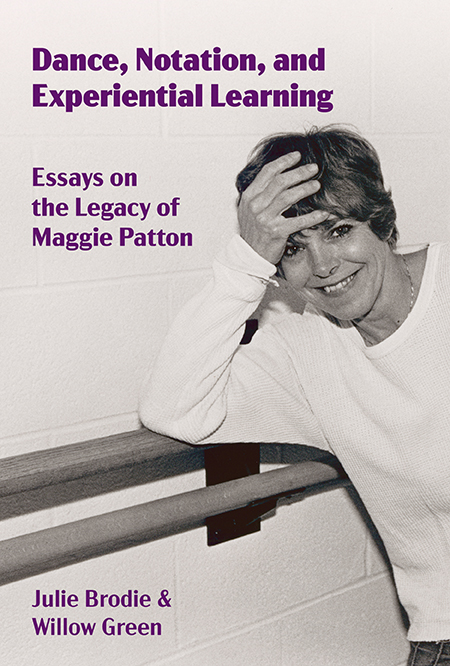
Dance, Notation, and Experiential Learning: Essays on the Legacy of Maggie Patton honors the life and artistic work of Maggie Patton, an influential choreographer, educator, and pioneering force of modern dance in Ohio. Through oral histories, archival research, movement analysis, dance notation—including a complete Labanotation score—and reflections on collaborative experiential learning, this volume traces the reconstruction of Patton’s signature solo, while illuminating the broader history of dance in higher education. Dance, Notation, and Experiential Learning bridges biography, dance history, pedagogy, and performance to demonstrate how embodied research can preserve artistic legacies, inspire new interpretations, and serve as a model for collaborative scholarship across the arts.
About the authors
Julie Brodie, MFA, CMA, is a professor of dance and director of the Kenyon College Office for Community Partnerships. Brodie stages dances from scores, presents her work, teaches, and performs internationally. A two-time Fulbright Scholar, Brodie is currently on the Fulbright Specialist roster. She has published multiple articles, contributed a chapter to The Wiley Handbook of Collaborative Online Learning and Global Engagement, and coauthored the book Dance Science and Somatics. Brodie was awarded the Kenyon College Trustee Teaching Excellence Award in 2022, and she is a fellow and chair of the Research Panel of the International Council of Kinetography Laban.
Willow Green is an interdisciplinary artist, choreographer, and writer currently based in Brooklyn, NY. They graduated from Kenyon College with a BA in Dance and English in 2021. In 2022–23, Willow was awarded a Fulbright English Teaching Assistantship grant, during which they also developed their solo artistic practice by participating in MASH’s Choreographic Incubator. After their Fulbright, Willow studied butoh intensively with Tiziana Longo of the Berlin Butoh Institute in 2024. They have also presented their research at the International Council for Kinetography Laban conferences in Mexico City (’19) and Seoul (’23), and their choreography has been performed at Salon Dreiklang, MASH, Kelim, Arts on Site, Greenspace, and MOTIVE Brooklyn.
Praise for Dance, Notation, and Experiential Learning
At once an homage to a significant choreographer, an explication of Ohio dance history, and a deep dive into the embodied processes of staging dance repertory, Dance, Notation, and Experiential Learning highlights a signature dance that encapsulates women’s work in higher education during the late twentieth century. With a full Labanotation score and contextual historical information, Brodie and Green provide an effective, historically informed embodied experience central to dancing from the page to the stage.
—Hannah Kosstrin, author of Honest Bodies: Revolutionary Modernism in the Dances of Anna Sokolow
Willow Green and Julie Brodie have assembled a wonderful tribute to Maggie Patton, a unique and fascinating Ohio choreographer and much beloved teacher and mentor. They literally follow in her footsteps, restaging her signature solo on multiple dancers in order to notate its choreography, as well as to explore the historical context in which it was made. Their passionate commitment to this process engages the multiple expressive possibilities available in collaborative research, offering a model for high-impact learning within a liberal arts environment.
—Ann Cooper Albright, author of Simone Forti: improvising a life
Lovers of solo work from around the world will enjoy this intergenerational perspective on one of the state of Ohio’s most beloved dance leaders—Maggie Patton. The interweaving of Labanotation score, biographical information, historical and situational contexts provide readers insight into Patton’s autobiographical choreographic process alongside performance qualities detailed in the notating and coaching of the solo dance “You Can’t Dress Me Up But You Can Take Me Anywhere.” Through the eyes of Kenyon College’s alumni, students, faculty, and notators, Brodie and Green take us through Patton’s life via the solo, and its significance leaps from the page and invites a new generation of dancers to experience and create a reinterpretation of the dance in constant motion relatable to today’s society.
—Valarie Williams, Professor of Dance, The Ohio State University
This volume unfolds like petals around a stem: rooted in Maggie Patton’s legacy, supported by exploration of a signature choreographic work, and opening into broader examinations of dance pedagogy, research methods, notation, collaboration, and the women who made so much of that happen. Brodie and Green reveal layers of history, embodied experience, and artistry in a compelling affirmation of dance as a path of powerful knowing. As dance in higher education faces ongoing challenges, this work illuminates not only the discipline’s presence and purpose, but its continuing promise as both a field of inquiry and a model for collaborative scholarship.
—Lynn Matluck Brooks, Arthur and Katherine Shadek Humanities Professor Emerita, Franklin & Marshall College