
Investigation of brain networks and cognitive functioning during simulated and chronic pain: An EEG study
Graduate Student: Bayan Ahmad
This ongoing project focuses on collecting data during experimentally induced pain conditions in conjunction with cognitive tasks. The purpose is to investigate neural networks in both resting and pain states to identify a model of cognitive information processing across different pain conditions. The literature has shown significant differences in brain function in patients with chronic pain; thus, we assess how their neural responses during both simulated pain and cognitive execution differ from those of non-chronic pain patients.
Learn More Here: https://blogs.uakron.edu/barkana-signals-lab/cognition-and-pain/

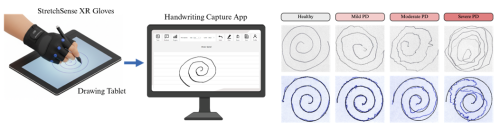
AI-Driven Monitoring of Parkinson’s Disease Through Handwriting Analysis Study
Graduate Student: Maria Leyba Mesa
This ongoing project focuses on collecting handwriting data across a variety of tasks. The purpose is to track the progression of Parkinson’s disease over time. The project begins with collecting data from a control population, which will be used to train an AI model to learn typical handwriting patterns. From there, the project will branch out to a Parkinson’s population to better understand their condition.
Learn More Here: https://blogs.uakron.edu/barkana-signals-lab/handwriting-analysis/
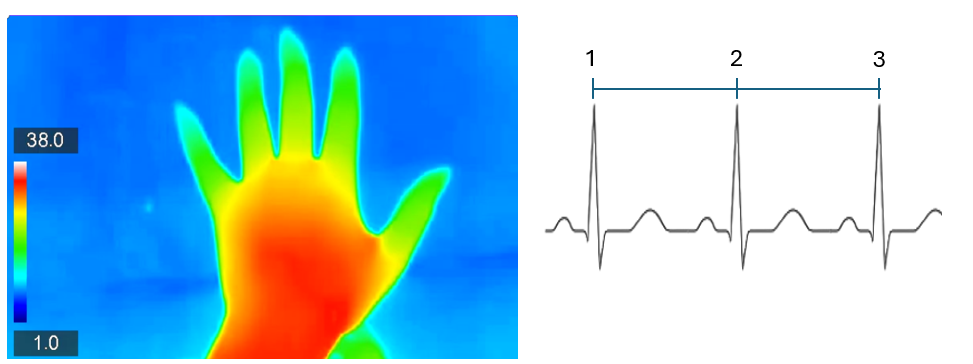
Investigation of Recovery After Cognitive Demand and Pain Stimulation: ECG and Thermal Camera Study
Graduate Student: Rachael Amira Brimm
This ongoing project focuses on collecting ECG and thermal camera imagery during the recovery phase after completing a cognitively demanding task and undergoing a cold pressor test. By analyzing ECG signals alongside thermal imaging, the study captures both physiological and surface-level indicators of stress and pain response. The purpose of this study is to better understand the relationship of pain recovery across different conditions.
Learn More Here: https://blogs.uakron.edu/barkana-signals-lab/ecg-thermal-pain-recovery/
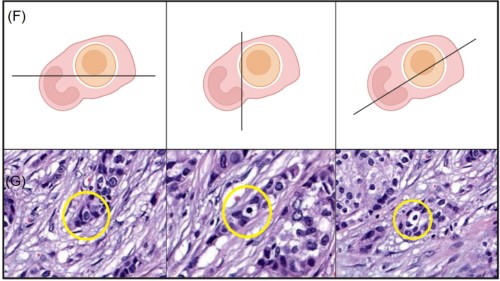
Segmentation and Deep Learning of Entotic Cells Study
Graduate Student: Meherin Tasfia
Former Graduate Student: Maria Leyba Mesa
This ongoing project focuses on capturing images of cells and training AI to identify entotic cell-in-cell structures. Using deep learning models such as YOLOv8 paired with geometric reasoning, the project aims to detect and quantify these structures with high sensitivity. Identifying entotic cells is important due to their potential link to poor prognosis in several cancers, and this work aims to support earlier, more accurate, and more consistent cancer diagnosis.
Learn More Here: https://blogs.uakron.edu/barkana-signals-lab/entosis-study/
Undergraduate Research Projects
In our lab, we work closely with undergraduates, giving them the opportunity to either develop their own project or join an existing one to gain research experience. Graduate students gain firsthand experience mentoring undergraduate students, while undergraduates get to experience what it’s like to work in a research lab, gaining valuable experience and potentially discovering a passion for the work.
Learn More Here: https://blogs.uakron.edu/barkana-signals-lab/undergraduate-work/
HVD and Common Words Spoken and Imagined EEG
Graduate Students: Bayan Ahmad and Rachael Amira Brimm
Undergraduate Researchers: Julia Ehnot
About
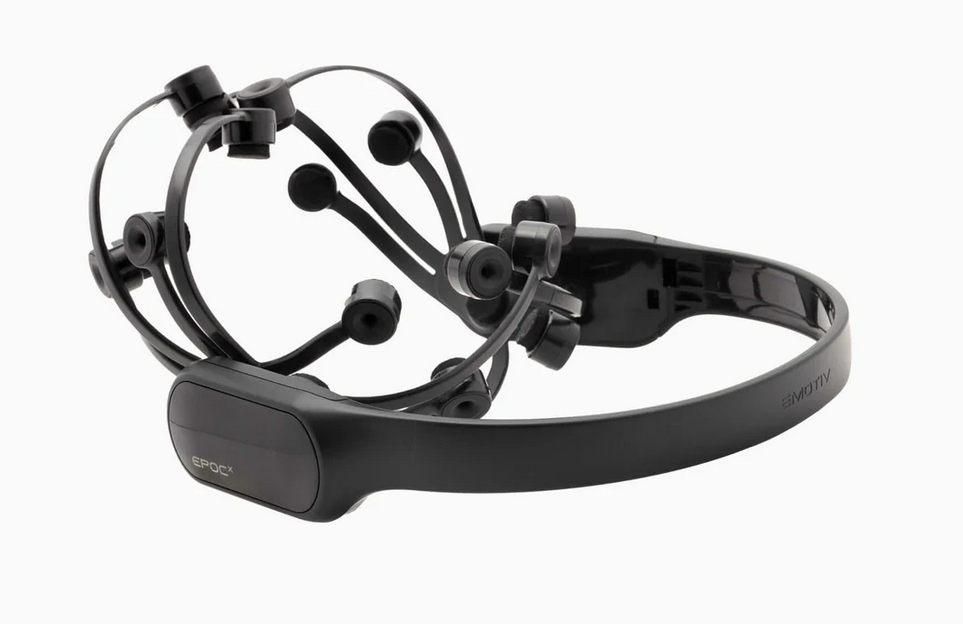
HVB and common words are captured during spoken and imagined language while participants wear EEG. By comparing EEG signals recorded during these two conditions, the study aims to identify distinct neural activation patterns associated with each. Understanding these differences could contribute to advancements in brain-computer interfaces.

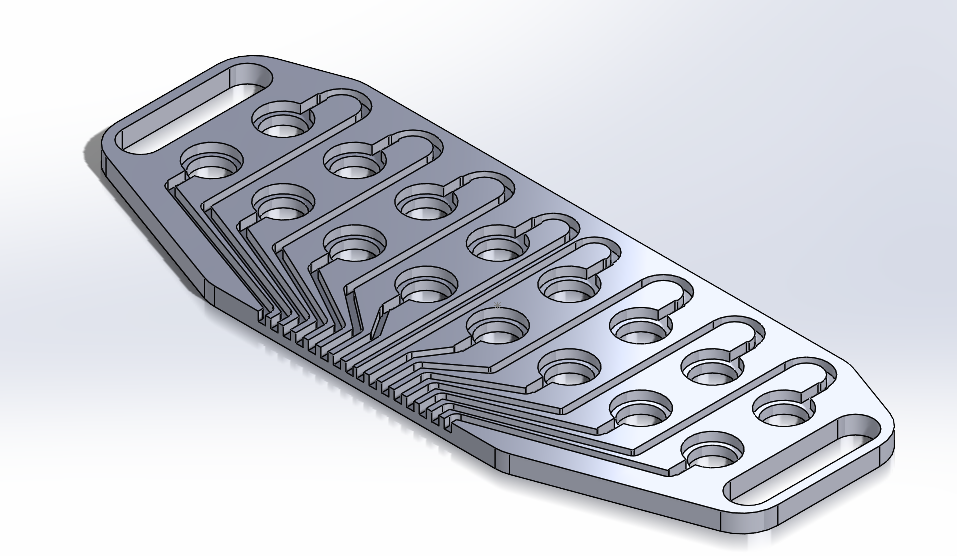
EMG Wristband to Track Tremors
Graduate Student: Maria Leyba Mesa
Undergraduate Researchers: Elijah Ray and Connor Allen
About
An EMG-based wristband is currently being developed to monitor tremors, in support of the lab’s Parkinson’s disease research. This device also serves as a project for undergraduate students to gain hands-on research experience. Using electromyography, the wristband will track muscle movement through a uniquely designed form that remains comfortable during handwriting tasks.
Optical Coherence Tomography (2024-present)
Graduate Student: Maria Leyba Mesa
Undergraduate Researchers: Elijah Ray
About
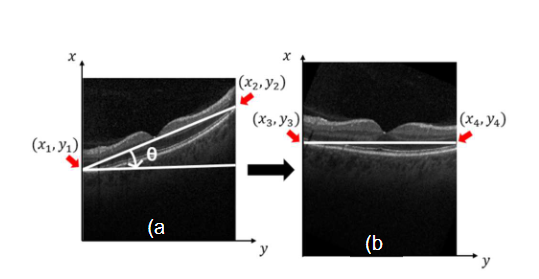
Optical coherence tomography (OCT) image analysis plays a crucial role in detecting and monitoring retinal diseases such as diabetic macular edema and age-related macular degeneration. In this project, we developed a retinal layer segmentation algorithm for OCT images, organizing the retina into four primary layer groups. To improve segmentation accuracy, we designed new preprocessing techniques, including background adjustment, adaptive denoising, and rotational correction. We then built an interdependent segmentation model using Otsu’s method, edge detection, and morphological operators. To evaluate the effectiveness of the segmented layers, we extracted statistical and texture-based features to support further analysis.

Advanced In-Process Inspection (IPI) of Internally Machined Features using Miniature Confocal Chromatic Sensors (Funded by Center for Precision Manufacturing, 2023-present)
Past Undergraduate Researchers: Quintin Kelley, Erin Keller, Kaden Carpenter
About
Machined surface quality and the surface layer’s physical and mechanical characteristics are complex indicators that determine the performance properties of machine parts. The surface roughness characterizes the surface quality and significantly impacts machine parts and products. Advanced manufacturing technology requires in situ surface finish measurement estimating Ra parameters without removing the parts since mounting and dismounting the parts may cause various errors. Confocal chromatic measurement techniques have shown significant improvement in real-time high-resolution profile measurement during inspection. However, the application of confocal chromatic sensors is still limited for the purpose of inspection in restricted reflective spaces. The primary and secondary objectives of the proposed work in the 3rd round of CPM are as follows:
- Test the developed model for different materials and colors. Revise the software accordingly.
- Design and implement a setup for measuring Ra inside parts as the sensor acquires data while itself or the part rotates.
- Revise the existing software based on the new setup.
- Improve the GUI prototype based on the industry needs and requests.
- Find the potentials and limitations of the confocal sensor in each condition.
- Porting MATLAB-based software to Python-based software.
- Start the physical design of the prototype (1st prototype).
- Initiation of machine learning (ML) approach for Ra estimation.
E-Tattoo (2025-2026)
Collaborator: Dr. Justin Baker
Undergraduate Researchers: Jen Hatalla, Connor Allen, and Adrian Kovshovik
About
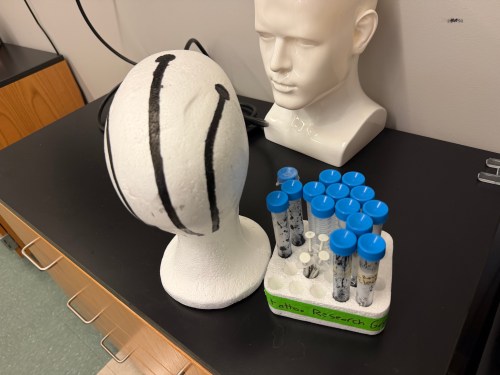
Ambulatory EEG has become a valuable diagnostic tool for neurological disorders such as epilepsy, but conventional EEG caps with wired electrodes are intrusive and socially conspicuous, limiting their suitability for continuous daily monitoring. This project explores conductive tattoo ink as a possible replacement for traditional EEG electrodes and wiring, aiming to make long-term data collection less obtrusive and more practical for everyday use, similar to how continuous glucose monitors have transformed diabetes care.
Using PEDOT:PSS-based ink formulations, including low-impedance, high-impedance, and modified high ion concentration inks, the study evaluates key electrical properties such as voltage, current, and resistance as a function of trace length over a 24-hour drying period. Results show that conductivity decreases with increasing trace length, with the higher ion concentration formulation demonstrating improved electrode performance. Stereomicroscopic imaging was also used to assess ink deposition and confirm feasible conductive pathways within synthetic skin.
Future work will compare tattoo-based EEG recordings with conventional EEG systems and evaluate performance on curved scalp geometries, with the long-term goal of supporting more practical seizure prediction technology.
Collaborative Projects
Exploration of Ventral and Dorsal Pathway Interactions on Pediatric Language Disorders and Therapeutic Interventions (Funded by UA FRC Fellowship 2024-2025)
Collaborator: Dr. Kristen Chris, Ed.D., CCC-SLP, School of Speech-Language Pathology and Audiology / Speech-Language Pathology
Graduate Researchers: Bayan Ahmad and Rachael Amira Brimm
Learn More Here: https://blogs.uakron.edu/barkana-signals-lab/language-therapy/
About
Developmental speech and language disorders (DSDs and DLDs) are seen in 1 in 20 preschool children without any neurologic deficits, intellectual impairment, or hearing loss. DSDs affect the clarity of the produced sounds, while DLDs affect language structures, including grammar and semantics. Usually, developmental speech and language disorders (DSLD) coexist. Despite many research studies, no consistent symptom-based prognostic markers have been found yet.
The project aims to evaluate and compare the impacts of traditional and nontraditional language-based therapy on the dorsal and ventral streams of children who have language and speech disorders. In this study, the traditional way is the therapy given when the participant sits on a chair. The nontraditional way is the therapy in which participants actively use their fine and gross motor skills during language therapy. The project is expected to generate knowledge for pediatric speech-language therapists, pathologists, child psychiatrists, psychologists, and neuroscientists. It will lead to a larger external research project as an evidence-based intervention for children with speech-language disorders. This project is also expected to provide directions for effective interventions and clinical research to improve speech-language therapy practices.
Inflammatory Breast Cancer (IBC) Analysis and Diagnosis Using Bilateral Mammography Images (2020 – present)
Learn More Here: https://blogs.uakron.edu/barkana-signals-lab/inflammatory-breast-cancer/
https://doi.org/10.3390/s23010064
About
Inflammatory breast cancer (IBC) is a rare and aggressive clinicopathologic form of breast cancer. It has a roughly 55% 5-year survival rate, much lower than most other types of breast cancer, which is about a 90% 5-year survival rate in the United States. The American Joint Committee on Cancer (AJCC) defines the IBC with erythema (redness), edema, and peau d’orange over at least a third of the breast—often with no underlying tumor mass—with a duration of the first symptom to the diagnosis fewer than six months. In addition, the histopathology of tumor emboli in the breast biopsy indicates IBC. The diagnosis of IBC based on the AJCC criteria is challenging because the presence and extent of erythema, edema, and peau d’orange vary between IBC patients, and there are no solid pathologic criteria to confirm the diagnosis of the diseases. In addition, the AJCC clinical signs are not present in many IBC cases.
