By: Killian Reed
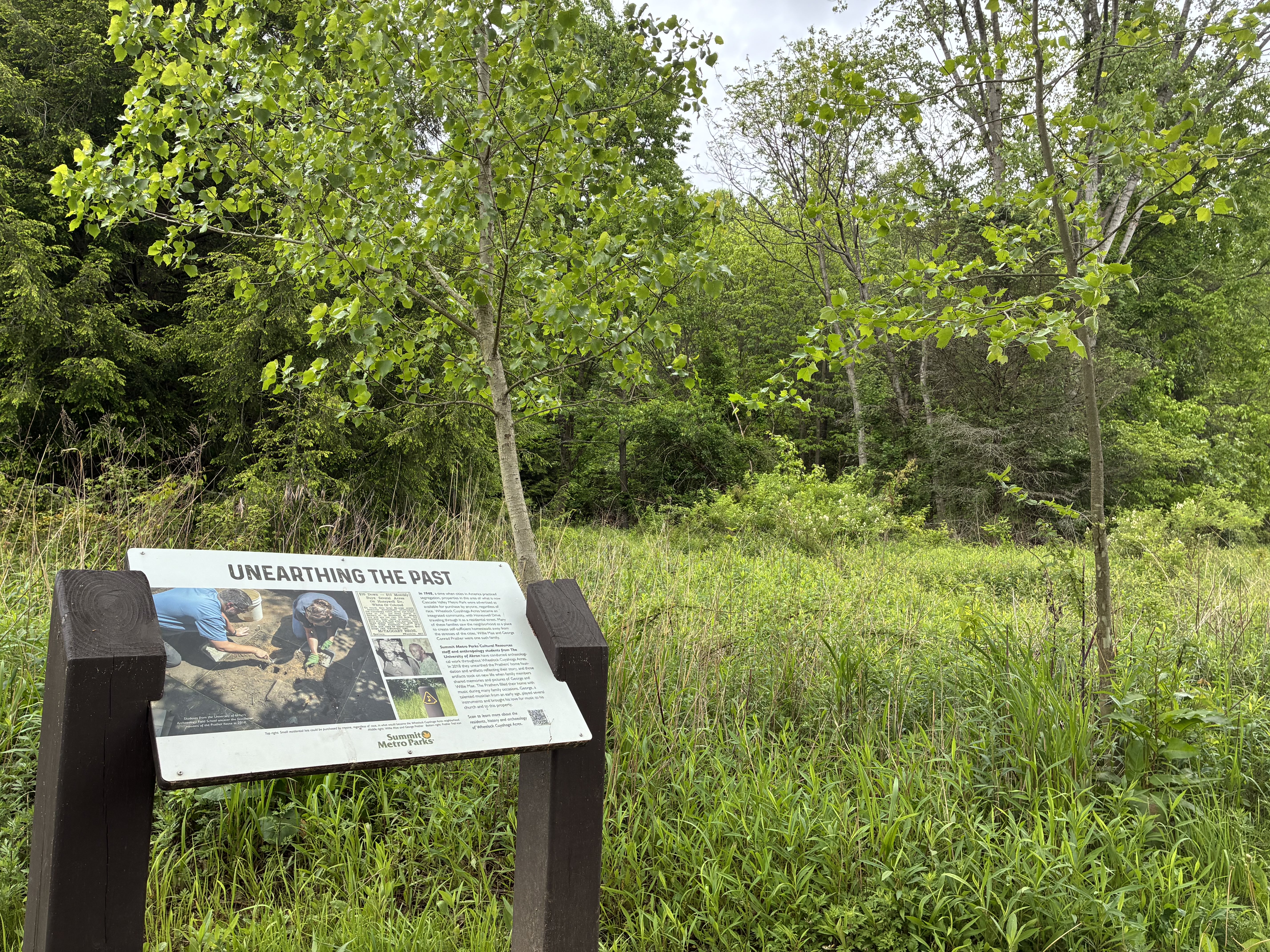
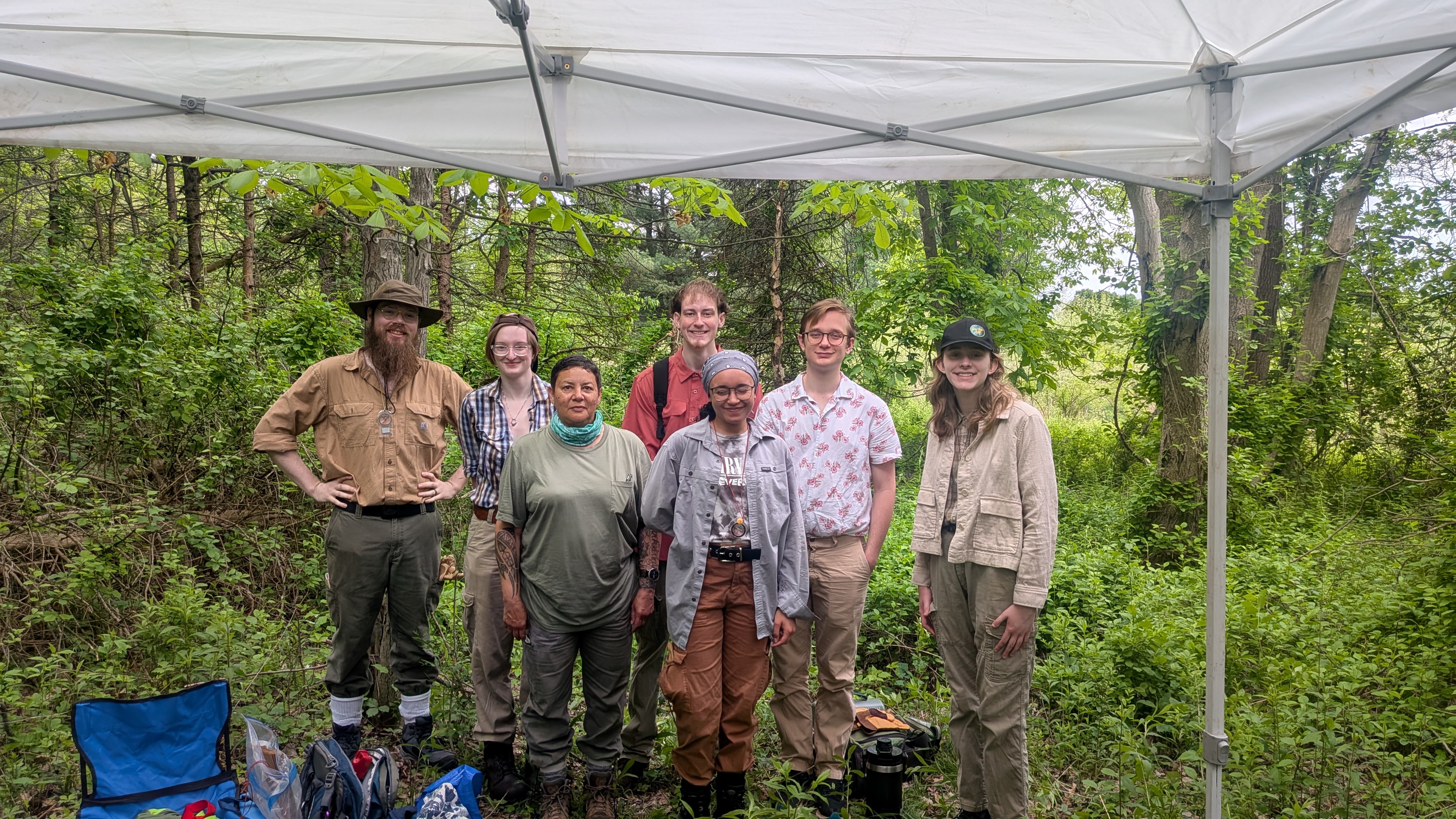
Heat, bug bites, cuts, ticks, rain, and mud; this will be the life for the next eight weeks for seven students at the Prather site during this summer’s field school at Wheelock Cuyahoga Acres. The Prather house, on Honeywell Drive, was home to George and Willie Mae Prather from 1948 to the early 1970s, which later burned down in 1976. The surrounding area was used by Valley View Golf Club and later bought by Summit Metro Parks. Rediscovered in 2017 during a survey for the Valley View restoration project, the site has become an interesting piece of Akron’s history, going back to the Great Migration. Honeywell Drive was home to many Black Americans seeking affordable housing and developed into a mixed-race community. Several structures along Honeywell Drive were identified using historic aerial photos and ads. Just as the Prather’s once called this their home, we’ll be making this our home away from home this summer, setting up a tent throughout the week, eating lunch together, and uncovering a piece of Akron’s history.
As nearly none of us have hands-on experience in archaeological field work, we had to start with the basics, namely walking. Walking in a straight line is something anyone can say they can do efficiently. If you get really good at it, you could walk runways sporting the latest fashion trends. But walking in a straight line is something we had to relearn, so we can say we knew how to walk about ten meters. Each of us walked ten meters a few times until we knew how many paces it took on a flat surface. The number of steps changed once we started walking on the type of bumpy terrain you would expect out in the middle of the woods. And getting a feel for ten meters drastically changes when you find yourself trying to walk through a path with brambles or a well-placed tree right in the middle of your path. Several times, I had to consider whether I would talk through or around a mass of brambles. The cuts on my arms and legs would tell you there was nothing standing in my way.
Once we were used to pacing, we put it into practice during a pedestrian survey. Each of us walked ten meters out from each other and began marching into the forest behind the Prather site and into the dump area behind. My colleagues and I flagged a number of jars, glass bottles, and the remains of what former gold club employees drank while presumedly on the clock. Most interestingly, we found a large, rusted stand with some kind of machine on top with a large dial. After doing this two more times, we went back through the area while Shelby mapped each artifact.
Later that day, we trekked to the Smith site to begin plotting out a dig test. This consisted of marking spots ten meters out from a fixed datum. Moving East and South, we walked into the bushes, one person holding a line and another marking every ten meters, making a grid of about 700 square meters. The following two days, we began dig tests in groups and individually. Dig tests consist of digging square holes 50 cm each way in hopes of finding artifacts and measuring changes in soil. There was only a change in soil on the first shovel test I dug with Page. Another one of my colleagues, Teela, later found several spots of concrete, discovering what appears to be a driveway from the Smith house to the road. I was able to find lots of plastic material and a fill line next to the Smith’s driveway on my second dig test.
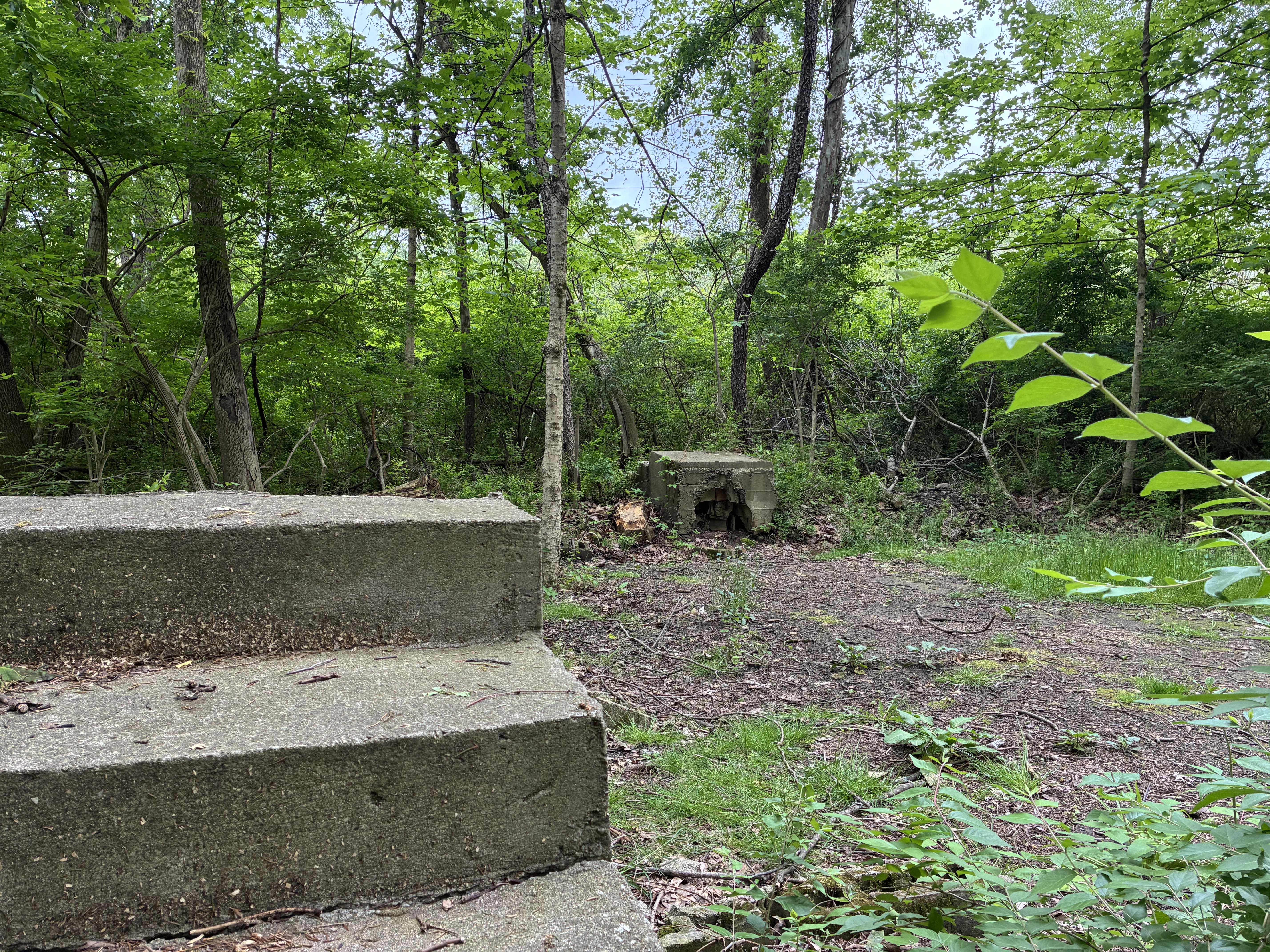
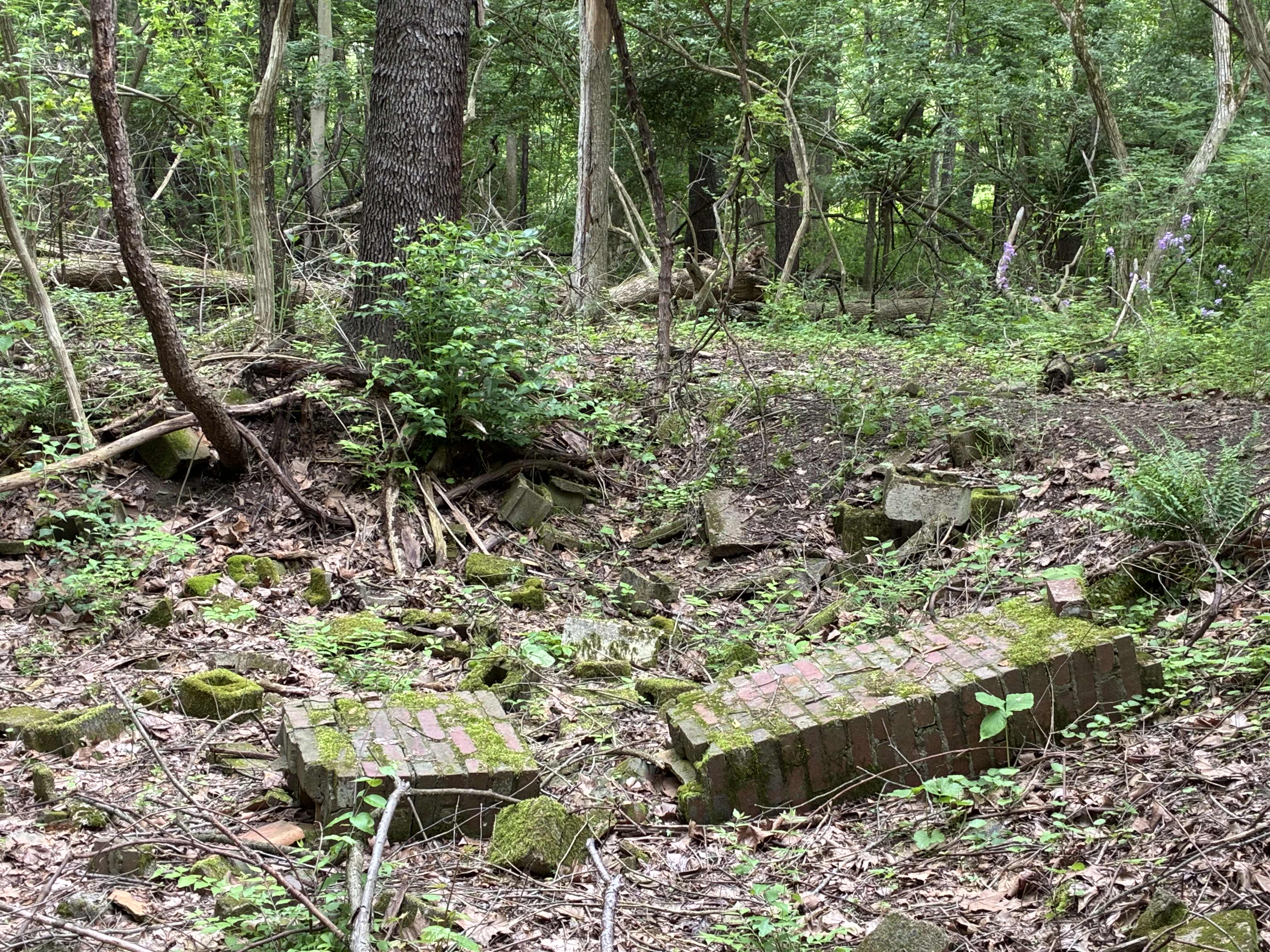
On the second day on the field, we were shown two previous excavations: Victor and Ethel Johnson’s home, living there from 1950 to the 1970s, and Edward and Ruby Atkinson’s home, living there from 1950 to 1954. Led by Charlotte Gintert, the Johnson site was excavated in the summer of 2023. Zoe Brown led the excavation of the Atkinson site in the summer of 2025. What remains of each site was a scattering of bricks forming the lower foundation of the homes, a few set of stairs, and a toppled chimney.
While the Prather family didn’t live in their home when it burned down in 1976, many of their belongings were still inside. It’s anticipated that we’ll find some household items that tell us more about how the Prather’s lived. I’m excited to continue working with my colleagues on the Prather and Smith sites for the next seven weeks in sun and rain.