By: David Floyd
Week two of field school was very informative, as I gained further experience in surveying as well as some in early excavation. Throughout the week, our work ranged from shovel testing and pedestrian surveys to reopening a previously excavated portion of the Prather’s site.
We didn’t have field school on Monday due to the holiday, so this week we began on Tuesday morning.
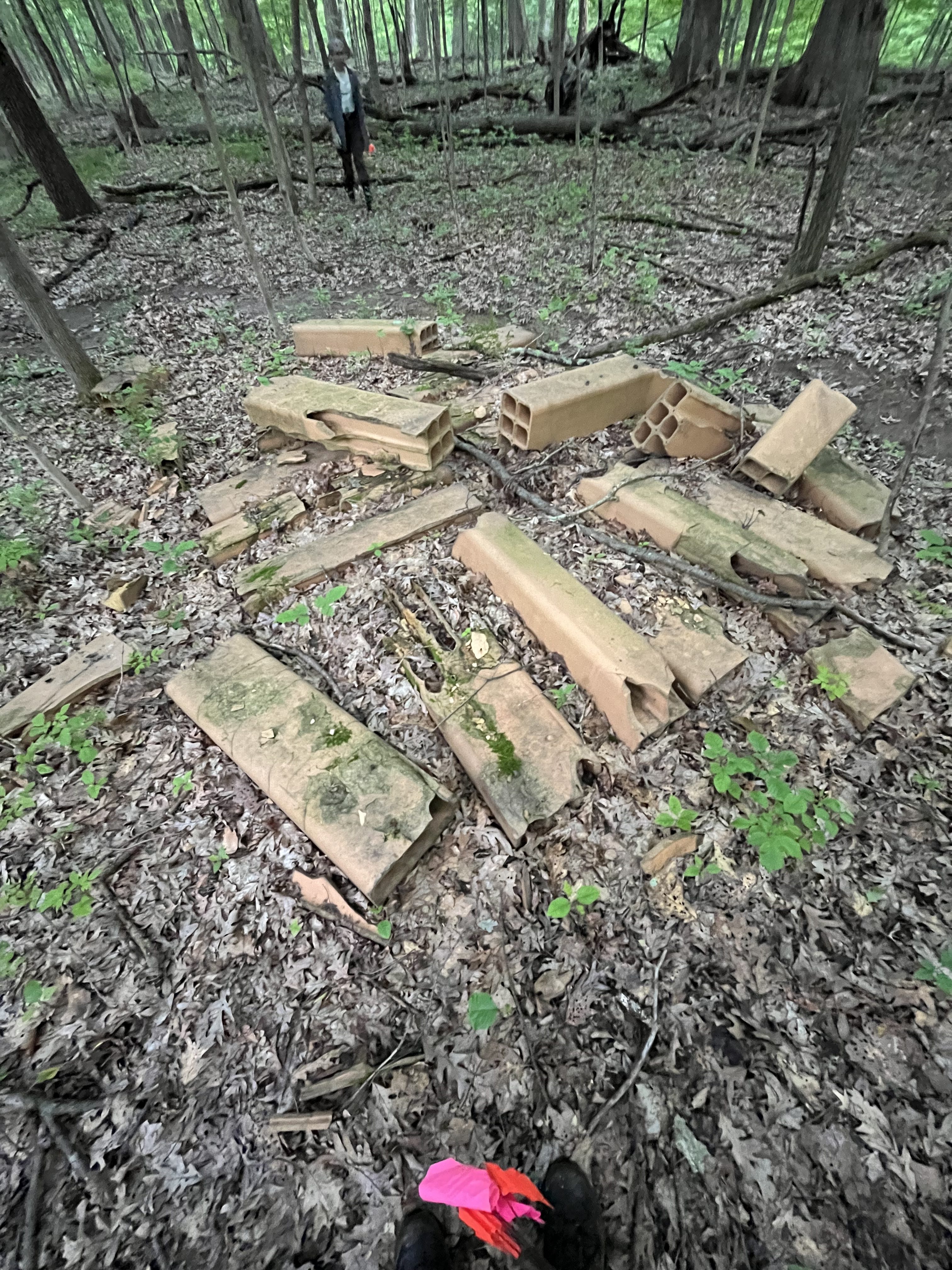
On Tuesday, we conducted additional shovel tests in the Walter Shingles area to continue our search for archaeological evidence of the previous owners. Although I didn’t find any artifacts in any of my own shovel tests, the survey was still productive. During our tests, we identified an exposed portion of a stone structure and a concrete pad. While not every test unit yields artifacts, finding substantial amounts of artifacts or features such as these can provide important information for identifying site boundaries. So far, my experience with shovel tests has highlighted the reality that archaeology often involves finding nothing. However, negative results are just as important for locating the perimeters of a site. We also spent the end of the day draining the gathered rainwater from the top tarp covering the excavation site, preparing it to be reopened later Thursday.
On Wednesday, we conducted pedestrian surveys in a new area. We walked along the path of a former road and conducted surveys at ten-meter intervals while heading north. Once we reached the end of the survey area, a steep drop off, we repeated the process, moving further west until the entire northern section had been surveyed. We then repeated this process while heading south to ensure complete coverage. This systematic approach allowed us to thoroughly examine the surface and look for any evidence that may have been missed during previous volunteer surveys.
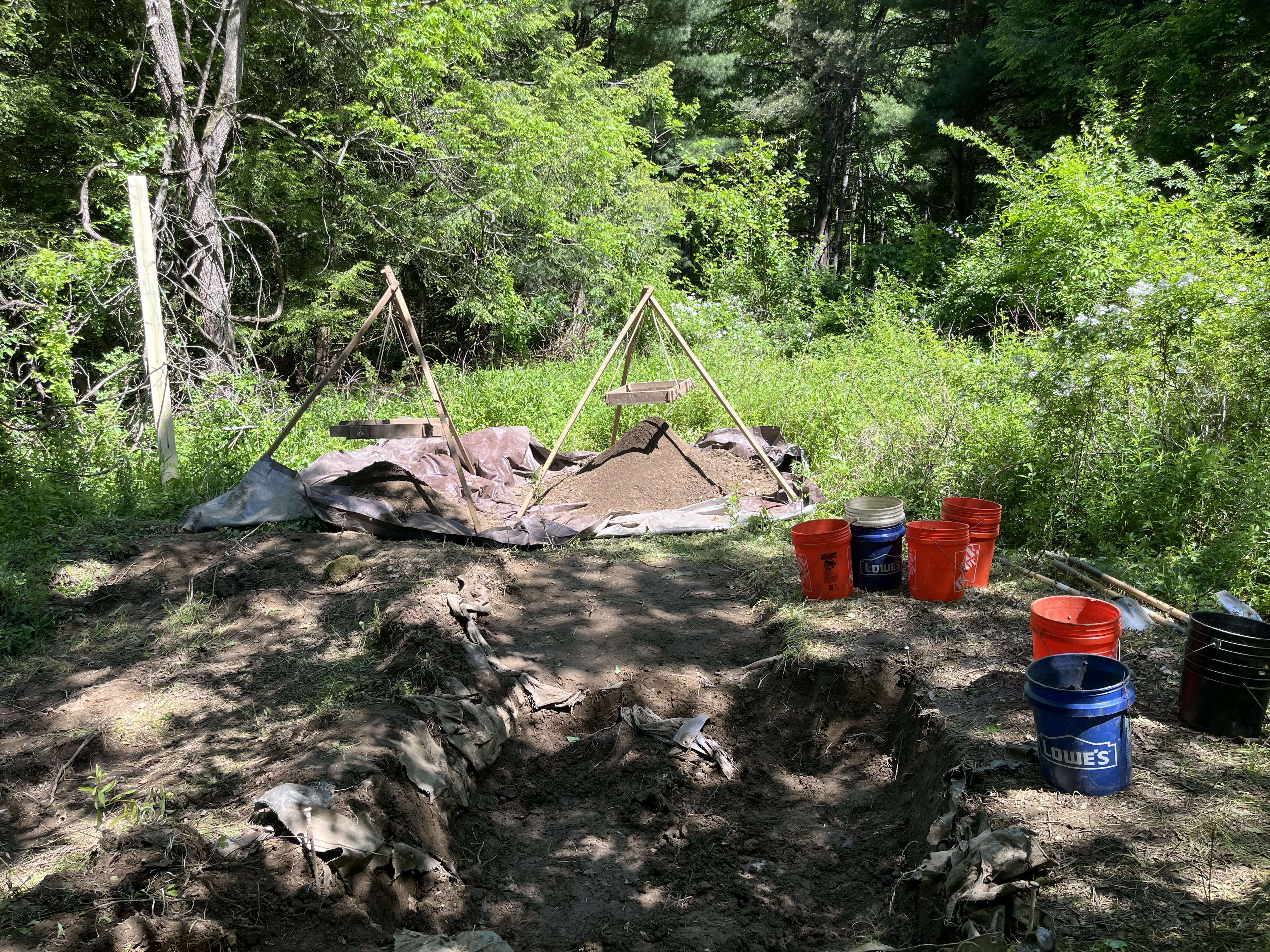
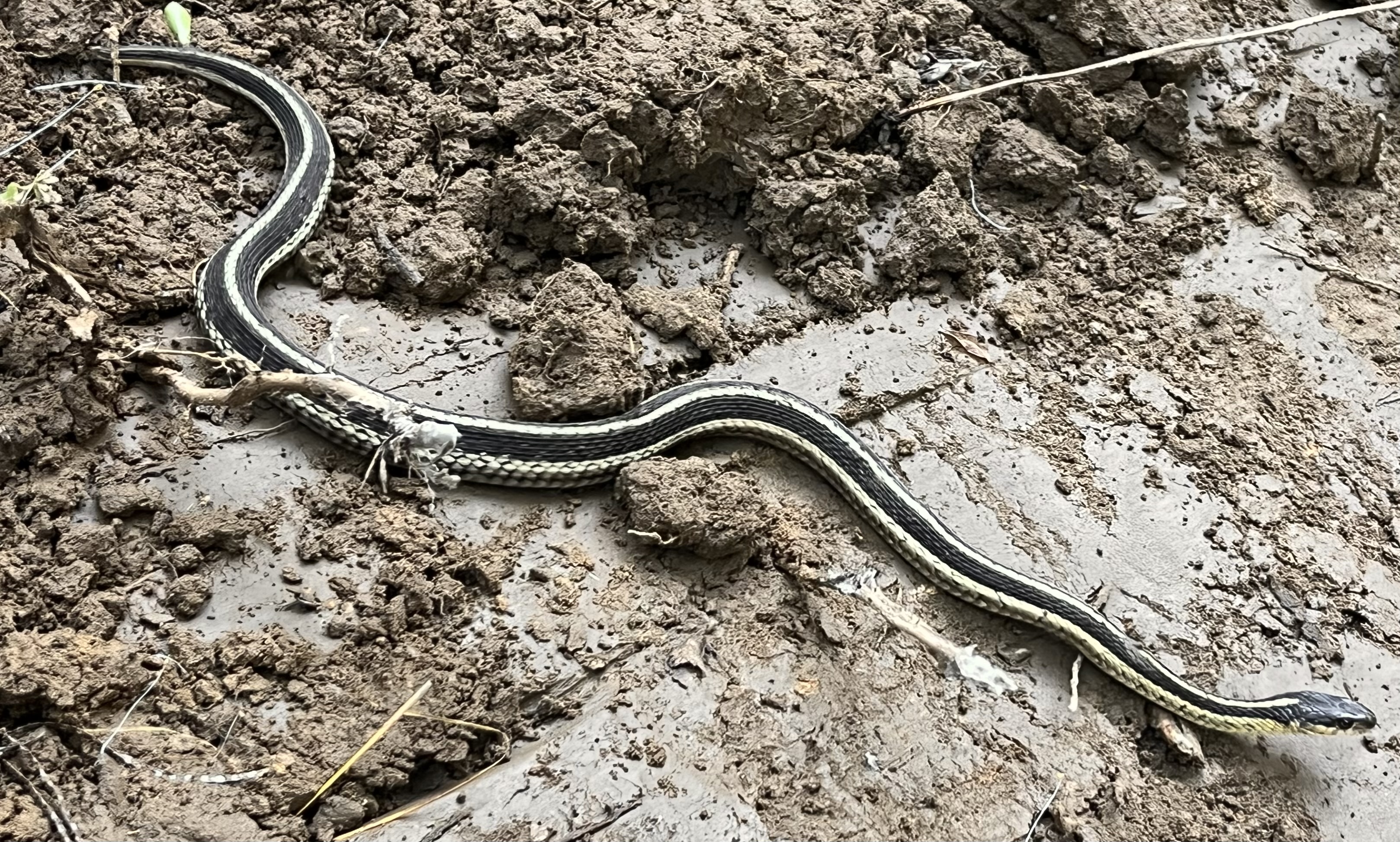
Thursday was definitely the most memorable day of the week. We began by removing the tarp and plywood covering the previously excavated portion of Prather’s basement. This area had originally been uncovered by the Metro Parks before being reburied with backfill and covered for protection in 2018. As we removed the plywood and wood plank covering, a snake slithered out, surprising us. After a fellow student safely moved it, another crawled out; seemingly, they had made the area beneath it their home. After they were both moved to another nearby area, we continued work on the excavation. We then began by learning how to ensure the corners of the unit were square, then setting our boundary string around the 2-meter by 2-meter unit.
The remainder of the day was spent carefully removing the backfill soil. We skimmed away the dirt with shovels while taking care not to damage either the underlying tarp or the previously identified wall. Every bucket of soil was also screened through a tripod sifter to recover any artifacts that may have been missed during the previous excavations. We started with only one sieve set up; however, we eventually needed to set up a second tripod sieve to sift the piling buckets of dirt faster.
As we dug deeper, the somewhat damaged underlying tarp that had been placed over the site in 2018 became more and more visible. As we neared the tarp, we switched from shovels to our trowels and dustpans to ensure that the excavation remained controlled and precise. Although we made significant progress, time unfortunately ran out before the tarp could be completely exposed. At the end of the day, we carefully recovered the site with the upper tarp before packing up our equipment and heading out.
I’m looking forward to continuing with our excavation next week.