By: Eden DeVinney
Week 3 in field school, we focused our work on the Prather House Site. We first uncovered the site last week, removing the tarp and back dirt set over the 2×2 meter unit. By shovel skimming, a method used to carefully scrape the dirt rather than stabbing vertically and digging, we were able to make great progress and remove the bulk of the back dirt, so Monday consisted mostly of using our trowels to carefully remove the remaining dirt and level out the space. Before we could begin troweling, we learned how to use a dumpy level, an optical surveying technique used to find the ground level and then measure how far deep Unit A was that morning. From this point on, we’ll be setting up our dumpy level every morning to measure once in the morning before we start, and then again in the afternoon to check our progress.
Monday was very eventful, and full of new things to learn. Because we finished Unit A, we were able to see what happens following the cleaning up of a unit. The images below show how Unit A looked before and after we cleaned up the unit. We used just our trowels and dustpans to uncover the rest of the space, and we were able to fully remove the tarp left there in 2018.
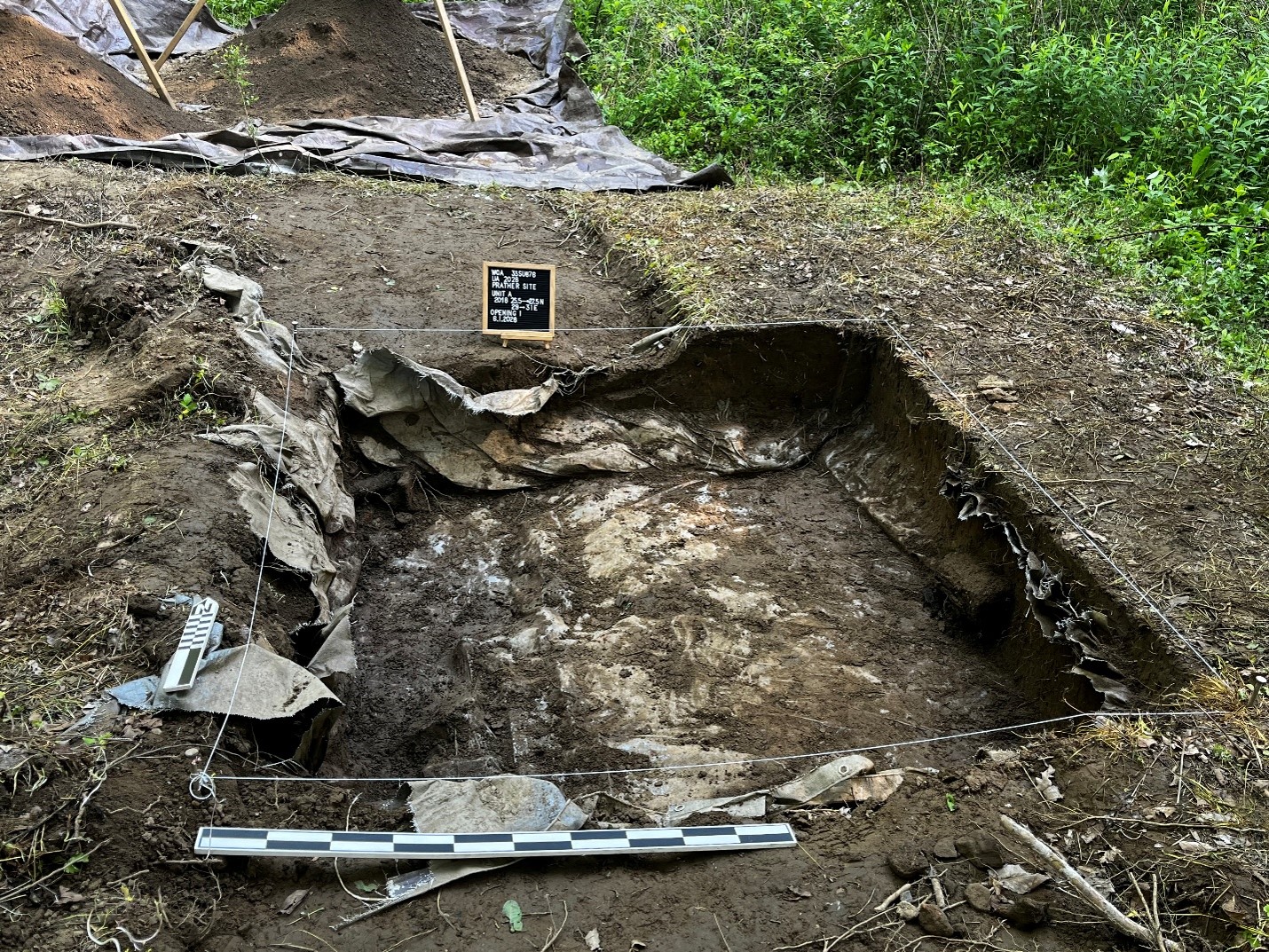
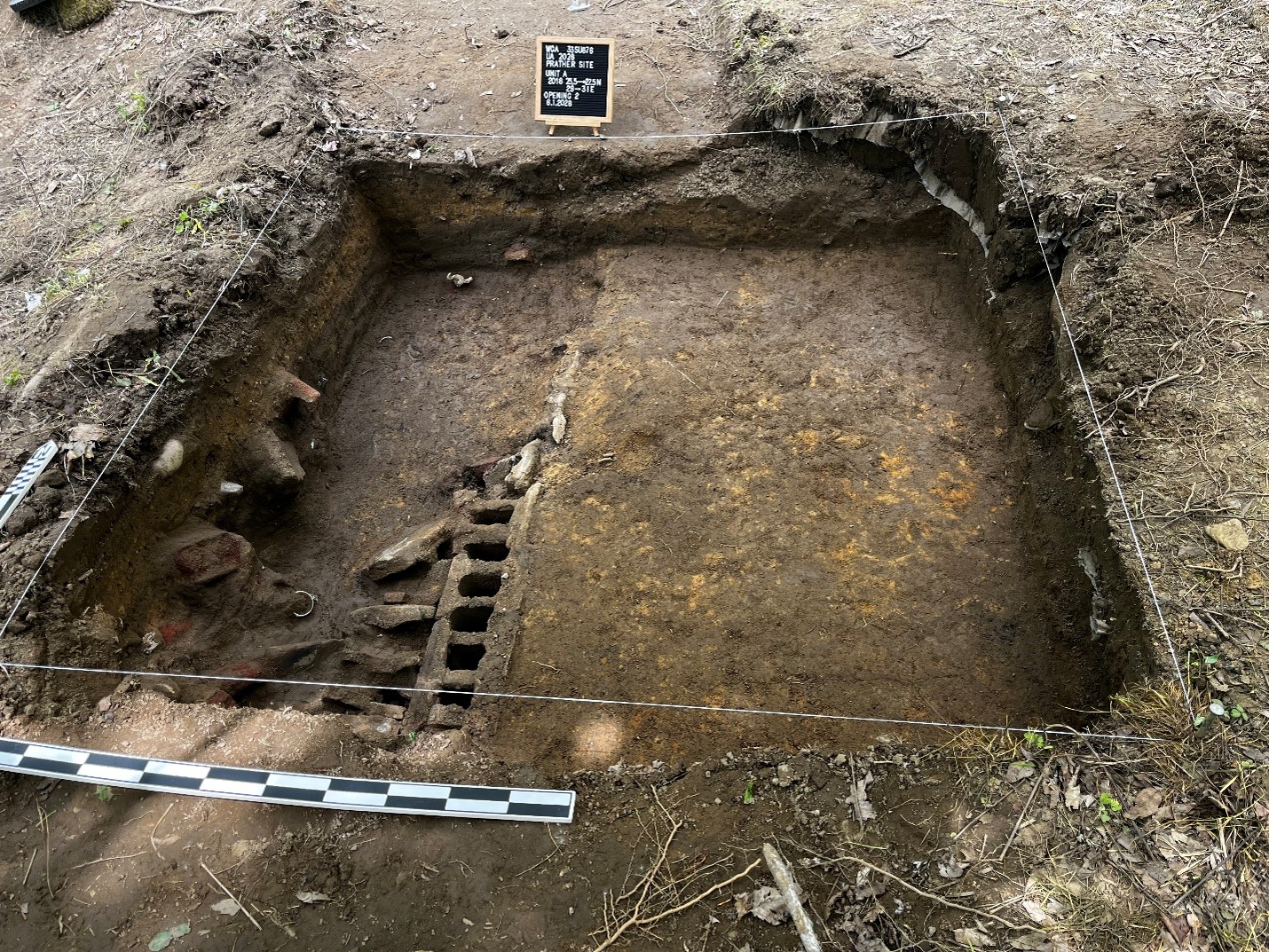
Once the space was precisely cleaned up with the trowels, we were able to take the final pictures of the unit and test the soil color and type, a method used by archaeologists to uncover any disturbances made in the soil by human or environmental activity. There is still plenty to learn just from this unit, but we wanted to move on and see what more we could discover, so we opened two new units. Again, in 2×2 meter squares, units B and C were created.
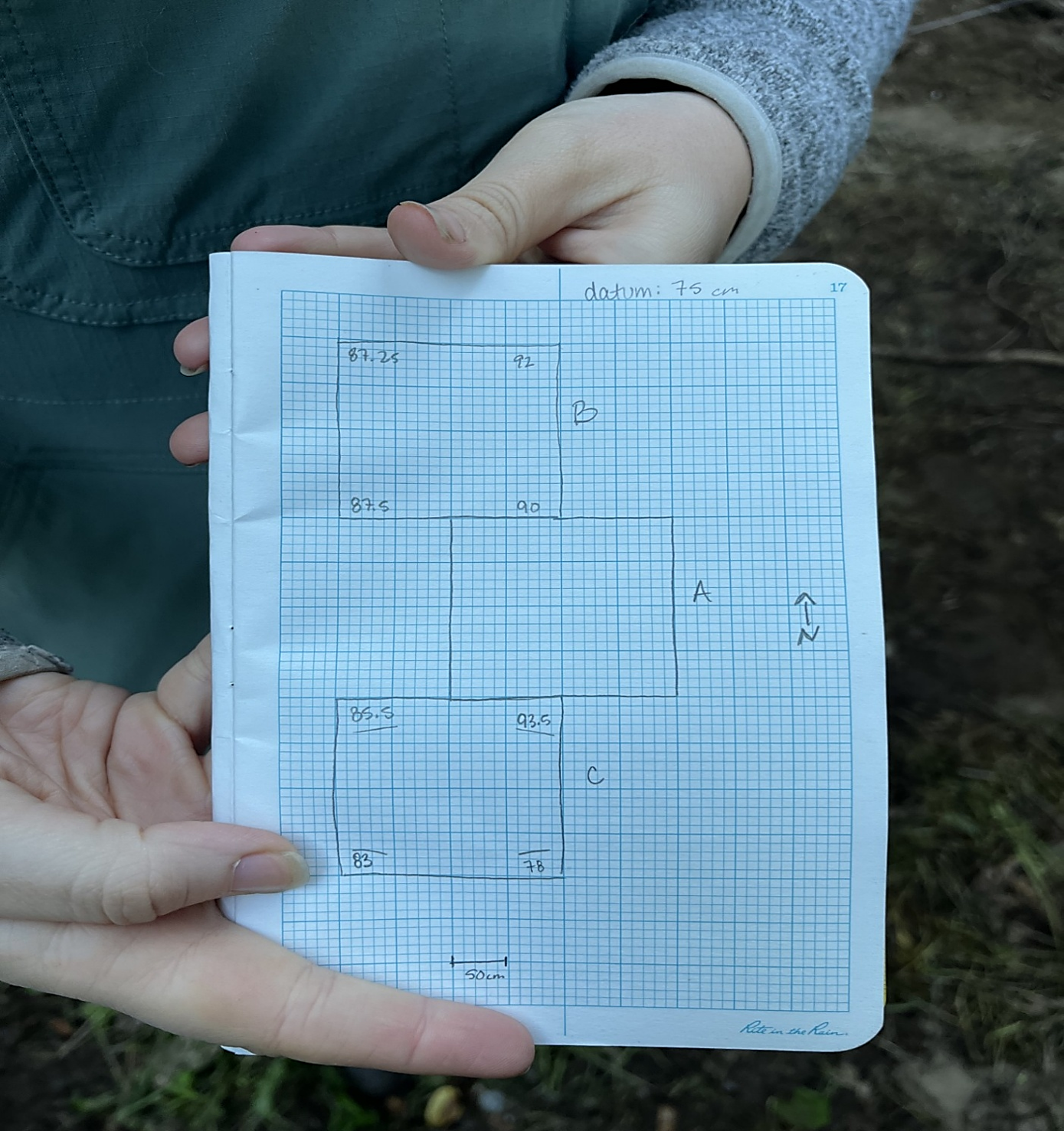
This is an example of our site; each measurement was made using the dumpy level on Tuesday morning before we began to shovel skim each unit. Shovel skimming and then using the sieve to sift through the dirt was what we did all of Tuesday. I worked on Unit C this day, which was slightly precarious because there was a hole we uncovered close to Unit A that didn’t seem to have a clear bottom and it left the North-West corner of the unit slightly unstable. Because it was a new unit, there was a lot of grass, vines, and worms to remove before we could get to any artifacts. It was also on this day that the golf ball pile was created, because we found at least seven golf balls buried between the two new units. By the end of the day, we had uncovered what appeared to be architectural remains that left us questioning if we found the corner of the Prather House.
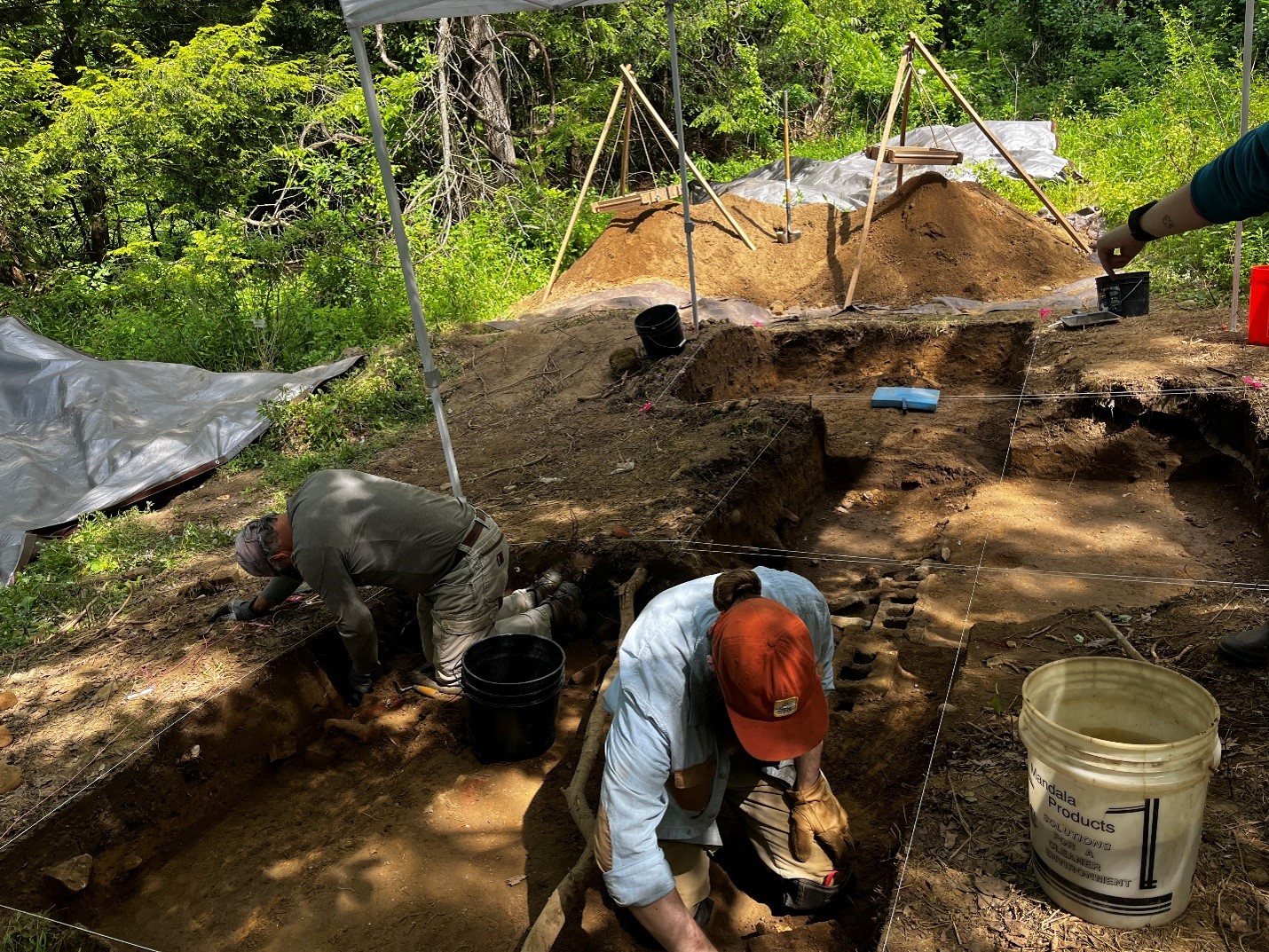
On Wednesday, I worked on Unit B. I found a lot of rusted nails and glass and ceramic material, and of course, the ever-present worms. Interestingly, the glass I found seemed to have been a privacy design, one you might see in a bathroom window. I also found what appeared to be a piece of basement glass, because it has a piece of twisted wire inside. The ceramic pieces looked like they could have been from the same item, each were painted pink with the other side a light grey shade. It felt like uncovering new treasures each time I found something new, even the rusted nails had made me want to go into the lab at Olin Hall to research what the artifacts were, how and when they were made, and how they were used.
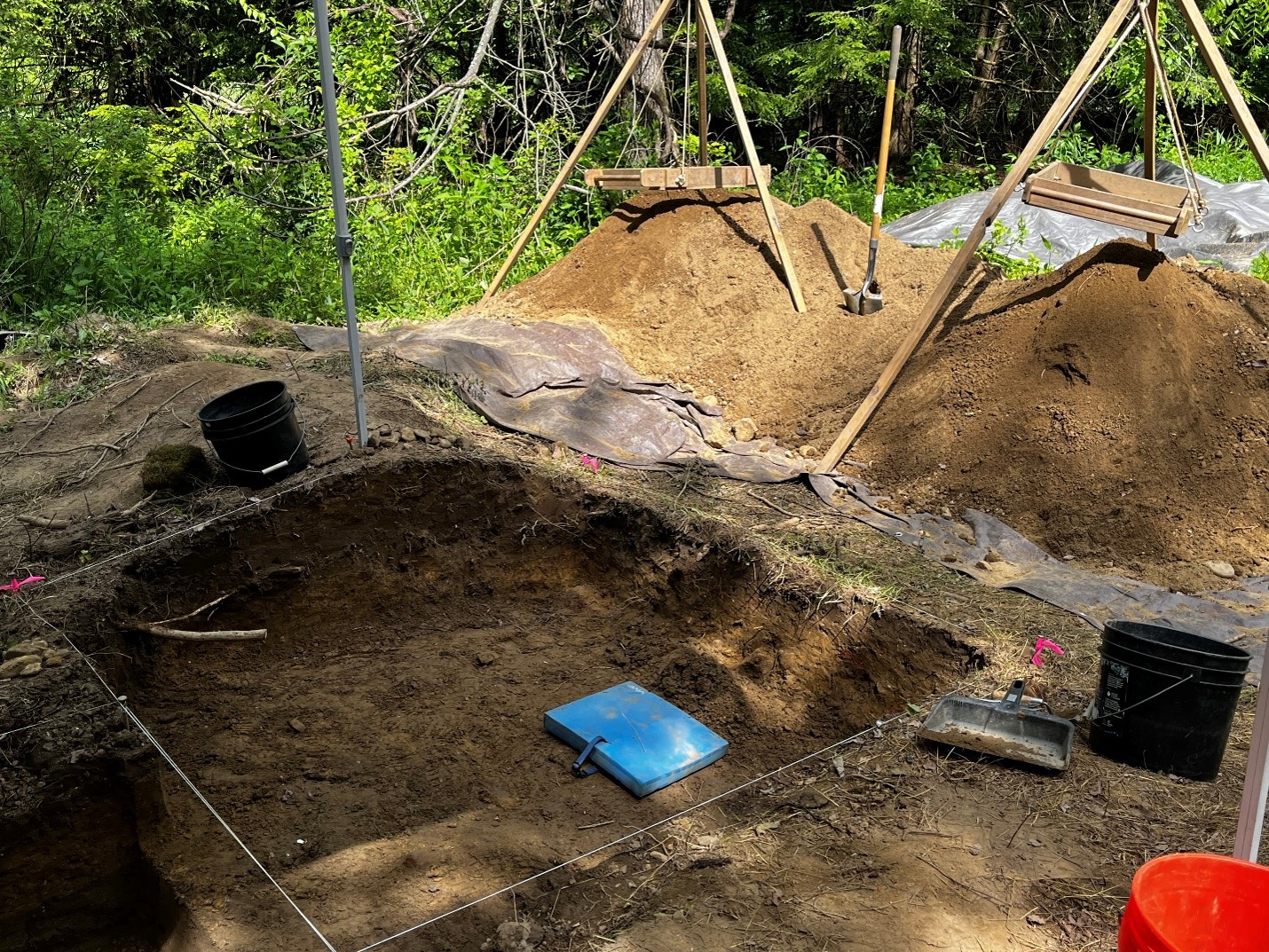
Here is Unit B, I worked on this unit again on Thursday. I found more ceramic pieces, as well as plenty of nails and worms, and of course a golf ball for the pile. We had to switch from shovel skimming to using our trowel and dustpans because we were getting closer and closer to foundation. I enjoyed being back in this unit, it felt like a perfect end to a field school work week because I had only helped measure and line out this unit on Monday. Now, on Thursday, it’s a real unit and I’ve spent hours with my classmates getting it to this point. Even in this 2×2 meter space, it feels like we’re learning so much history. I’m excited to get back to work on Monday, this site already means a lot to me.